Forklift Battery Size Chart: How to Find the Right Battery for Your Lift Truck

Forklift Battery Size Chart: How to Find the Right Battery for Your Lift Truck

Quick Summary

A forklift battery size chart should include more than just voltage information. The correct replacement battery must match the electric lift truck model, battery compartment dimensions, approved weight range, amp-hour capacity, connector type, cable configuration, and charging system. Green Power Forklift Batteries recommends collecting the truck and battery nameplate details before measuring the existing unit. A model-specific quote is more reliable than selecting from a basic chart because batteries with the same voltage can have major differences in size, weight, capacity, and compatibility.

A forklift battery size chart is most useful when it connects an electric lift truck model to a complete set of battery specifications. Voltage alone does not determine fit. The replacement must fit the compartment, meet the manufacturer’s weight requirements, deliver suitable amp-hour capacity, and connect correctly to the truck and charger.

Green Power Forklift Batteries supplies new and reconditioned batteries for electric forklift systems, including common 24V, 36V, 48V, and 80V configurations. We recommend verifying the manufacturer, model, serial information, and existing battery data before ordering.

What Information Belongs in a Forklift Battery Size Chart?

A reliable battery sizing chart or fitment record should include enough information to separate batteries that may appear similar but are not interchangeable. Collect specifications from the forklift, current battery, and charger, including:

  • Electric forklift manufacturer, model number, and serial number
  • Battery model number, voltage, cell count, and amp-hour capacity
  • Overall length, width, and height of the battery case
  • Required minimum and maximum battery weight
  • Compartment dimensions, cover clearance, and restraint arrangement
  • Connector type, color or keying, cable length, and cable position
  • Charger voltage, output rating, chemistry profile, and AC input

A generic voltage list cannot replace these details. The same 36V battery family may be offered in several tray sizes, capacities, and weights for different truck designs.

Keep the completed fitment record with the fleet maintenance files. The same record can speed future quotes and reduce errors when another battery reaches replacement age. Update it after any connector, cable, or charger change.

Step One: Identify the Electric Lift Truck and Existing Battery

Begin with the forklift data plate and operator manual. Record the manufacturer, exact model, serial number, approved battery voltage, compartment dimensions, and required battery weight range. Some forklift models may have different battery compartments or counterweight requirements depending on the configuration.

Next, photograph or record the current battery nameplate information. Include the model number, voltage, amp-hour capacity, dimensions, weight, connector type, and cable arrangement. If the current battery fit properly and delivered the expected performance, these details create a useful reference point for replacement.

Step Two: Verify Voltage and Cell Count

Industrial lead-acid cells are nominally rated at 2 volts each. A 24V battery commonly has 12 cells, a 36V battery has 18 cells, a 48V battery has 24 cells, and an 80V battery has 40 cells. Confirm the nameplate and truck specification instead of estimating by appearance.

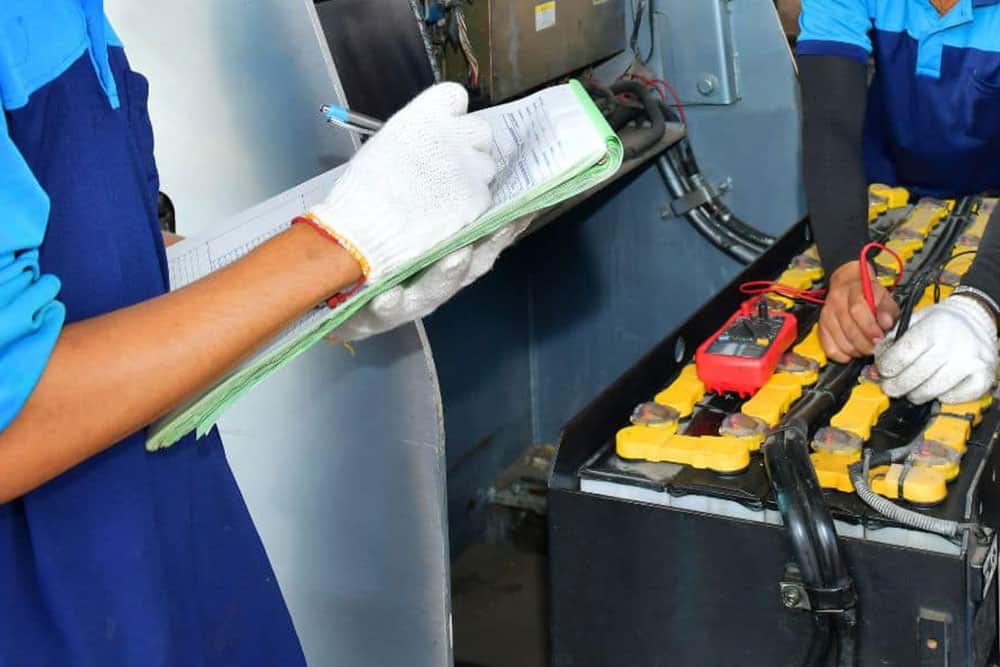
A fully charged flooded lead-acid cell should show a stable voltage of approximately 2.1 to 2.2 volts. Cell readings can help with battery evaluation, but they do not change the required nominal system voltage. The replacement battery and charger must match the truck’s approved voltage.

Step Three: Measure Battery Length, Width, and Height

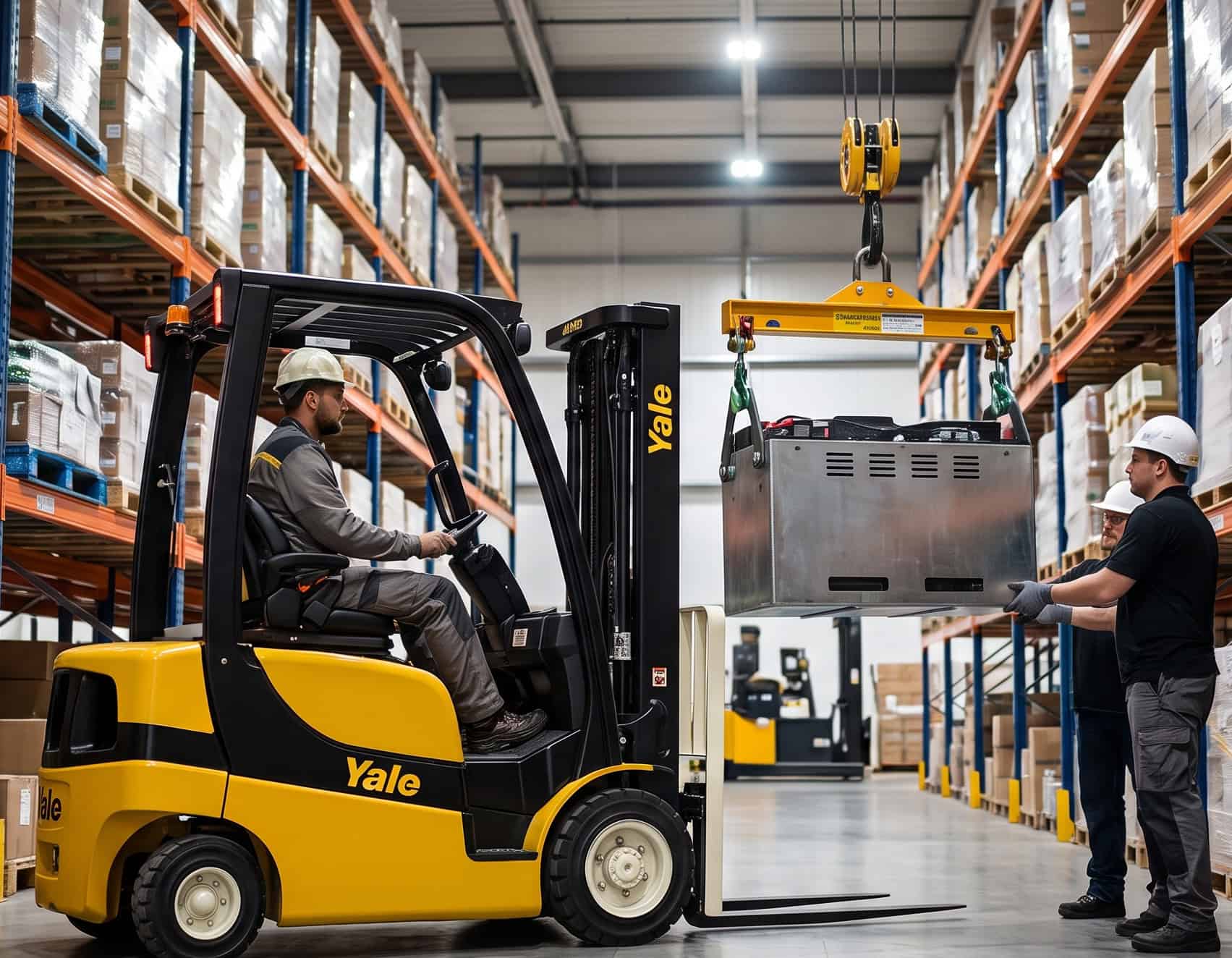
Measure the actual battery case instead of only measuring the open compartment area. Record the length, width, and height at the largest fixed points. Include details such as lifting eyes, handles, covers, cable exits, connector placement, and tray features that may affect installation clearance.

Measure the forklift battery compartment and available vertical space as well. A battery that is slightly oversized may not sit correctly, while excessive space can affect restraints and positioning. Confirm all measurements against forklift specifications before shipment.

Step Four: Match the Required Battery Weight

In many electric counterbalance forklifts, the industrial battery contributes to the truck’s designed counterweight. A battery outside the approved weight range can affect stability, rated capacity, steering, and braking behavior. Weight is therefore a fitment and safety specification, not just a shipping detail.

Use the truck data plate or manufacturer documentation to identify the allowed battery weight range. Do not assume that a physically smaller or lighter battery is acceptable because it fits inside the compartment.

Step Five: Choose Amp-Hour Capacity for the Workload

Amp-hour capacity affects how much energy the battery can deliver before charging. The right capacity depends on shift length, travel distance, load weight, attachment use, floor conditions, temperature, and available charging time. Cold environments and long travel routes can increase energy demand.

A higher-capacity battery is not automatically better. It must fit the approved case size and weight range, and the charger must be able to replenish it within the available window. Compare actual operating demand with the battery rating rather than selecting the largest number on a chart.

Step Six: Confirm Connector and Cable Configuration

The battery connector must match the forklift and charger in type, keying, and current rating. Record the connector color, housing style, contact size, cable gauge, cable length, and cable exit location from the battery case.

A battery may have the correct size and voltage but still be unusable if the cable cannot reach correctly or the connector does not match. Avoid modifying connectors or cables unless qualified personnel and equipment manufacturers approve the change.

Step Seven: Check Charger Compatibility Before Ordering

Confirm that the existing charger matches the new battery voltage, chemistry, and amp-hour range. A replacement with greater capacity may require a different charger output or a longer charging window. Lithium-ion batteries generally require an approved charging system and battery management communication.

We offer forklift battery chargers for multiple material handling applications. Reviewing the battery and charger together can prevent incomplete charging, excess heat, and installation delays.

Common Forklift Battery Sizing Mistakes

  • Using only the forklift brand without the exact model and serial information
  • Matching voltage while ignoring dimensions, weight, and amp-hour capacity
  • Measuring the compartment but not the existing battery and cable exits
  • Assuming a lighter battery is acceptable in a counterbalance forklift
  • Ordering a different chemistry without checking charger compatibility
  • Leaving out the shipping city, state, ZIP code, or country when requesting pricing

Use Green Power’s Model-Specific Battery Resource Tool

Our online forklift battery quote tool lets buyers select a forklift manufacturer and model, review available battery information, and submit application details. Include the shipping location, battery specifications, and any questions about fitment, capacity, pricing, or lead time.

Our own new forklift batteries are available across a broad voltage range and include an industry-leading 7-year warranty on most units. For a lower initial price, buyers can also compare refurbished forklift batteries sold as finished replacement products. We do not offer repair or reconditioning services for customer-owned batteries.

Request the Correct Battery Size for Your Electric Lift Truck

Send us the electric forklift manufacturer, model, serial number, battery voltage, amp-hour rating, dimensions, weight, connector details, charger information, and shipping location. Complete information helps us compare fitment, product options, price, warranty, and lead time without unnecessary delays.

Frequently Asked Questions

Can I choose a forklift battery using voltage alone?

No. Voltage must match, but the battery also needs the correct dimensions, weight, amp-hour capacity, connector, cable arrangement, chemistry, and charger compatibility.

Measure the battery case length, width, and height at the widest fixed points. Record cover height, lifting features, cable exits, connector position, and the compartment clearance.

The battery may be part of the electric forklift’s counterweight system. Using a battery outside the manufacturer’s approved weight range can affect stability and rated performance.

Possibly, but only when the case dimensions, weight, voltage, connector, and charger remain compatible. The truck and battery manufacturer specifications should be reviewed before changing capacity.
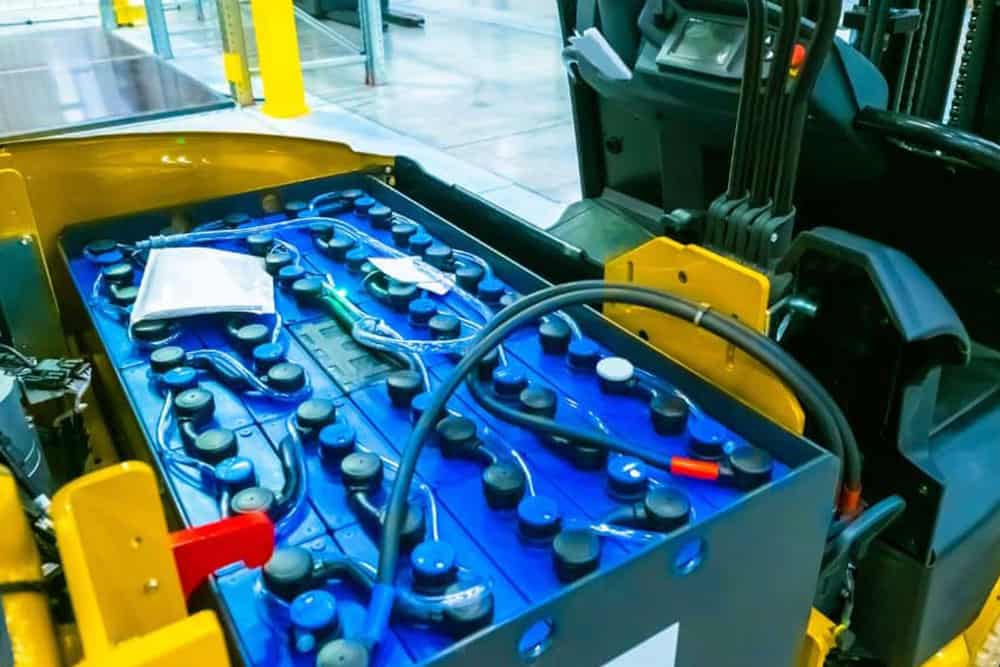
Forklift Battery Overheating: Causes, Warning Signs, and How to Respond

Forklift Battery Overheating: Causes, Warning Signs, and How to Respond

Quick Summary

Forklift battery overheating can happen because of overcharging, an incompatible charger, low electrolyte levels, limited ventilation, heavy discharge cycles, electrical resistance, or internal battery cell problems. Common warning signs include an unusually hot battery case, excessive gassing, strong sulfur odor, swelling, electrolyte leaks, charger errors, and reduced operating time. Stop charging or operating the battery, separate it from normal use, ventilate the area, and have trained personnel inspect the system before returning it to service.

Forklift battery overheating is a safety concern and a performance warning. Lead-acid batteries naturally warm during charging and heavy use, but excessive temperature can damage internal components, increase water loss, shorten runtime, and raise the risk of electrolyte exposure or hydrogen accumulation.

Green Power Forklift Batteries supplies batteries and charging solutions for 24V, 36V, 48V, and 80V electric forklifts. When a battery becomes unusually hot, first follow a controlled safety response, then identify the charging, maintenance, or internal condition behind the heat.

Common Causes of Forklift Battery Overheating

Overcharging or an Incorrect Charger

A charger with the wrong voltage, amp-hour range, or charging profile can send excessive current into the battery or continue charging beyond the required cycle. Repeated overcharging increases battery temperature, accelerates water loss, and can shorten battery life.

Green Power offers forklift battery chargers for lead-acid and lithium-ion applications. The charger should be selected as part of the battery system rather than treated as a universal accessory.

Low Electrolyte or Improper Watering

In flooded lead-acid batteries, low electrolyte levels expose the plates and reduce the battery’s ability to control heat. Adding too much water can also cause electrolyte overflow when the fluid expands during charging.

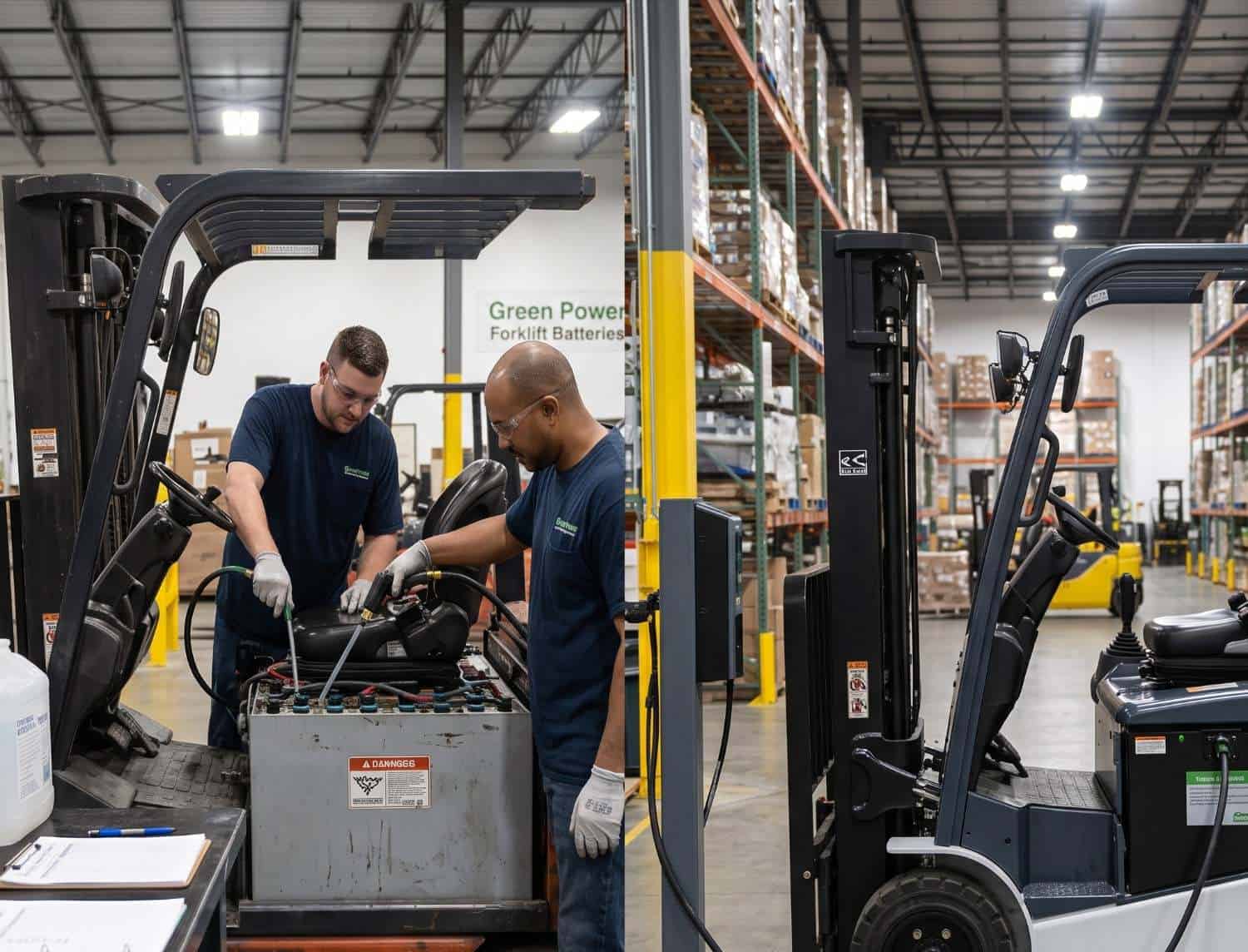
Check water levels after the battery has completed charging and cooled down. Add approved water only to the manufacturer’s recommended level.

A documented forklift battery maintenance schedule helps identify abnormal water use before the battery overheats repeatedly. A sudden need for frequent watering may indicate overcharging or elevated operating temperature.

Poor Ventilation in the Charging Area

Lead-acid batteries release hydrogen and oxygen during charging. Insufficient airflow can trap heat and gases around the battery area. Charging locations should have proper ventilation, remain free from ignition sources, and follow the facility’s battery safety procedures.

A suitable charging environment helps manage normal heat generation and reduces risks associated with gas accumulation.

Heavy Discharge and Insufficient Cooling Time

Extended operating hours, heavy loads, and repeated deep discharge cycles increase battery temperature. Charging immediately after intensive forklift use can add more heat before the battery has time to cool.

Monitor battery temperature, discharge levels, and operating patterns. Include adequate cooling periods in the charging schedule, especially for high-use fleets.

Corrosion, Loose Connections, or Damaged Cables

Electrical resistance converts energy into heat. Corroded terminals, loose inter-cell connections, worn connectors, and damaged cables can create localized hot spots, arcing, voltage drop, and charging problems. Trained personnel should inspect the battery only after it is disconnected and safe to handle.

Our informational page about forklift battery repair describes common fault areas. Green Power does not perform repair or reconditioning services for customer-owned batteries; we sell finished replacement products.

A Weak, Shorted, or Imbalanced Cell

A damaged or failing cell can cause the remaining cells and charger to operate incorrectly. A fully charged lead-acid battery should display a stable reading of approximately 2.1 to 2.2 volts per cell.

A cell that consistently shows lower voltage, produces unusual heat, or releases more gas than surrounding cells requires evaluation from qualified personnel. Internal cell problems can affect the performance of the entire battery.

Warning Signs of an Overheating Forklift Battery

  • The battery case, cables, connector, or terminal area is hotter than normal.
  • The battery produces excessive bubbling, visible vapor, or a strong sulfur or rotten-egg odor.
  • The case appears swollen, cracked, distorted, or wet with electrolyte.
  • The charger displays repeated faults, runs unusually long, or fails to reach normal completion.
  • Runtime drops, voltage falls rapidly under load, or the forklift loses power earlier in the shift.

Odor, swelling, leaking, and abnormal gassing are not normal. Stop the process and follow the facility’s battery incident procedure.

How to Respond to Forklift Battery Overheating

  • Stop operating or charging the battery. Turn off the charger before disconnecting whenever conditions allow safe access.
  • Keep untrained personnel away, remove ignition sources, and ventilate the charging area.
  • Use required personal protective equipment and follow the site’s electrolyte, eyewash, spill, and fire-response procedures.
  • Allow the battery to cool before trained personnel inspect electrolyte levels, connectors, cables, cell readings, and charger compatibility.
  • Remove the battery from service if the case is damaged, electrolyte is leaking, or cell behavior remains abnormal.

Review the full forklift battery safety guidance before establishing charging and handling procedures. Only trained and authorized personnel should change, charge, inspect, or handle industrial batteries.

Preventing Repeat Overheating

Preventing future heat issues requires proper charging, maintenance, and operating practices. Match the charger to the battery, complete recommended charge cycles, avoid frequent deep discharge, maintain correct electrolyte levels, clean battery surfaces, inspect cables and connectors, and keep the charging area properly ventilated.

Record charging duration, water usage, battery temperature, and runtime performance. These records can reveal developing issues before they interrupt daily operations.

An undersized or aging battery may also generate excessive heat when the workload repeatedly pushes it beyond its practical limits. Compare measured battery capacity with the original amp-hour rating and actual shift requirements. A controlled capacity test provides more useful information than relying on a single open-circuit voltage measurement.

When an Overheating Battery Should Be Replaced

Replacement is usually the safer business decision when the battery has recurring heat problems, damaged components, leaking electrolyte, a failing cell, or insufficient capacity for the shift. Green Power can compare new forklift batteries with lower-cost reconditioned inventory based on voltage, dimensions, weight, connector, capacity, warranty, lead time, and daily use.

Most new Green Power batteries include an industry-leading seven-year warranty. Share the forklift model, battery specifications, charger details, and operating hours for a quick quote and product match.

FAQs

Is it normal for a forklift battery to get warm while charging?

Some temperature rise is normal, but the case should not become excessively hot, swollen, leaking, or accompanied by strong odor or abnormal gassing. Compare the condition with normal charging records and stop the process when symptoms are unusual.

Yes. Low electrolyte can expose plate material and reduce the battery’s ability to manage heat. Check levels after charging and cooling, and add only approved water to the specified level.

No. Green Power does not offer repair or reconditioning services for customer-owned batteries. We supply new, reconditioned, and lithium-ion replacement batteries and invite buyers to browse our battery models for their electric forklift and workload.

When Should You Add Water To Your Green Power Forklift Battery?

When Should You Add Water To Your Green Power Forklift Battery?

Quick Summary

Water levels play an important role in the performance and lifespan of lead-acid forklift batteries. Adding water at the correct time helps maintain proper electrolyte levels, protects internal components, and contributes to reliable operation. Understanding the right watering schedule can reduce maintenance issues and help batteries operate more efficiently throughout their service life.

Understanding when do you add water to a forklift battery is an important part of maintaining electric forklifts and maximizing battery life, since improper watering practices can affect performance, reduce capacity, and contribute to premature wear that may shorten the useful lifespan of a battery.

Lead-acid forklift batteries depend on proper electrolyte levels to function correctly, making regular inspections and maintenance an essential part of daily operations. A consistent maintenance routine combined with quality battery solutions can help facilities reduce downtime and keep equipment operating more efficiently throughout demanding work schedules.

Why Water is Important in Lead-Acid Forklift Batteries

Lead-acid batteries contain an electrolyte solution that allows chemical reactions to take place during charging and discharging cycles, making proper fluid levels necessary for normal battery operation. As batteries are used and recharged, water gradually evaporates from the electrolyte and must be replenished periodically to maintain correct levels.

Insufficient water can expose battery plates and contribute to overheating, reduced capacity, and internal damage that may affect long-term performance. Maintaining proper electrolyte levels helps batteries operate as intended while reducing the likelihood of avoidable maintenance concerns that can interrupt productivity.

The Best Time to Add Water

Battery watering should generally take place after a battery has completed its charging cycle because electrolyte levels naturally rise during charging. Adding water before charging can cause overflow issues as the electrolyte expands, potentially creating unnecessary cleanup and maintenance concerns.

Waiting until the battery is fully charged allows operators to accurately assess fluid levels and add the appropriate amount of water where needed. This approach helps maintain proper electrolyte balance while reducing the risk of overfilling battery cells during routine maintenance procedures.

Signs a Forklift Battery May Need Water

Regular battery inspections can help identify low water levels before they become a larger problem, allowing maintenance teams to address issues early and maintain consistent battery performance. Visual checks remain one of the simplest ways to monitor battery condition and identify cells that require attention.

Battery plates becoming visible, declining runtime, increased operating temperatures, or noticeable changes in charging performance can indicate that water levels should be checked. These observations should be evaluated alongside a structured maintenance schedule rather than relying solely on performance changes to determine watering needs.

Common Watering Mistakes to Avoid

Many battery issues stem from improper watering practices rather than battery defects, making maintenance procedures an important part of preserving battery health. Small mistakes repeated over time can gradually affect performance and reduce the useful service life of a battery.

Overfilling cells, adding water before charging, using unsuitable water sources, or neglecting routine inspections can all contribute to maintenance challenges. Following manufacturer recommendations and maintaining consistent service intervals helps create a more effective battery management program.

How Proper Maintenance Extends Battery Life

Forklift batteries represent a significant investment for many operations, making routine maintenance one of the most practical ways to maximize long-term value. Watering, charging, cleaning, and inspections work together to help batteries perform reliably throughout daily operations.

Our new forklift batteries are designed for dependable performance, but maintenance practices still play a major role in achieving the longest possible service life. Combining quality batteries with consistent care can help facilities reduce replacement frequency and improve overall operational efficiency.

Creating a Consistent Battery Maintenance Routine

Battery maintenance becomes easier when inspections and watering schedules are incorporated into regular operating procedures rather than being handled only when problems arise. A structured approach helps maintenance teams identify potential issues before they affect equipment availability.

Facilities that establish routine battery checks can maintain more consistent performance while reducing unexpected downtime associated with preventable battery concerns. This proactive approach contributes to better fleet management and helps operations gain greater value from their battery investment over time.

Get More Value from Every Battery Investment

Battery performance depends on both product quality and proper maintenance practices throughout its service life. At Green Power Forklift Batteries, we help businesses find dependable battery solutions, including refurbished forklift batteries, backed by knowledgeable guidance and responsive customer service. Contact us today to explore options that fit your forklift fleet and operational goals.

FAQs

How frequently should a forklift battery be watered?

Watering frequency depends on usage, charging cycles, and operating conditions, though regular inspections help determine when attention is needed.

Should water be added before charging a forklift battery?

No, water is generally added after charging because electrolyte levels rise during the charging process.

Can overwatering damage a forklift battery?

Yes, excessive water can cause electrolyte overflow, increase maintenance concerns, and create conditions that affect battery operation.

Is A Refurbished Green Power Forklift Battery Charger Worth The Investment?

forklift-wall-charger

Quick Summary

Battery chargers play a critical role in forklift performance and battery lifespan. While new chargers remain a popular choice, refurbished units can offer meaningful savings when sourced from a trusted supplier. Understanding the benefits, limitations, and evaluation criteria can help businesses determine whether a refurbished charger is the right investment for their operations.

A refurbished forklift battery charger can be an attractive option for businesses looking to manage equipment costs without compromising essential charging capabilities. As forklift fleets continue operating across warehouses, manufacturing facilities, and distribution centers, reliable charging equipment remains a necessary part of maintaining productivity and battery health.

Purchasing decisions frequently involve balancing budget considerations with long-term operational needs, and charger selection is no exception. Understanding what refurbished equipment offers, how it is evaluated, and where it fits within a fleet strategy can help determine whether this type of investment aligns with operational goals.

What Is a Refurbished Forklift Battery Charger?

A refurbished charger is a previously used unit that has undergone inspection, testing, repair, and restoration before being returned to service. Rather than purchasing equipment in its original used condition, buyers receive a charger that has been evaluated to verify proper operation and charging performance.

The refurbishment process may include replacing worn components, correcting electrical issues, testing charging functions, and confirming compatibility requirements. This process allows chargers to continue serving forklift operations while extending the useful life of equipment that still has significant operational value.

Cost Savings are One of the Biggest Advantages

Budget management remains a priority for many businesses, particularly when operating multiple forklifts that require charging infrastructure. Purchasing new equipment across an entire facility can represent a significant expense, especially when multiple chargers must be replaced simultaneously.

Refurbished chargers generally cost less than comparable new models, making them an appealing option for organizations seeking dependable equipment while controlling capital expenditures. The resulting savings can allow facilities to allocate resources toward other operational priorities without sacrificing charging capability.

Refurbished Chargers Can Still Deliver Reliable Performance

Many buyers assume that previously used equipment automatically delivers lower performance, but charger reliability depends heavily on the quality of refurbishment and testing procedures. Equipment that has been properly inspected and restored can continue functioning effectively for years under normal operating conditions.

Performance expectations should focus on charger condition, compatibility, and supplier standards rather than age alone. A charger that has successfully passed inspection and operational testing may offer dependable service while meeting the charging demands of a busy forklift fleet.

Compatibility Matters Before Making a Purchase

New forklift batteries or refurbished forklift batteries require chargers that match specific voltage, capacity, and charging requirements. Selecting a charger without verifying compatibility can lead to charging inefficiencies, reduced battery performance, and unnecessary operational challenges that affect equipment availability.

Battery specifications should always be reviewed before purchasing any charger, whether new or refurbished. Matching charger capabilities to battery requirements helps maintain proper charging cycles and contributes to better battery performance throughout its service life.

Evaluating Long-Term Value Beyond Initial Price

Purchase price represents only one part of the overall investment calculation because equipment value extends far beyond the initial transaction. Reliability, expected lifespan, maintenance requirements, and supplier support all influence the total return on investment over time.

A refurbished charger that performs consistently and remains operational for years may generate excellent value relative to its purchase cost. Looking beyond upfront savings helps businesses make more informed decisions when comparing available charging solutions.

Choosing a Supplier Makes a Significant Difference

The quality of refurbishment varies depending on the standards used during inspection, repair, and testing. Working with an experienced supplier reduces uncertainty by helping buyers obtain equipment that has been thoroughly evaluated before being offered for sale.

We offer both new and refurbished forklift chargers as part of a broader range of forklift power solutions designed to meet varying operational needs. Combined with responsive customer service and a straightforward purchasing process, this approach helps customers identify charging equipment that aligns with their fleet requirements.

A Smarter Way to Manage Charging Equipment Costs

Green Power Forklift Batteries offers refurbished and new charger options for businesses seeking dependable charging solutions without unnecessary complexity. Contact us today to discuss charging equipment, battery compatibility, and cost-effective options that help keep forklifts operating efficiently.

FAQs

How much can a refurbished forklift battery charger save compared to a new charger?

Savings vary by model and condition, but refurbished chargers generally cost less than comparable new charging equipment.

Are refurbished forklift battery chargers tested before resale?

Yes, reputable suppliers inspect and test refurbished chargers to confirm proper functionality before offering them for sale.

How do I know if a charger is compatible with my forklift battery?

Battery voltage, capacity, and charging requirements should be reviewed to confirm compatibility before purchasing a charger.

Green Power Lithium-Ion Vs. Lead Acid Forklift Battery: Which Is Right For Your Fleet?

lithium-iron

Quick Summary

Forklift battery selection affects productivity, charging practices, maintenance requirements, and long-term operating costs. Lithium-ion and lead-acid batteries each offer distinct advantages depending on workload demands and facility operations. Understanding the differences between these technologies can help businesses choose a battery solution that aligns with fleet requirements and operational objectives.

Choosing between lithium ion forklift battery vs lead acid solutions can have a significant impact on fleet efficiency, maintenance schedules, and overall operating expenses. Battery technology influences how forklifts are charged, how long they remain productive during shifts, and the amount of attention required to keep equipment operating reliably.

Both battery types have strengths that make them suitable for different environments and workloads, which is why understanding their differences is important before making a purchasing decision. Factors such as runtime expectations, charging habits, facility operations, and budget considerations all play a role in determining the most practical option.

Understanding the Basics of Each Battery Type

Lead-acid batteries have powered electric forklifts for decades and remain a widely used option across many industries due to their proven performance and lower upfront cost. These batteries rely on electrolyte-filled cells that require routine maintenance and periodic watering to maintain proper operation throughout their service life.

Lithium-ion batteries use advanced battery technology that operates without the watering and maintenance requirements associated with traditional lead-acid systems. Their design allows for more flexible charging practices, making them an attractive option for facilities seeking a different approach to fleet power management.

Comparing Charging and Runtime Performance

Charging practices can significantly influence forklift productivity, particularly in operations where equipment is used across multiple shifts each day. The amount of time forklifts spend charging directly affects equipment availability and the ability to maintain efficient workflows throughout busy periods.

Lithium-ion batteries typically recharge faster and can accept opportunity charging during breaks or downtime, while lead-acid batteries generally follow a more structured charging schedule. Operations with demanding usage patterns may find these charging differences important when evaluating long-term fleet requirements.

Maintenance Requirements and Daily Operations

Battery maintenance represents an ongoing responsibility for many forklift operators, making service requirements an important factor during the selection process. Regular maintenance tasks can influence labor allocation, operational planning, and the amount of time equipment remains available for productive work.

Lead-acid batteries require periodic watering, cleaning, and inspection to maintain performance, while lithium-ion batteries operate with fewer routine maintenance demands. Facilities seeking a simplified maintenance process may view this distinction as a meaningful advantage when comparing battery technologies.

Evaluating Long-Term Cost Considerations

Purchase price is only one part of the overall battery investment, as operating expenses and maintenance requirements contribute to total ownership costs over time. Evaluating the complete financial picture helps businesses make more informed decisions based on long-term operational needs.

Lead-acid batteries generally feature a lower initial investment, making them appealing for organizations with budget-focused purchasing strategies. Lithium-ion batteries typically involve higher upfront costs but may offset some expenses through reduced maintenance requirements and operational efficiencies during their lifespan.

Matching the Right Battery to Your Fleet

Every forklift fleet operates under unique conditions that influence battery performance and value, making it important to evaluate daily usage patterns before selecting a battery type. Factors such as shift schedules, charging opportunities, facility layout, and equipment utilization all affect which solution may be the better fit.

Our battery lineup includes both traditional and advanced battery options designed to meet a wide range of operational requirements. Whether a fleet prioritizes affordability, maintenance simplicity, runtime flexibility, or long-term value, selecting the right battery begins with understanding how equipment is used each day.

Making a More Informed Battery Decision

Battery technology continues to evolve as businesses seek ways to improve productivity while managing operational expenses and equipment performance. Understanding the advantages and limitations of each battery type creates a stronger foundation for making decisions that align with current and future fleet needs.

Our new forklift batteries, reconditioned batteries, and lithium-Ion batteries for forklifts give businesses flexibility when evaluating replacement options for their equipment. Access to multiple battery categories allows operations to choose a solution that reflects workload demands, budget objectives, and long-term fleet planning strategies.

Find the Battery Solution that Fits Your Operation

Battery selection should align with operational goals, equipment demands, and long-term budget considerations. Green Power Forklift Batteries offers quality battery options, responsive customer service, and a straightforward purchasing experience to help businesses identify the right solution for their fleets. Contact us today to discuss your forklift battery needs.

FAQs

Which battery lasts longer in a forklift?

Battery lifespan depends on usage, maintenance practices, charging habits, and operating conditions rather than battery type alone.

Are lithium-ion forklift batteries maintenance-free?

Lithium-ion batteries require significantly less routine maintenance because they do not need regular watering or electrolyte checks.

Why do some fleets still use lead-acid batteries?

Lead-acid batteries remain popular because of lower upfront costs and a long history of reliable forklift performance.


Green Power Forklift Battery For Yale Forklifts: Ensuring Compatibility And Power

warehouse-worker-operating

Quick Summary

A Yale forklift battery must provide the correct fit, power output, and performance characteristics to support daily operations. Battery compatibility affects equipment efficiency, runtime, and overall productivity, making proper selection an important part of fleet management. Understanding key considerations can help businesses choose a battery solution that delivers dependable performance while supporting long-term operational goals.

A dependable Yale forklift battery is essential for maintaining productivity in warehouses, manufacturing facilities, and distribution centers where electric forklifts play a critical role in daily operations. Battery performance influences equipment uptime, charging schedules, operating efficiency, and the ability to meet workflow demands throughout the workday.

Selecting a replacement battery involves more than choosing a unit with the correct voltage. Compatibility with the forklift, operational requirements, charging equipment, and long-term performance expectations should all be considered. Understanding these factors can help businesses make informed decisions that support both equipment reliability and operational efficiency.

Why Battery Compatibility Matters

Forklift batteries are designed to work within specific equipment parameters, making compatibility one of the most important considerations during the replacement process. An improperly matched battery may affect forklift performance, reduce efficiency, or create operational challenges that interfere with daily productivity.

Battery dimensions, weight, voltage, and capacity must align with the forklift’s requirements to ensure safe and effective operation. Verifying these specifications before purchasing a replacement battery helps prevent issues while supporting dependable equipment performance.

Matching the Correct Voltage and Capacity

Voltage is one of the primary factors that determine whether a battery can operate correctly within a forklift. Yale forklifts may use different voltage configurations depending on the model and intended application, making accurate specification matching essential.

Capacity is equally important because it influences how long a forklift can operate between charging sessions. Selecting a battery with appropriate capacity helps ensure that equipment can meet operational demands without frequent interruptions for charging or battery replacement.

Battery Fit Influences Performance and Safety

Physical compatibility extends beyond electrical specifications because battery dimensions and weight affect how the forklift operates. Batteries are designed to fit securely within designated compartments while contributing to equipment stability during operation.

A properly fitted battery supports safe handling, consistent performance, and compliance with equipment requirements. Confirming compartment measurements before ordering a replacement battery helps avoid installation challenges and unnecessary delays.

Supporting Productivity Through Reliable Power

Forklift productivity depends heavily on battery performance because equipment cannot operate effectively without a dependable power source. Batteries that deliver consistent power output help forklifts maintain operational efficiency throughout demanding work schedules.

Reliable batteries also help reduce unexpected downtime, allowing operators to focus on completing tasks rather than managing equipment interruptions. Consistent performance contributes to smoother workflows and better utilization of material handling equipment across the facility.

New and Reconditioned Battery Options

Different operations often have different budget requirements and performance priorities, making flexibility an important part of battery selection. Some facilities prefer new batteries for maximum service life, while others seek cost-conscious alternatives that still provide dependable performance.

Green Power Forklift Batteries offers both new and reconditioned battery options for Yale forklifts, allowing businesses to choose solutions that align with operational goals and financial considerations. This flexibility helps fleet managers identify batteries that fit their specific requirements without limiting available options.

Charging Equipment Plays an Important Role

Battery performance is closely connected to charging practices and charger compatibility. Even a high-quality battery may experience reduced efficiency if paired with unsuitable charging equipment or inconsistent charging procedures.

Selecting compatible chargers and following recommended charging practices helps maintain battery health while supporting long-term performance. Coordinating battery and charger selection creates a more effective power management strategy for the entire fleet.

Simplifying the Battery Replacement Process

Replacing a forklift battery can seem complicated when evaluating specifications, compatibility requirements, and available product options. Working with an experienced supplier can simplify the process by helping identify the correct battery for the specific forklift application.

Our team helps customers evaluate battery requirements and select solutions that match both equipment specifications and operational needs. This support streamlines purchasing decisions while helping businesses avoid compatibility concerns that could affect performance.

Power Your Yale Forklift With Confidence

Choosing the right Yale forklift batteries help ensure reliable performance, proper equipment compatibility, and efficient daily operations. At Green Power Forklift Batteries, we provide new and reconditioned battery solutions backed by responsive customer service and a straightforward purchasing experience. Contact us today to discuss battery options that support your fleet’s productivity and long-term goals.

FAQs

Why is battery capacity important for forklift operations?

Capacity determines how long a forklift can operate before requiring recharging, making it a key factor in productivity and uptime.

Should I replace my charger when replacing a forklift battery?

Not always, but charger compatibility should be verified to ensure it meets the charging requirements of the replacement battery.

Can a reconditioned battery be used in a Yale forklift?

Yes, a properly reconditioned battery can provide dependable performance when it meets the forklift’s compatibility requirements.

Designing An Efficient Green Power Forklift Battery Charging Station

efficient-green-power

Quick Summary

A well-designed forklift charging station contributes to safer operations, smoother workflows, and better battery management. Charging area placement, ventilation, traffic flow, equipment accessibility, and future expansion plans all influence overall efficiency. Understanding the key elements of charging station design can help facilities reduce operational interruptions and create a more productive working environment.

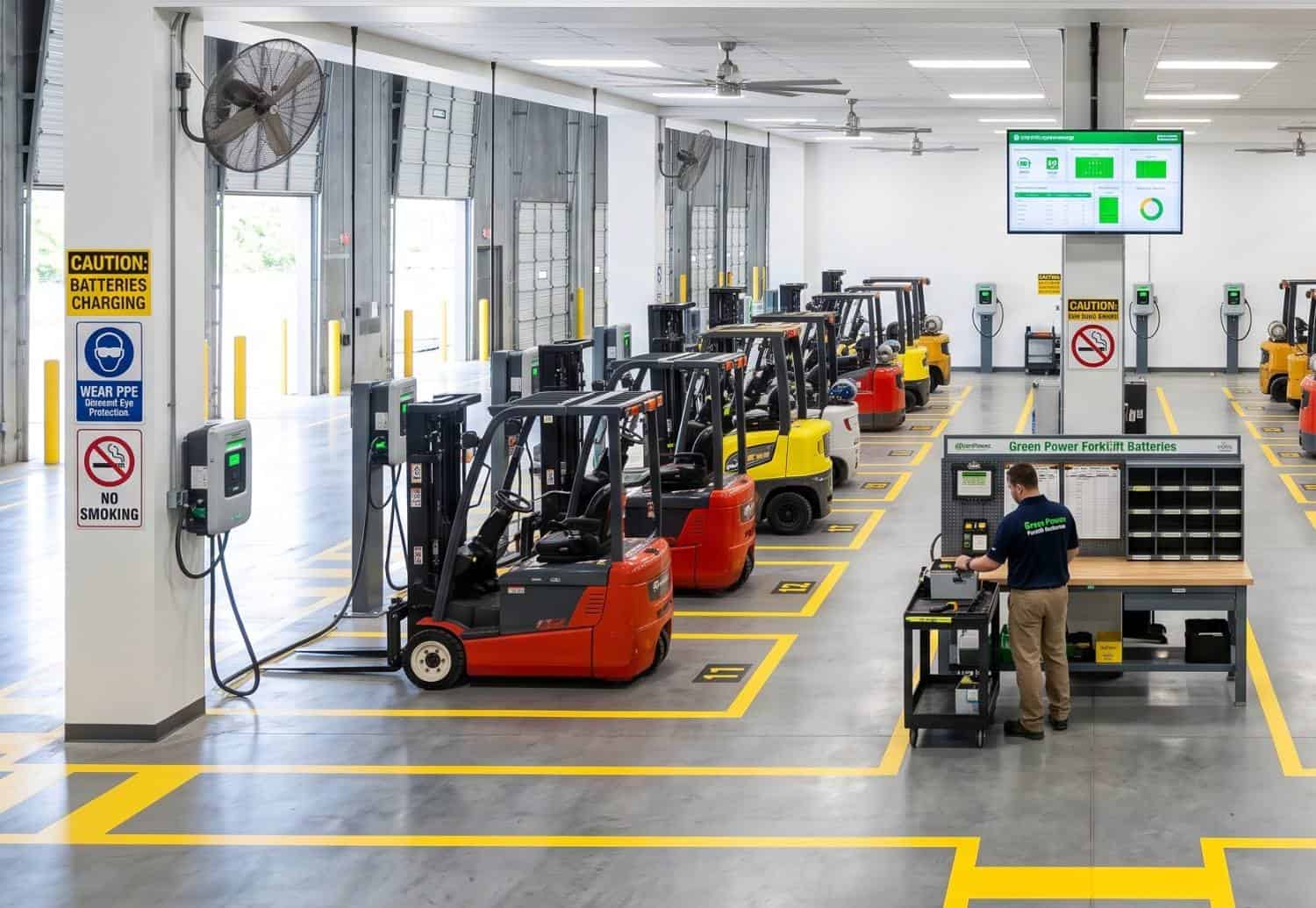
Creating an effective forklift charging station layout involves more than simply assigning a space for battery charging, as the design of the area can influence safety, workflow efficiency, battery performance, and the movement of personnel and equipment throughout a facility. A thoughtful layout helps reduce unnecessary travel distances while making charging procedures easier to manage.

Warehouse operations, manufacturing facilities, and distribution centers all have unique requirements that influence charging station design, making it important to evaluate both current and future operational needs. Proper planning can help facilities create an organized charging environment that contributes to reliable forklift performance and long-term battery management success.

Start With Operational Workflow

Charging stations function as part of a larger operational system, which means their location should complement daily workflows rather than create obstacles that slow productivity. Placing charging equipment too far from active work zones can increase travel time and reduce the amount of time forklifts remain available for productive tasks.

Facilities should evaluate traffic patterns, equipment movement, and shift schedules when selecting a charging station location so that charging activities integrate naturally into existing operations. Positioning charging areas near key operating zones can help reduce congestion while improving overall workflow efficiency throughout the facility.

Allocate Sufficient Space for Equipment Access

Battery charging areas require enough space to allow forklifts to enter, park, charge, and exit safely without interfering with surrounding operations. Restricted spaces can create bottlenecks that increase the likelihood of accidental contact with equipment, infrastructure, or other vehicles operating nearby.

Adequate spacing also allows maintenance personnel to inspect batteries, access chargers, and perform routine service activities without unnecessary difficulty. A charging station that accommodates both equipment movement and maintenance tasks creates a more organized environment that contributes to smoother daily operations.

Prioritize Safety Throughout the Design

Safety should remain a primary consideration when designing any forklift battery charging area because charging activities involve electrical equipment, battery systems, and regular vehicle movement. A well-planned layout helps reduce hazards while creating a more controlled environment for employees working near charging stations.

Clear walkways, designated charging zones, visible signage, and well-defined traffic paths can help separate pedestrians from moving equipment while reducing confusion within the charging area. Establishing these safety measures as part of the initial design process can contribute to more consistent operational practices.

Consider Ventilation Requirements

Battery charging generates heat and, in some cases, gases that should be managed through appropriate ventilation strategies. Facilities that overlook airflow considerations may encounter conditions that affect employee comfort and the overall functionality of the charging area.

Ventilation planning should account for the number of batteries being charged, facility design characteristics, and environmental conditions within the building. Creating adequate airflow helps maintain a more suitable charging environment while contributing to effective battery management practices.

Plan for Charger Placement and Accessibility

Charger placement can significantly influence the usability of a charging station because poorly positioned equipment may create unnecessary obstacles or increase the complexity of charging procedures. Strategic placement helps operators connect equipment efficiently while maintaining orderly traffic patterns.

Forklift battery chargers are available in both new and reconditioned options, making charger selection an important component of a complete battery management strategy. Matching charger placement with operational needs allows facilities to create a charging station that balances accessibility with efficient use of available space.

Design for Future Growth

Facility requirements rarely remain static, particularly in industries experiencing growth, seasonal demand fluctuations, or operational changes. Charging stations that only address current needs may require significant modifications if forklift fleets expand in the future.

Planning for additional charging positions, charger capacity, and equipment access during the design stage can help facilities adapt more easily to changing requirements. This forward-looking approach helps avoid costly redesigns while creating flexibility for future operational developments.

Create an Organized Battery Management System

Charging station efficiency depends not only on physical layout but also on the processes used to manage batteries throughout their service life. Organized battery management practices help reduce confusion and contribute to more consistent equipment performance across the fleet.

Labeling systems, maintenance schedules, inspection procedures, and charging protocols can all help facilities maintain better control over battery operations. Integrating these processes into the charging station environment creates a more structured approach to battery management and equipment reliability.

Support Maintenance and Inspection Activities

Routine maintenance plays an important role in battery performance, making it beneficial to incorporate inspection and service considerations into charging station design. Areas that allow easy access to batteries and chargers can simplify maintenance activities while helping personnel identify potential issues earlier.

Our new forklift batteries and reconditioned battery options are designed to deliver dependable performance, but regular inspections remain an important part of maximizing battery value. Creating space for maintenance activities within the charging station helps facilities maintain a proactive approach to battery care.

Reduce Congestion During Peak Operating Periods

Facilities operating multiple forklifts across different shifts may experience increased activity around charging stations during certain periods of the day. Congestion can slow operations and create inefficiencies if charging areas are not designed to accommodate peak demand.

Evaluating charging schedules and fleet utilization patterns can help determine the number of charging positions needed to maintain efficient operations. A layout that accounts for high-traffic periods helps reduce delays while improving the overall flow of equipment through the charging area.

Align Charging Infrastructure With Battery Strategy

Battery technology influences charging requirements, making it important to align charging infrastructure with the battery solutions used throughout the fleet. Lead-acid batteries, reconditioned batteries, and lithium-ion batteries may each involve different operational considerations that affect charging station design.

Our broad range of battery solutions allows facilities to select equipment that matches operational requirements while maintaining flexibility as needs evolve. Coordinating battery selection with charging infrastructure planning creates a more effective foundation for long-term fleet management.

Build a Charging Area that Works as Hard as Your Fleet

An efficient charging station contributes to better battery management, safer operations, and improved productivity throughout the facility. At Green Power Forklift Batteries, we help businesses find battery and charger solutions that align with operational goals while simplifying the purchasing process. Contact us today to discuss battery, charger, and charging station requirements for your fleet.

FAQs

Why is the charging station layout important for forklift operations?

A well-planned layout improves safety, reduces congestion, and helps maintain efficient equipment movement throughout the facility.

How much space should a forklift charging station have?

Space requirements depend on fleet size, charger quantity, battery handling procedures, and overall facility design.

Do forklift charging stations require ventilation?

Yes, ventilation helps manage heat and maintain suitable conditions during battery charging activities.

Should future fleet growth be considered during charging station design?

Planning for expansion can simplify future upgrades and help facilities adapt to changing operational requirements.

Can opportunity charging reduce the space needed in a charging station?

Opportunity charging allows batteries to receive short charging sessions during breaks, which can reduce the number of spare batteries required and simplify a forklift charging station layout. This approach works best when batteries and chargers are compatible with frequent charging cycles.

How can battery maintenance affect charging station efficiency?

Regular maintenance helps batteries charge correctly, reach full capacity, and operate safely throughout their lifespan. Neglected batteries may require longer charging times, create workflow disruptions, and reduce the overall efficiency of the charging station.

Benefits Of Using Green Power Batteries As Your Toyota Forklift Battery

wholesale-logistic-loading

Quick Summary

Selecting the right battery has a direct impact on forklift performance, operating costs, and productivity. Battery quality, service responsiveness, warranty coverage, and replacement availability all influence long-term value. Understanding the advantages of working with a battery supplier that prioritizes efficiency and customer experience can help fleets make smarter purchasing decisions.

A dependable Toyota forklift battery plays an important role in maintaining productivity across warehouses, manufacturing facilities, and distribution centers where equipment performance directly affects daily operations. Battery reliability influences run time, charging efficiency, maintenance requirements, and the overall cost of operating an electric forklift fleet.

Battery selection involves more than matching voltage and capacity specifications because factors such as lead times, warranty coverage, customer service, and purchasing convenience can significantly affect long-term ownership costs. Working with a supplier that simplifies these areas can make battery replacement decisions much easier while helping fleets stay operational.

Competitive Pricing Helps Control Operating Costs

Battery replacement represents a substantial investment for any fleet, particularly when multiple forklifts require new power sources at the same time. Cost considerations frequently influence purchasing decisions because managers must balance equipment performance with budget requirements while keeping operations running efficiently.

Our battery options are designed to deliver strong value without sacrificing quality, allowing businesses to manage replacement expenses more effectively while still obtaining dependable power solutions. This combination of affordability and performance makes it easier to maintain equipment readiness without placing unnecessary strain on operational budgets.

Faster Lead Times Reduce Equipment Downtime

Forklift downtime can quickly create workflow disruptions that affect productivity, order fulfillment, and facility efficiency. Waiting extended periods for replacement batteries may leave equipment unavailable when it is needed most, creating avoidable operational challenges throughout the facility.

Our streamlined ordering process and inventory capabilities help shorten lead times so fleets can receive replacement batteries faster. Reducing delays allows equipment to return to service sooner, helping managers maintain productivity targets and avoid disruptions that can impact daily operations.

Warranty Coverage Adds Long-Term Value

Battery purchases should be evaluated based on more than initial acquisition costs because long-term value depends heavily on reliability and manufacturer backing. Strong warranty protection adds confidence by helping buyers understand what coverage is available should issues arise during the battery’s service life.

Our new forklift batteries include competitive warranty coverage that reflects confidence in product quality and performance. This additional protection helps businesses make purchasing decisions with greater certainty while strengthening the overall value of their battery investment.

Simple Ordering Makes Fleet Management Easier

Procurement processes can become frustrating when obtaining replacement batteries involves complicated quoting procedures, extended communication cycles, or unnecessary administrative delays. Purchasing decisions are easier when suppliers simplify the path from inquiry to completed order.

Our approach focuses on making quotes and purchases straightforward so customers can quickly identify the right battery solution for their equipment. A streamlined experience reduces administrative burdens and allows fleet managers to spend more time focusing on operations rather than navigating lengthy purchasing procedures.

Customer Service Creates a Better Ownership Experience

Battery performance remains important after installation because questions related to maintenance, charging practices, compatibility, and future replacements may arise throughout the product lifecycle. Access to knowledgeable assistance can make a meaningful difference when these situations occur.

Our commitment to customer service centers on responsiveness, industry experience, and practical guidance that helps customers make informed decisions. This focus on support strengthens the ownership experience and helps build long-term relationships based on trust, communication, and dependable assistance.

Flexible Battery Solutions for Different Fleet Needs

Facilities rarely operate under identical conditions, which means battery requirements can vary significantly depending on equipment usage, operating schedules, and budget considerations. Some fleets prioritize new batteries while others seek cost-conscious alternatives that still meet performance expectations.

Our product lineup includes new batteries, reconditioned batteries, lithium-ion options, and charging equipment that allow businesses to select solutions aligned with their operational requirements. This flexibility helps fleets find products that match both current needs and future growth objectives.

Power Your Fleet With Confidence and Simplicity

Green Power Forklift Batteries combine competitive pricing, responsive customer service, dependable warranty coverage, and efficient ordering processes to help businesses find the right Toyota forklift batteries for their operations. Contact us today to discuss battery options that fit your fleet’s performance goals and budget requirements.

FAQs

How long does a Toyota forklift battery typically last?

Battery lifespan varies by usage, maintenance, charging practices, and operating conditions, though many batteries remain functional for several years.

Can reconditioned batteries work in Toyota forklifts?

Yes, properly reconditioned batteries can power compatible Toyota forklifts while offering a cost-conscious alternative to new batteries.

What factors should be considered when replacing a forklift battery?

Voltage, compartment dimensions, capacity requirements, usage patterns, warranty coverage, and supplier service should all be evaluated.

5 Benefits Of Choosing Green Power Forklift Batteries As Your Yale Forklift Batteries

5 benefits of choosing GPFP for your Yale forklift

Quick Summary

Battery selection plays a major role in forklift performance, operating costs, and equipment reliability. The right solution can improve runtime, simplify maintenance, and help operations manage productivity goals more effectively. Understanding the advantages of quality replacement batteries highlights why dependable power sources remain an important part of efficient material handling operations.

Businesses that rely on Yale forklift batteries need dependable power solutions that can keep equipment moving throughout demanding shifts while helping control operating expenses over time. Battery performance influences productivity, charging schedules, maintenance requirements, and the overall lifespan of electric forklifts, making battery selection an important operational decision.

Different battery technologies and replacement options are available for Yale forklifts, ranging from traditional lead-acid models to advanced lithium-ion systems designed for high-performance environments. Access to quality replacement batteries, knowledgeable guidance, and straightforward purchasing options can help operations identify a solution that aligns with daily workload requirements.

Cost-Effective Solutions Without Compromising Performance

Forklift battery replacement can represent a significant investment, especially for facilities operating multiple electric trucks across warehouses, manufacturing plants, or distribution centers. Selecting a battery supplier that focuses on value helps businesses control costs while still obtaining dependable power for daily operations.

Our battery options are designed to balance affordability and performance, giving operations access to replacement solutions that meet equipment requirements without unnecessary spending. This approach allows businesses to allocate resources efficiently while maintaining productivity throughout demanding work schedules.

A Wide Range of Battery Options for Different Operations

No two facilities operate under exactly the same conditions, which means battery requirements can vary based on shift length, workload intensity, charging practices, and equipment specifications. A broad product selection makes it easier to identify a battery solution that matches operational goals instead of settling for a one-size-fits-all approach.

Our lineup includes new forklift batteries, reconditioned batteries, lithium-ion batteries, and battery chargers, creating flexibility for organizations with different budgets and performance expectations. This variety allows facilities to choose an option that aligns with current needs while maintaining room for future growth.

Faster Availability and Streamlined Ordering

Equipment downtime can affect productivity, scheduling, and customer commitments, making battery replacement timelines an important consideration for forklift operators. Long lead times and complicated purchasing processes can create unnecessary delays when batteries reach the end of their service life.

Our focus on a simple quote and ordering process helps businesses move from inquiry to purchase with fewer obstacles, making battery replacement more straightforward. Combined with competitive lead times, this approach helps reduce disruptions and allows operations to return equipment to service more quickly.

Reliable Power Backed by Industry Experience

Battery quality becomes increasingly important when forklifts operate through demanding shifts and challenging workloads that require consistent performance. Dependable power contributes to smoother operations, reduced interruptions, and greater confidence that equipment will remain productive throughout the workday.

Our experience in forklift battery solutions and battery reconditioning contributes valuable insight when helping customers evaluate replacement options. This knowledge allows businesses to make informed decisions based on equipment requirements, operating conditions, and long-term performance objectives.

Sustainable Solutions that Extend Battery Value

Many organizations are looking for practical ways to reduce waste while managing equipment expenses more effectively, and battery lifecycle management plays an important role in those efforts. Reconditioning and recycling programs create opportunities to maximize battery value while limiting unnecessary disposal.

Our battery recycling and core management programs help businesses handle used batteries responsibly, while reconditioned battery options offer a lower-cost alternative for certain applications. These solutions can help extend battery usefulness and contribute to broader sustainability goals within material handling operations.

A Smarter Way to Power Your Fleet

Reliable forklift performance starts with dependable battery solutions that match operational demands, budget considerations, and long-term productivity goals. At Green Power Forklift Batteries, we combine quality battery options, responsive customer service, and a straightforward purchasing experience to help businesses find the right fit for their equipment. Contact us today to power your fleet with dependable battery solutions.

FAQs

What types of batteries are available for Yale forklifts?

Options include lead-acid batteries, reconditioned batteries, lithium-ion batteries, and specialized solutions designed for various operational requirements.

Why are lithium-ion forklift batteries becoming more popular?

Lithium-ion batteries offer fast charging, maintenance-free operation, and consistent power output throughout the discharge cycle.

Can reconditioned forklift batteries be a good investment?

Reconditioned batteries can reduce replacement costs while supplying dependable performance for suitable applications and operating conditions.

What should be considered when replacing a forklift battery?

Battery size, voltage, capacity requirements, operating schedules, charging practices, and budget all influence the best replacement choice.

Understanding Green Power Battery Specifications For Your Schaeff Forklifts

Understanding Green Power Battery Specifications For Your Schaeff Forklifts

Quick Summary

Schaeff forklift batteries must match specific voltage, capacity, and configuration requirements to ensure proper performance and safe operation. Key factors include amp-hour rating, charger compatibility, tray dimensions, and battery chemistry, all of which directly impact runtime and charging behavior. Incorrect specifications can lead to reduced efficiency, charging issues, or equipment downtime. Lead-acid and lithium-Ion batteries for forklifts each serve different operational needs depending on usage intensity and maintenance expectations. Regular evaluation of battery fitment and charging setup helps maintain consistent fleet performance. Green Power Forklift Batteries provides battery options designed to align with Schaeff forklift requirements and operational demands.


Electric forklifts rely on consistent power delivery to maintain productivity across warehouses, manufacturing facilities, and distribution centers. This is especially true when selecting Schaeff forklift batteries, where battery specifications directly influence runtime, charging behavior, and operational efficiency.

Many facilities replace batteries based only on voltage requirements, but battery selection involves much more than matching a 24V, 36V, 48V, or 80V system. Capacity ratings, charger compatibility, operating schedules, and battery dimensions all impact how forklifts perform throughout the day.

Businesses evaluating forklift batteries for Schaeff forklifts should understand how these specifications affect both short-term performance and long-term operational stability.

Why Battery Specifications Matter in Schaeff Forklifts

Battery specifications determine how efficiently a forklift handles continuous workloads. Incorrect battery sizing can lead to charging delays, inconsistent lifting power, and reduced runtime between shifts.

Amp-hour ratings affect how long forklifts operate before charging becomes necessary. Higher-capacity batteries generally support longer run times, especially in demanding multi-shift operations. However, oversized batteries can create charging inefficiencies if chargers are not configured correctly.

Tray dimensions and connector configurations also matter. A battery that does not align properly with the compartment can create installation issues, poor electrical contact, or unnecessary strain on connectors and cables.

Understanding Voltage Configurations

Different Schaeff lift trucks operate using different voltage systems depending on equipment size and workload requirements.

Smaller pallet jacks and warehouse equipment commonly operate on 24V systems. Medium-duty reach trucks may use 36V or 48V batteries, while larger counterbalance forklifts often require 80V configurations for higher lifting demands.

Selecting the wrong voltage affects more than forklift performance. It can also damage electrical systems or create charging problems. Facilities installing new forklift batteries should confirm voltage requirements, connector styles, and charger compatibility before replacement.

How Amp-Hour Capacity Impacts Runtime

Amp-hour capacity determines how much energy the battery stores during operation. Higher amp-hour ratings generally provide longer operational cycles before charging is required.

Facilities operating across multiple shifts often require batteries with larger capacities to minimize interruptions during peak productivity periods. Lower-capacity batteries may work well for lighter workloads but can create operational slowdowns when equipment demand increases.

Battery capacity should match actual usage patterns rather than selecting the largest available option. Oversized batteries may increase charging times and place unnecessary strain on charging infrastructure.

Charging Compatibility Is Often Overlooked

Battery charging systems must align with voltage and amp-hour specifications. Mismatched chargers can create incomplete charging cycles, overheating, or reduced battery efficiency over time.

Operations using opportunity charging should confirm whether their equipment supports partial charging throughout the day. Many facilities transitioning to lithium-Ion batteries for forklifts choose this setup because it allows faster charging without requiring extended cooling periods between shifts.

Battery Chemistry Changes Daily Operations

Lead-acid and lithium-ion batteries support forklift operations differently. Lead-acid batteries remain widely used because they are familiar, cost-effective, and suitable for many single-shift operations.

Lithium-ion systems reduce watering requirements, shorten charging times, and maintain more stable voltage output during discharge cycles. This makes them useful for facilities operating continuous or high-demand schedules.

Keep Your Fleet Running Without Charging Delays

Battery issues rarely improve on their own. If your Schaeff forklifts are experiencing runtime inconsistencies, charging slowdowns, or power interruptions, now is the time to evaluate your battery setup.

Contact Green Power Forklift Batteries today to discuss replacement options, charger compatibility, and battery configurations designed to keep your Schaeff forklift fleet operating without unnecessary downtime.

FAQs

How do I know which battery voltage my Schaeff forklift requires?

The required voltage depends on the forklift model and workload. Common configurations include 24V, 36V, 48V, and 80V systems. Equipment documentation or battery compartment labels usually identify the correct voltage.

Can lithium-ion batteries replace lead-acid batteries in Schaeff forklifts?

In many cases, yes. However, charger compatibility, tray dimensions, and electrical system requirements should always be verified before converting to lithium-ion systems.

Why does amp-hour capacity matter in forklift batteries?

Amp-hour capacity affects runtime between charging cycles. Higher capacities support longer operation periods, especially in multi-shift environments.