Forklift Battery Warranty Explained: What’s Covered, What Voids It, and How Green Power Compares

Quick Summary

A forklift battery warranty determines how much protection your fleet has against premature capacity loss, cell failure, and manufacturing defects. Coverage terms vary widely between suppliers, and the fine print often matters more than the number of years printed on the paperwork. Proper charging habits, routine watering, and correct voltage testing all play a role in keeping coverage valid. Understanding these terms before you buy helps you avoid unexpected repair costs and choose a battery backed by real, honored protection.

A strong forklift battery warranty is one of the most overlooked factors in a battery purchase decision, yet it has an outsized impact on your total cost of ownership. Two batteries can look identical on a spec sheet and still leave you with very different levels of financial protection if one manufacturer honors five years of coverage and another honors seven.

Here at Green Power Forklift Batteries, we built our warranty program around a simple idea: if we stand behind our products, our customers should never have to guess what happens when something goes wrong.

This guide walks through what a typical forklift battery warranty includes, the most common reasons a claim gets denied, and how our coverage compares to what you’ll find elsewhere in the industry.

What a Forklift Battery Warranty Covers

Most warranties on industrial batteries are prorated, meaning the percentage of the repair or replacement cost the manufacturer covers decreases as the battery ages. A strong warranty will typically address:

  • Manufacturing defects in the plates, jars, or covers
  • Premature capacity loss that falls outside normal wear patterns
  • Cell failure that occurs when the battery has been maintained and charged correctly
  • Structural issues with the case that develop under normal handling

Green Power backs most of our new batteries with a 7-year warranty, one of the strongest terms available for lead-acid forklift power in the industry. That length of coverage reflects the quality control we apply during manufacturing and the testing every unit goes through before it leaves our facility.

What Voids a Forklift Battery Warranty

Warranty denials are rarely about the battery itself. In most cases, they come down to how the battery was maintained in the field. Common causes include:

  • Improper charging. Using a charger that doesn’t match the battery’s voltage and amp-hour rating, or interrupting charge cycles repeatedly, accelerates plate degradation.
  • Water neglect. Lead-acid batteries need regular watering to keep the plates submerged in electrolyte. Letting water levels drop exposes the plates to air and causes irreversible damage.
  • Deep discharging below recommended limits. Running a battery past 80% depth of discharge on a routine basis shortens its usable life and can void coverage.
  • Physical damage. Cracked cases, damaged terminals, or evidence of impact from forklift operation are typically excluded from warranty repair.
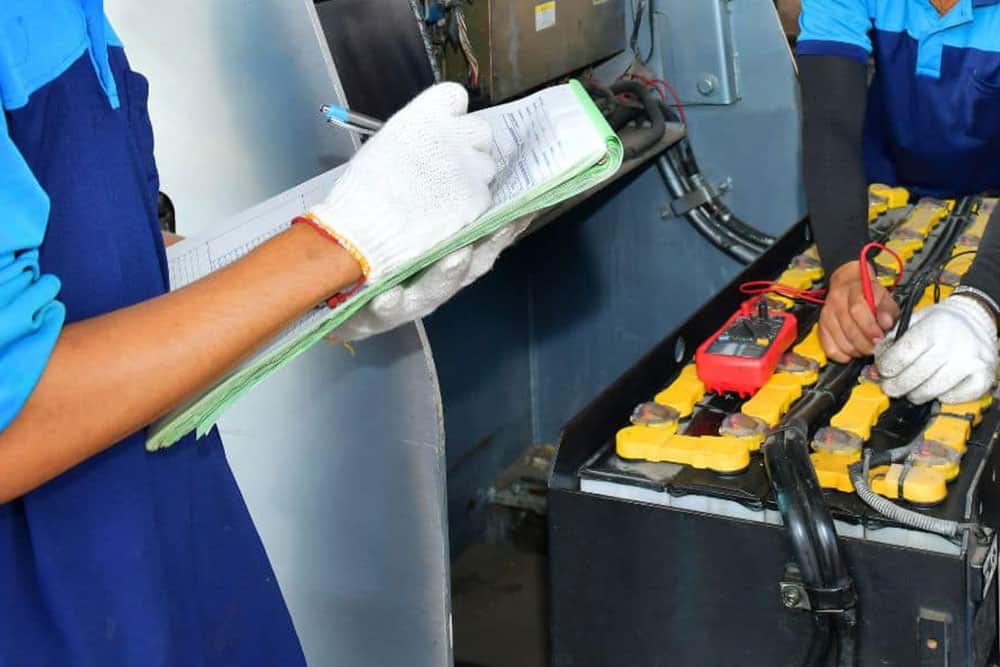
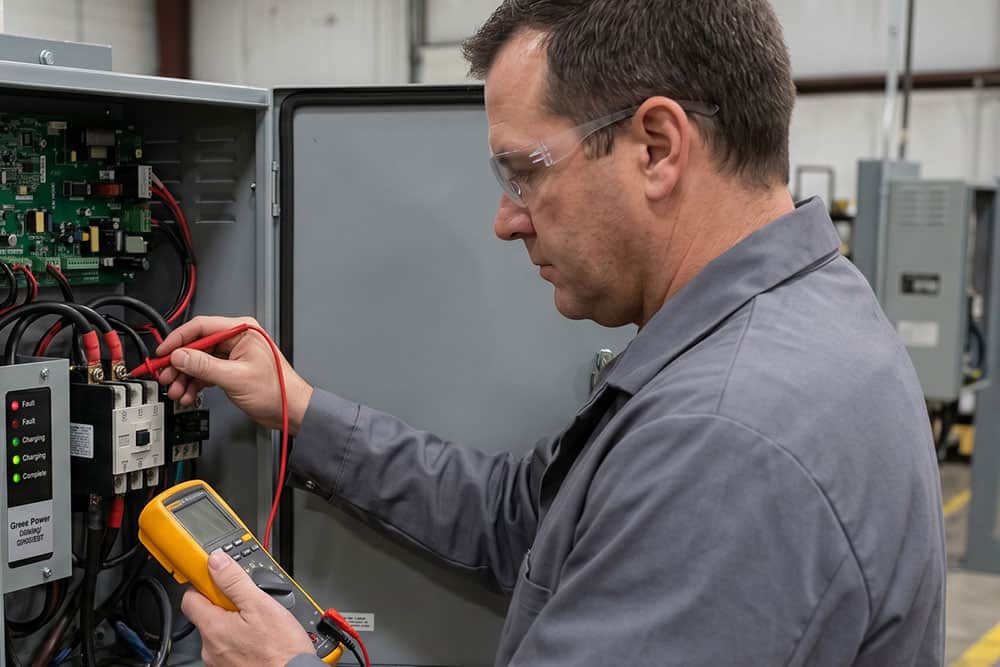
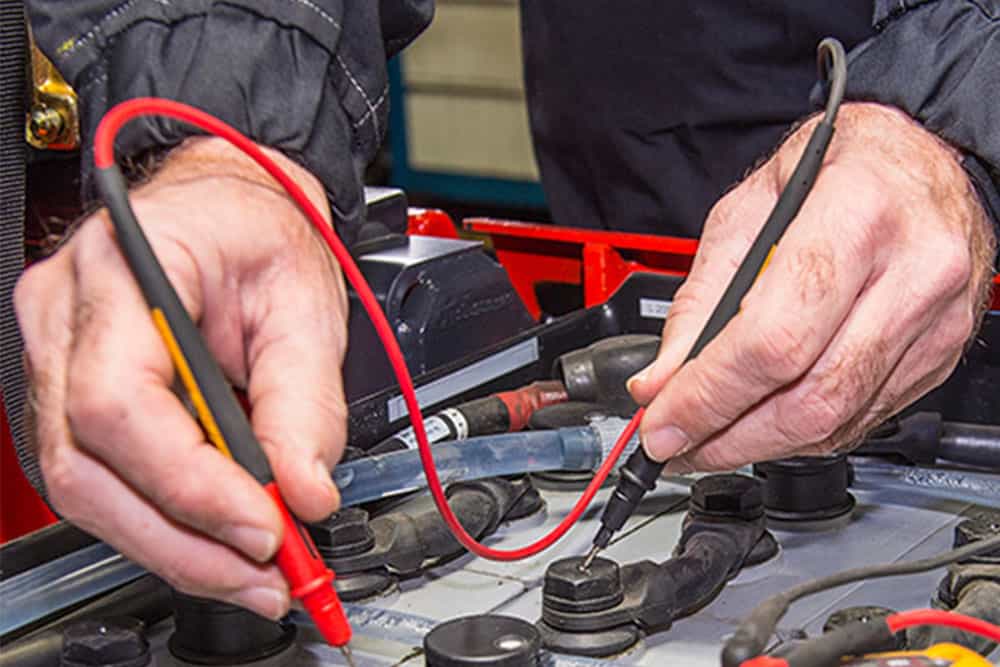
  • Incorrect voltage testing. A fully charged cell should read a stable 2.1 to 2.2 volts. Consistent readings outside that range, without addressing the root cause, can indicate a maintenance issue rather than a defect.

Reading the warranty document before you buy, not after a problem shows up, is the best way to avoid a denied claim. If a supplier is vague about exclusions or won’t put terms in writing, that is worth treating as a red flag.

New vs. Refurbished Forklift Batteries: How Warranty Terms Differ

New forklift batteries generally carry longer and stronger warranty terms because they start from zero cycles and have no prior wear history. Refurbished forklift batteries can still carry meaningful coverage, but the terms are usually shorter and more tightly scoped, since the unit has already completed part of its useful life before resale. Neither option is inherently wrong for every operation.

A warehouse running a single shift with light-duty cycling may get excellent value from a refurbished unit, while a multi-shift operation with heavy daily discharge is often better served by new battery power and the longer protection that comes with it.

Whichever option fits your operation, ask your supplier for the exact prorated schedule in writing, not just the headline number of years.

How Green Power’s Warranty Compares

Industry warranty terms on new lead-acid forklift batteries commonly range from three to five years, with prorated coverage that declines steadily after the first year or two. Green Power’s 7-year warranty on most new batteries sits well above that baseline, and the overwhelming majority of our customers never need to file a claim at all. We built this coverage to match the quality we put into manufacturing, not to be a marketing number that falls apart under scrutiny.

If you want a straightforward answer about what’s covered on a specific battery model, our team can walk you through the terms before you commit to a purchase.

Get a Warranty-Backed Battery Quote Today

If your current battery supplier has left you guessing about coverage, request a quote from Green Power Forklift Batteries and get clear answers about what’s protected, for how long, and under what conditions.

Our team can also help you match the right battery to your shift pattern so you get the most value out of your warranty from day one.

FAQs

How long is a typical forklift battery warranty?

Terms vary by manufacturer and battery type, but most new lead-acid forklift batteries in the industry carry warranties between three and seven years. Green Power backs most of our new batteries with a 7-year warranty.

Yes. Using a mismatched charger, interrupting charge cycles, or overcharging on a regular basis can accelerate wear and lead to a denied claim, since these issues are considered maintenance-related rather than manufacturing defects.

Yes, most refurbished batteries carry a warranty, though the terms are shorter than what you’d get with a new battery, since the unit has already been in service before resale.

A fully charged cell should show a stable voltage between 2.1 and 2.2 volts. Readings consistently outside that range can point to a maintenance issue that should be addressed before it affects your coverage.

No. Cracked cases, damaged terminals, and other impact-related damage are generally excluded from warranty coverage, since they result from handling rather than a manufacturing defect.

Review the warranty period, prorated coverage schedule, maintenance requirements, exclusions, and claim process before purchasing. Confirm that the terms match your charging practices, operating conditions, and expected battery usage.

36V vs 48V vs 80V Forklift Battery: Which Voltage Does Your Operation Need?

Quick Summary

Choosing the right forklift battery voltage depends on the equipment you operate, the loads you lift, and the duty cycle of your shift. Lower voltage batteries suit lighter-duty electric forklifts, while higher voltage systems deliver more power for heavier loads and longer operating hours. Matching voltage correctly protects your equipment, avoids compatibility issues, and prevents you from overpaying for capacity you don’t need or underpowering equipment that requires more.

Voltage is one of the first specifications you need to get right when replacing forklift power, and getting it wrong isn’t a small mistake. Installing the incorrect voltage can damage your equipment, void warranties, and create safety issues on the floor.

This guide breaks down the differences between a 36v forklift battery, 48V, and 80V systems, along with how to determine which one your operation actually needs.

Why Voltage Matters

A forklift’s electrical system is designed around a specific voltage, and the battery has to match that design exactly. Voltage affects:

  • Available power: Higher voltage systems generally deliver more power, which supports heavier lift capacities and more demanding applications.
  • Runtime characteristics: Voltage and amp-hour rating together determine how long a battery lasts on a single charge before needing to be swapped or charged.
  • Equipment compatibility: Forklift manufacturers design the drive motor, controller, and charging system around a specific voltage. A mismatch isn’t something that can be adjusted after the fact.
  • Charging requirements: Voltage determines which charger is compatible with the battery, so the charging system must match the battery’s voltage rating.
  • Motor efficiency: The correct voltage allows the forklift’s motor and electrical components to operate within their intended specifications, supporting consistent performance and reducing unnecessary electrical strain.

Green Power Forklift Batteries carries the full range of common configurations, including 24V, 36V, 48V, and 80V, so operations of every size can find the correct match for their equipment.

36V Forklift Batteries

A 36-volt system is common in smaller electric forklifts, pallet jacks, and light-duty warehouse equipment. These batteries are well suited to:

  • Lighter load capacities
  • Smaller warehouses or distribution centers with shorter travel distances
  • Single-shift operations with moderate usage
  • Equipment where a smaller physical battery compartment limits the available options

36V batteries are generally more compact and lighter than their higher-voltage counterparts, which fits the smaller equipment they’re designed to power.

48V Forklift Batteries

48-volt systems represent the most common voltage class for mid-size electric forklifts used across general warehousing and distribution. These batteries typically suit:

  • Standard counterbalance forklifts handling moderate to heavy loads
  • Multi-shift operations that need reliable runtime across a full workday
  • Warehouses with a mix of load types and travel distances
  • Operations looking for a balance between power, battery size, and cost

Because 48V is such a widely used standard, it also tends to offer strong availability and a broad selection of both new forklift batteries and reconditioned options.

80V Forklift Batteries

An 80-volt system delivers the most power among these three configurations and is typically found in larger, heavy-duty electric forklifts built for demanding lift capacities and intensive multi-shift use. These batteries are the right fit when:

  • Your forklifts handle heavier loads on a regular basis
  • Your operation runs extended shifts or multiple shifts back to back
  • You need maximum available power for demanding lift heights or travel distances
  • Your equipment manufacturer specifies an 80V system as the required configuration

Because 80V batteries are larger and more powerful, they also represent a bigger upfront investment, which makes getting the voltage decision right the first time even more important.

How to Confirm the Correct Voltage for Your Equipment

The safest way to confirm voltage is to check your forklift’s data plate or existing battery compartment specifications rather than guessing based on the size of the forklift. If you’re unsure, our team can help you verify the correct configuration before you place an order, which avoids the cost and hassle of returning an incompatible battery.

It’s also worth checking your existing battery’s specification label for the exact voltage, amp-hour rating, and cell configuration, since these details matter as much as voltage alone when matching a replacement.

Testing and Maintaining Your Battery Regardless of Voltage

No matter which voltage configuration your operation runs, proper maintenance matters. A fully charged cell should read a stable voltage between 2.1 and 2.2 volts across 24V, 36V, 48V, or 80V systems, since this reading is measured per cell rather than across the full battery pack.

Consistent readings outside that range are worth investigating regardless of which voltage class you operate.

Voltage and Amp-Hour Rating Work Together

Voltage alone doesn’t tell the full story of a battery’s performance. Amp-hour rating, which measures the battery’s energy storage capacity, works alongside voltage to determine how long a battery will run before it needs to be charged or swapped.

Two 48V batteries can have very different amp-hour ratings depending on the number and size of the cells inside, which means they’ll deliver very different runtimes even though they share the same voltage.

When you request a quote, it helps to provide both your equipment’s required voltage and your typical shift length, so the amp-hour rating can be matched to your actual runtime needs rather than just the voltage requirement alone.

Common Voltage Mistakes to Avoid

  • Assuming a bigger forklift always needs a higher voltage: Voltage is determined by the manufacturer’s electrical design, not simply the physical size of the equipment.
  • Mixing components from different voltage systems: Chargers, batteries, and forklift electrical systems all need to match. Pairing a charger designed for one voltage with a battery of another can cause serious damage.
  • Ignoring the amp-hour rating when comparing quotes: Two quotes at the same voltage can represent very different values if their amp-hour ratings, and therefore runtimes, are different.
  • Skipping verification on used or reconditioned equipment: If you’re purchasing a battery for a forklift you didn’t buy new, don’t assume the previous battery’s voltage was correct. Confirm against the data plate directly.

Get the Right Voltage the First Time

Choosing between a 36V, 48V, or 80V forklift battery doesn’t have to be a guessing game. Our team at Green Power can confirm the exact configuration your equipment requires and provide a forklift battery quote that matches your operation’s real power needs.

Contact us today to get started.

FAQs

How do I know what voltage my forklift battery needs?

Check your forklift’s data plate or the specification label on your existing battery. If you’re unsure, our team can help confirm the correct voltage before you order.

Voltage upgrades typically require changes to the drive motor, controller, and charger, not just the battery, so this should only be done in consultation with the equipment manufacturer or a qualified technician.

No. Voltage should match your equipment’s design and your operation’s power needs, not simply be the highest number available. An 80V battery in equipment designed for 48V would not be compatible.

Voltage works together with amp-hour rating to determine runtime. Two batteries of the same voltage can still have very different runtimes depending on their amp-hour capacity.

We carry 24V, 36V, 48V, and 80V configurations across our new and reconditioned battery lines to match a wide range of forklift equipment.

No. A 48V battery is not a direct replacement for a 36V battery because the forklift’s electrical components are designed for a specific voltage. Using the wrong voltage can damage equipment and create safety risks.

Not necessarily. Charging time depends on the battery’s capacity, charger output, state of charge, and charging system. A higher-voltage battery does not automatically mean faster charging.

Why Is My Forklift Battery Losing Charge So Fast? 7 Causes and Fixes

Why Is My Forklift Battery Losing Charge So Fast? 7 Causes and Fixes

Quick Summary

A forklift battery can lose charge quickly due to incomplete charging, an incompatible charger, low electrolyte levels, excessive heat, corroded connections, weak cells, or a battery that is too small for the application or nearing the end of its service life. Review charging records, cell voltage, battery temperature, water levels, cable condition, and actual shift requirements before deciding on replacement. Green Power Forklift Batteries helps buyers compare new and reconditioned replacement options when testing shows that the existing battery can no longer handle the required workload.

When a forklift battery drains quickly, short runtime can interrupt picking, loading, and production while increasing battery changes and operator downtime. Determine whether the problem comes from charging, battery condition, or a mismatch with the application.

Green Power Forklift Batteries supplies electric forklift batteries for 24V, 36V, 48V, and 80V systems. Record the voltage, amp-hour rating, charger information, shift length, and symptoms before deciding on replacement. These details help separate operating issues from permanent capacity loss.

The Forklift Battery Is Not Reaching a Full Charge

A partially charged battery will lose power early. Interrupted cycles, an early timer cutoff, or brief charging sessions can leave a flooded lead-acid battery below capacity. Review charger records instead of assuming a green indicator proves a complete cycle.

The charger must match the battery voltage and amp-hour range. Green Power offers forklift battery chargers for lead-acid and lithium-ion applications. A mismatched or malfunctioning charger can undercharge the battery, overcharge it, or create heat that accelerates performance loss.

The Battery Is Being Discharged Too Deeply

Frequently operating a lead-acid battery below approximately 80% depth of discharge can reduce usable runtime over time.

A forklift that now handles longer shifts, heavier loads, or greater travel distances may require more energy than the original battery selection was designed to handle. Monitor operating hours and record the battery state of charge at the end of each shift to identify changing power demands.

The solution may involve adjusting the charging schedule, selecting a higher-capacity battery that fits the compartment, or adding another battery for multi-shift operations. Voltage, dimensions, weight, connector type, and amp-hour capacity must all match the electric forklift specifications.

Electrolyte Levels Are Too Low or Watering Is Incorrect

Flooded lead-acid batteries need enough electrolyte to cover the plates. Low water exposes active material, while overfilling before charging can force electrolyte out. Check levels after charging and cooling, then add approved water to the specified level.

A consistent inspection schedule is part of sound forklift battery maintenance. Record water additions because a sudden increase in water consumption can point to overcharging, excess heat, or a cell problem.

Dirty, Loose, or Corroded Connections Are Creating Resistance

Corrosion, damaged cables, loose terminals, and worn connectors create resistance, heat, and voltage drop. After trained personnel disconnect the battery, inspect connectors, cables, terminals, and the battery top for residue, damage, or heating.

Our informational guide to forklift battery repair explains common battery faults and diagnostic considerations. Green Power does not offer repair or reconditioning services for customer-owned batteries; we sell finished replacement products.

One or More Cells Are Weak or Out of Balance

A battery may display an acceptable overall voltage while still losing power quickly during operation if one or more cells are weak. A fully charged lead-acid battery should typically show a stable reading of around 2.1 to 2.2 volts per cell. A noticeably lower cell reading, sudden voltage drop, or repeated imbalance may indicate the need for professional evaluation.

Voltage readings alone do not show the complete battery condition. Specific gravity, temperature, charging patterns, and a controlled capacity test provide a clearer assessment. A battery that cannot maintain the required output should be removed from service and replaced.

Heat Is Reducing Battery Efficiency

High ambient temperatures, poor charging-area ventilation, overcharging, and immediate charging after heavy use can raise battery temperature. Heat speeds chemical activity and can accelerate water loss and internal deterioration. Allow the battery to cool, verify ventilation, and confirm that the charger profile matches the battery.

If the case is unusually hot, swollen, leaking, or producing a strong sulfur odor, stop charging or operating the battery. Isolate the area according to facility safety procedures and have trained personnel assess the condition.

The Battery Is Undersized or Has Lost Too Much Capacity

A battery may simply be too small for the workload or may have lost capacity through age and use. Compare measured capacity with the original amp-hour rating and the actual energy required per shift. Repeatedly swapping or charging a weak battery during one shift usually signals that replacement planning should begin.

Our refurbished forklift batteries offer a lower-cost replacement option and must retain at least 85% of rated capacity before sale. For high-use equipment and longer ownership plans, our new batteries are often the stronger long-term choice because most include an industry-leading seven-year warranty.

How to Diagnose a Forklift Battery That Drains Quickly

  • Confirm the battery and charger voltage, amp-hour range, connector, and charge profile.
  • Review charge duration, interruptions, end-of-shift state of charge, and operating hours.
  • Check electrolyte levels, cell voltage, temperature, cables, terminals, and visible damage.
  • Arrange a controlled capacity test when the battery passes visual checks but runtime remains short.

Do not replace a battery based on one short shift. Charger problems, workload changes, or missed watering can create similar symptoms. Consistent records make diagnosis faster.

Choose the Right Replacement Forklift Battery

Green Power makes the quote process simple. Share the electric forklift manufacturer and model, existing battery specifications, compartment dimensions, connector information, charger details, and expected hours per shift.

We can compare current inventory with new forklift batteries and reconditioned options based on price, warranty, lead time, and workload.

FAQs

Why does my forklift battery show full but die quickly?

A surface charge can make voltage look normal even when usable capacity is low. A weak cell, incomplete charge, high resistance, or permanent capacity loss may cause rapid voltage drop under load.

A fully charged lead-acid cell should show a stable voltage of approximately 2.1 to 2.2 volts. Cell-to-cell consistency and performance under load are also important.

No. Green Power does not offer repair or reconditioning services for customer-owned batteries. We sell new, reconditioned, and lithium-ion replacement batteries and help buyers match the product to the electric forklift and workload.

How to Choose the Right Forklift Battery Charger: A Complete Selection Guide

How to Choose the Right Forklift Battery Charger: A Complete Selection Guide

Quick Summary

The right forklift battery charger must match the battery voltage, chemistry, amp-hour capacity, connector specifications, and the electrical service available at the facility. The charging method should also align with the operating schedule, especially for fleets running multiple shifts. Green Power Forklift Batteries offers conventional, opportunity, fast, and multi-voltage charging solutions for electric forklift applications. Gather complete battery and facility details before ordering so the charger can restore battery power safely, efficiently, and within the required charging timeframe.

Learning how to choose a forklift battery charger starts with one rule: the charger must be selected for the battery and the facility, not only for the forklift model.

A charger that does not match the battery voltage, chemistry, amp-hour range, or available AC power can cause incomplete charging, excessive heat, unnecessary downtime, or permanent battery damage.

At Green Power Forklift Batteries, we help B2B buyers compare charging equipment for electric forklifts operating on 24V, 36V, 48V, and 80V battery systems. The most reliable selection process uses verified battery specifications, shift demands, charging windows, and electrical details from the installation site.

Start With the Forklift Battery Specifications

Before comparing charger models, record the battery information from the nameplate or purchase documentation. Do not rely on the lift truck voltage alone because two batteries with the same voltage may have different capacities, chemistries, connectors, and charging requirements.

  • Battery voltage, such as 24V, 36V, 48V, or 80V
  • Rated amp-hour capacity and the applicable discharge rate
  • Battery chemistry, including flooded lead-acid, AGM, gel, or lithium-ion
  • Connector type, connector color or keying, cable length, and cable position
  • Battery model, manufacturer, serial information, and current charger model

When testing a fully charged flooded lead-acid battery, each cell should display a stable voltage of approximately 2.1 to 2.2 volts. This measurement helps confirm battery charge status before additional testing, but charger selection must still follow the battery manufacturer’s approved requirements.

Keeping accurate battery records also makes future replacements easier because the facility can reference verified charger information instead of repeating the entire selection process.

Match Charger Output Voltage to Battery Voltage

The charger output voltage must match the battery’s nominal voltage. A 36V battery requires a charger specifically designed for 36V operation. Using a charger with an incorrect output voltage can create safety concerns or prevent the battery from reaching the proper charge level.

Multi-voltage chargers can be useful for facilities operating different battery sizes, but only when the equipment can correctly identify or accept the required settings. Operators should not use improvised adapters or manually adjust charger settings unless the manufacturer approves the configuration.

Choose a Charger Profile for the Battery Chemistry

Lead-acid and lithium-ion batteries require different charging methods.

Flooded lead-acid batteries may need controlled finishing cycles and scheduled equalization, while lithium-ion systems require an approved charger and communication with the battery management system. AGM and gel batteries also need charging profiles designed specifically for sealed battery types.

A charger marketed for multiple battery chemistries is not automatically suitable for every application. Confirm the approved charging profile, communication requirements, and compatibility before connecting the equipment. This helps protect battery performance and reduces risks associated with overheating or repeated undercharging.

Match Charger Amperage to Battery Capacity and Charge Time

The amp-hour rating helps determine the appropriate charger output. A charger that is too small may not restore the battery within the available window. A charger that is too aggressive for the battery can raise temperature and increase stress on the cells.

Consider the starting state of charge, the number of hours available, the number of batteries assigned to each charger, and the battery manufacturer’s recommended current range. The goal is not simply the highest output. The goal is a complete charge within the schedule without exceeding the approved charging rate.

Confirm the Facility AC Input and Electrical Service

Forklift battery chargers may require 110/120V plug-in service or industrial 208V, 240V, or 480V power. Larger units may use single-phase or three-phase service. Verify the actual voltage and phase at the proposed charger location before ordering.

A qualified electrical professional should confirm circuit capacity, disconnects, ventilation, charger placement, and local requirements. Buying the correct DC output charger with the wrong AC input can delay installation and add unplanned electrical costs.

Select the Charging Method for the Fleet Schedule

Conventional Charging

Conventional charging generally fits single-shift operations that can dedicate a longer uninterrupted period to charging and cooling. It is often the simplest choice when each battery has enough time to complete the approved cycle before the next shift.

Opportunity Charging

Opportunity charging adds energy during scheduled breaks or periods of inactivity. It can reduce battery changes, but the battery, charger, operating schedule, and temperature controls must be designed for that strategy.

Fast Charging

Fast charging can support demanding multi-shift applications with limited downtime. The higher charging rate requires a compatible battery, suitable infrastructure, careful temperature management, and a charging plan based on actual utilization.

Review Charger Controls, Data, and Safety Features

Modern charger controls can automate cycle selection, equalization, shutoff, and fault reporting. Useful features may include digital displays, charge history, battery identification, temperature sensing, automatic equalization, and network reporting. Choose features that improve accountability rather than paying for data the operation will not use.

The connector and cable arrangement should also reduce strain and operator error. Confirm polarity, cable length, connector compatibility, mounting location, and clear access around the charger. Charging areas should follow the facility’s battery safety procedures.

Common Forklift Battery Charger Selection Mistakes

  • Selecting by voltage while ignoring amp-hour capacity and chemistry
  • Ordering before confirming the building’s AC voltage and phase
  • Using a lead-acid charger profile for an unapproved lithium-ion battery
  • Choosing fast charging without reviewing battery temperature and duty cycle
  • Ignoring connector type, cable position, and future fleet changes

The lowest initial price may not be the lowest operating cost. A properly matched charger can reduce incomplete cycles, operator delays, and premature battery replacement. We focus on price and customer service while helping buyers compare the practical requirements of each application.

How Green Power Helps You Choose a Forklift Battery Charger

Our selection of forklift battery chargers includes standard, conventional, opportunity, fast, and multi-voltage options for material handling applications. We can review battery voltage, amp-hour capacity, chemistry, AC input, charging window, and connector information before a buyer selects a model.

If the current battery also needs replacement, compare our new forklift batteries, which include an industry-leading 7-year warranty on most units. Buyers can also submit equipment and shipping information through our forklift battery quote system for a faster product match.

Get Help Selecting the Right Forklift Battery Charger

A correct charger match protects battery performance and keeps electric forklifts available for scheduled work. Send us the battery specifications, facility input power, and operating schedule to compare charger options, pricing, and lead time.

Frequently Asked Questions

Can a 36V charger charge a 48V forklift battery?

No. Charger output voltage must match the battery voltage unless the equipment is an approved multi-voltage charger configured for that specific battery. Never connect mismatched equipment.

Use the battery amp-hour capacity, chemistry, starting state of charge, available charging window, and manufacturer-approved current range. A supplier should review all of these details before recommending output amperage.

Only if the charger has approved profiles and communication features for each exact battery. Lithium-ion charging often requires battery management system communication, so compatibility must be confirmed rather than assumed.

Send the battery voltage, amp-hour rating, chemistry, connector details, current charger model, facility AC voltage and phase, charging window, daily operating schedule, and shipping location.

How Much Does a Forklift Battery Cost? (2026 Price Guide by Voltage)

How Much Does a Forklift Battery Cost? (2026 Price Guide by Voltage)

Quick Summary

Forklift battery cost depends on voltage, amp-hour capacity, chemistry, dimensions, and the operating demands of the electric lift. Current 2026 pricing commonly starts near $1,100 for compact 24V models and rises beyond $8,000 for larger 48V and 80V lead-acid units. Lithium-ion options, chargers, shipping, installation, and accessories can increase the total. A model-specific quote is the most reliable way to compare value.

A forklift battery price is not determined by voltage alone. Two batteries may both be rated at 36V, yet differ by thousands of dollars because their amp-hour capacity, tray dimensions, weight, connector, construction, and intended workload are different. For 2026, buyers should expect a broad range rather than one universal number.

At Green Power Forklift Batteries, we help businesses compare the right battery for the electric forklift, schedule, and budget. Our own new batteries are the primary choice for long-term value because most include an industry-leading 7-year warranty, competitive pricing, practical lead times, and guidance from an experienced customer service team.

We also sell reconditioned batteries, BBI batteries, chargers, and lithium-ion options for operations with different priorities. Keep reading to learn more about forklift battery costs and the factors that influence their prices.

2026 Forklift Battery Price Ranges by Voltage

The price ranges below represent general examples based on current product pricing and common lead-acid battery configurations. They are intended for early budgeting purposes and should not be considered guaranteed quotes.

Final pricing depends on battery capacity, dimensions, availability, battery type, shipping requirements, installation needs, and optional equipment.

A 24V battery is commonly used in pallet trucks, walkie stackers, and smaller electric equipment. A 36V system often powers reach trucks and many warehouse lifts. A 48V battery serves a wide range of sit-down electric forklifts, while 80V systems are generally associated with larger, heavier-duty electric lift trucks.

Buyers can review our full selection of forklift batteries before narrowing the choice by model and application.

What Changes the Price of a Forklift Battery?

Voltage sets the number of cells, but several other specifications shape cost. The following details can move a quote higher or lower even when the voltage stays the same:

  • Amp-hour capacity: Higher-capacity batteries contain more active material and can power longer or more demanding shifts, so they usually cost more.
  • Tray size and weight: The battery must fit the compartment and often serves as part of the forklift counterweight. A physically larger and heavier unit carries more material and shipping expense.
  • Battery chemistry: Flooded lead-acid, maintenance-conscious lead-acid options, and lithium-ion systems have different purchase prices, charging requirements, and operating profiles.
  • Connector and accessories: Plug style, watering systems, water-level indicators, covers, cable arrangements, and installation choices affect the order total.
  • Availability and lead time: A common in-stock model may cost less to deliver quickly than a less common configuration that must be built or moved from another location.

New, Reconditioned, and Lithium-Ion Battery Costs

New Forklift Batteries

For operations that need predictable performance and long-term warranty coverage, our new forklift batteries are usually the strongest starting point. Most Green Power new batteries carry a 7-year warranty.

Price, warranty, lead time, customer service, and our experience are the central value points – not an arbitrary claim that every battery lasts a fixed number of years.

Reconditioned Forklift Batteries

A reconditioned unit can reduce upfront cost when the application and duty cycle fit the available inventory. The refurbished forklift batteries we sell are guaranteed to retain at least 85% of their original rated capacity and include a standard 1-year warranty.

Green Power sells reconditioned products; we do not advertise repair or reconditioning as a customer service.

Lithium-Ion Forklift Batteries

Lithium-ion batteries generally have the highest initial purchase price. However, they may deliver stronger value for multi-shift operations that benefit from opportunity charging, consistent power output, reduced watering requirements, and fewer battery changes.

A complete cost comparison should include the compatible charger, operating schedule, available charging periods, installation requirements, and expected usage patterns. Looking only at the battery purchase price does not show the full ownership cost.

Additional Forklift Battery Costs to Budget For

The battery is the largest line item, but the complete project may include several related costs. A matching charger can add roughly $1,400 to $2,900 for many conventional configurations based on published market listings, while specialized or high-capacity systems can cost more.

Green Power offers forklift battery chargers across common voltage requirements, including 24V, 36V, 48V, and 80V applications.

  • Freight: Industrial batteries are extremely heavy, so destination, delivery access, and shipping method matter.
  • Installation: Some facilities can complete a safe battery exchange with existing equipment, while others need installation assistance.
  • Core status: The presence, condition, and handling of an existing battery core can affect the transaction.
  • Watering and monitoring accessories: These options add cost but may simplify routine battery care and help operators follow a consistent process.
  • Electrical compatibility: The charger input, output voltage, amp-hour range, phase, and connector must match the battery and facility.

How to Get an Accurate Forklift Battery Price

The best way to avoid an inaccurate estimate is to collect the forklift make and model, battery voltage, amp-hour rating, compartment dimensions, connector type, and delivery ZIP code. Photos of the battery data plate and compartment can also help identify unusual configurations.

Operating conditions are equally important. Share how many hours the forklift runs each day, the number of shifts, workload demands, and available charging periods.

Green Power’s battery quote tool helps buyers select the electric forklift manufacturer and model before requesting pricing. After confirming the correct fit, Green Power can compare new, reconditioned, BBI, charger, and lithium-ion solutions without requiring customers to estimate technical requirements themselves.

This process also helps identify product availability and expected lead times early.

How Workload Affects Forklift Battery Price

Battery size should match more than the forklift model. A light single-shift warehouse may not need the same amp-hour capacity as a multi-shift distribution center with long travel distances or limited charging windows.

Buying too little capacity can cause premature discharge and interruptions, while excessive capacity can raise the initial price without a practical return.

We review shift length, charging access, load weight, travel distance, and expected growth before recommending a configuration. When evaluating an existing flooded lead-acid unit, a fully charged battery should show a stable reading of about 2.1 to 2.2 volts per cell before capacity testing or replacement planning.

Request a 2026 Forklift Battery Quote

Green Power Forklift Batteries makes the quote and ordering process straightforward. Share the electric forklift model, battery specifications, workload, and delivery location, and our team will identify compatible options. Compare price, warranty, lead time, and long-term operating value before choosing the battery that fits the job.

Frequently Asked Questions

How much is a 24V forklift battery in 2026?

Common published prices for Green Power 24V lead-acid models currently begin around $1,100 and can exceed $2,700 as capacity, size, and options increase. Larger or lithium-ion configurations may cost substantially more.

Voltage does not describe total energy capacity or physical construction. Amp-hour rating, plate design, dimensions, weight, battery type, connector, cover, accessories, and warranty can all change the price.

Usually, yes. Reconditioned batteries are positioned as a lower-cost alternative, but the right decision depends on available capacity, warranty, shift demands, expected ownership period, and model fit.

Not automatically. Battery and charger pricing should be confirmed separately unless the quote clearly identifies a package. The charger must match the battery voltage, amp-hour range, chemistry, and available AC power.

Forklift Battery Size Chart: How to Find the Right Battery for Your Lift Truck

Forklift Battery Size Chart: How to Find the Right Battery for Your Lift Truck

Quick Summary

A forklift battery size chart should include more than just voltage information. The correct replacement battery must match the electric lift truck model, battery compartment dimensions, approved weight range, amp-hour capacity, connector type, cable configuration, and charging system. Green Power Forklift Batteries recommends collecting the truck and battery nameplate details before measuring the existing unit. A model-specific quote is more reliable than selecting from a basic chart because batteries with the same voltage can have major differences in size, weight, capacity, and compatibility.

A forklift battery size chart is most useful when it connects an electric lift truck model to a complete set of battery specifications. Voltage alone does not determine fit. The replacement must fit the compartment, meet the manufacturer’s weight requirements, deliver suitable amp-hour capacity, and connect correctly to the truck and charger.

Green Power Forklift Batteries supplies new and reconditioned batteries for electric forklift systems, including common 24V, 36V, 48V, and 80V configurations. We recommend verifying the manufacturer, model, serial information, and existing battery data before ordering.

What Information Belongs in a Forklift Battery Size Chart?

A reliable battery sizing chart or fitment record should include enough information to separate batteries that may appear similar but are not interchangeable. Collect specifications from the forklift, current battery, and charger, including:

  • Electric forklift manufacturer, model number, and serial number
  • Battery model number, voltage, cell count, and amp-hour capacity
  • Overall length, width, and height of the battery case
  • Required minimum and maximum battery weight
  • Compartment dimensions, cover clearance, and restraint arrangement
  • Connector type, color or keying, cable length, and cable position
  • Charger voltage, output rating, chemistry profile, and AC input

A generic voltage list cannot replace these details. The same 36V battery family may be offered in several tray sizes, capacities, and weights for different truck designs.

Keep the completed fitment record with the fleet maintenance files. The same record can speed future quotes and reduce errors when another battery reaches replacement age. Update it after any connector, cable, or charger change.

Step One: Identify the Electric Lift Truck and Existing Battery

Begin with the forklift data plate and operator manual. Record the manufacturer, exact model, serial number, approved battery voltage, compartment dimensions, and required battery weight range. Some forklift models may have different battery compartments or counterweight requirements depending on the configuration.

Next, photograph or record the current battery nameplate information. Include the model number, voltage, amp-hour capacity, dimensions, weight, connector type, and cable arrangement. If the current battery fit properly and delivered the expected performance, these details create a useful reference point for replacement.

Step Two: Verify Voltage and Cell Count

Industrial lead-acid cells are nominally rated at 2 volts each. A 24V battery commonly has 12 cells, a 36V battery has 18 cells, a 48V battery has 24 cells, and an 80V battery has 40 cells. Confirm the nameplate and truck specification instead of estimating by appearance.

A fully charged flooded lead-acid cell should show a stable voltage of approximately 2.1 to 2.2 volts. Cell readings can help with battery evaluation, but they do not change the required nominal system voltage. The replacement battery and charger must match the truck’s approved voltage.

Step Three: Measure Battery Length, Width, and Height

Measure the actual battery case instead of only measuring the open compartment area. Record the length, width, and height at the largest fixed points. Include details such as lifting eyes, handles, covers, cable exits, connector placement, and tray features that may affect installation clearance.

Measure the forklift battery compartment and available vertical space as well. A battery that is slightly oversized may not sit correctly, while excessive space can affect restraints and positioning. Confirm all measurements against forklift specifications before shipment.

Step Four: Match the Required Battery Weight

In many electric counterbalance forklifts, the industrial battery contributes to the truck’s designed counterweight. A battery outside the approved weight range can affect stability, rated capacity, steering, and braking behavior. Weight is therefore a fitment and safety specification, not just a shipping detail.

Use the truck data plate or manufacturer documentation to identify the allowed battery weight range. Do not assume that a physically smaller or lighter battery is acceptable because it fits inside the compartment.

Step Five: Choose Amp-Hour Capacity for the Workload

Amp-hour capacity affects how much energy the battery can deliver before charging. The right capacity depends on shift length, travel distance, load weight, attachment use, floor conditions, temperature, and available charging time. Cold environments and long travel routes can increase energy demand.

A higher-capacity battery is not automatically better. It must fit the approved case size and weight range, and the charger must be able to replenish it within the available window. Compare actual operating demand with the battery rating rather than selecting the largest number on a chart.

Step Six: Confirm Connector and Cable Configuration

The battery connector must match the forklift and charger in type, keying, and current rating. Record the connector color, housing style, contact size, cable gauge, cable length, and cable exit location from the battery case.

A battery may have the correct size and voltage but still be unusable if the cable cannot reach correctly or the connector does not match. Avoid modifying connectors or cables unless qualified personnel and equipment manufacturers approve the change.

Step Seven: Check Charger Compatibility Before Ordering

Confirm that the existing charger matches the new battery voltage, chemistry, and amp-hour range. A replacement with greater capacity may require a different charger output or a longer charging window. Lithium-ion batteries generally require an approved charging system and battery management communication.

We offer forklift battery chargers for multiple material handling applications. Reviewing the battery and charger together can prevent incomplete charging, excess heat, and installation delays.

Common Forklift Battery Sizing Mistakes

  • Using only the forklift brand without the exact model and serial information
  • Matching voltage while ignoring dimensions, weight, and amp-hour capacity
  • Measuring the compartment but not the existing battery and cable exits
  • Assuming a lighter battery is acceptable in a counterbalance forklift
  • Ordering a different chemistry without checking charger compatibility
  • Leaving out the shipping city, state, ZIP code, or country when requesting pricing

Use Green Power’s Model-Specific Battery Resource Tool

Our online forklift battery quote tool lets buyers select a forklift manufacturer and model, review available battery information, and submit application details. Include the shipping location, battery specifications, and any questions about fitment, capacity, pricing, or lead time.

Our own new forklift batteries are available across a broad voltage range and include an industry-leading 7-year warranty on most units. For a lower initial price, buyers can also compare refurbished forklift batteries sold as finished replacement products. We do not offer repair or reconditioning services for customer-owned batteries.

Request the Correct Battery Size for Your Electric Lift Truck

Send us the electric forklift manufacturer, model, serial number, battery voltage, amp-hour rating, dimensions, weight, connector details, charger information, and shipping location. Complete information helps us compare fitment, product options, price, warranty, and lead time without unnecessary delays.

Frequently Asked Questions

Can I choose a forklift battery using voltage alone?

No. Voltage must match, but the battery also needs the correct dimensions, weight, amp-hour capacity, connector, cable arrangement, chemistry, and charger compatibility.

Measure the battery case length, width, and height at the widest fixed points. Record cover height, lifting features, cable exits, connector position, and the compartment clearance.

The battery may be part of the electric forklift’s counterweight system. Using a battery outside the manufacturer’s approved weight range can affect stability and rated performance.

Possibly, but only when the case dimensions, weight, voltage, connector, and charger remain compatible. The truck and battery manufacturer specifications should be reviewed before changing capacity.

Forklift Battery Overheating: Causes, Warning Signs, and How to Respond

Forklift Battery Overheating: Causes, Warning Signs, and How to Respond

Quick Summary

Forklift battery overheating can happen because of overcharging, an incompatible charger, low electrolyte levels, limited ventilation, heavy discharge cycles, electrical resistance, or internal battery cell problems. Common warning signs include an unusually hot battery case, excessive gassing, strong sulfur odor, swelling, electrolyte leaks, charger errors, and reduced operating time. Stop charging or operating the battery, separate it from normal use, ventilate the area, and have trained personnel inspect the system before returning it to service.

Forklift battery overheating is a safety concern and a performance warning. Lead-acid batteries naturally warm during charging and heavy use, but excessive temperature can damage internal components, increase water loss, shorten runtime, and raise the risk of electrolyte exposure or hydrogen accumulation.

Green Power Forklift Batteries supplies batteries and charging solutions for 24V, 36V, 48V, and 80V electric forklifts. When a battery becomes unusually hot, first follow a controlled safety response, then identify the charging, maintenance, or internal condition behind the heat.

Common Causes of Forklift Battery Overheating

Overcharging or an Incorrect Charger

A charger with the wrong voltage, amp-hour range, or charging profile can send excessive current into the battery or continue charging beyond the required cycle. Repeated overcharging increases battery temperature, accelerates water loss, and can shorten battery life.

Green Power offers forklift battery chargers for lead-acid and lithium-ion applications. The charger should be selected as part of the battery system rather than treated as a universal accessory.

Low Electrolyte or Improper Watering

In flooded lead-acid batteries, low electrolyte levels expose the plates and reduce the battery’s ability to control heat. Adding too much water can also cause electrolyte overflow when the fluid expands during charging.

Check water levels after the battery has completed charging and cooled down. Add approved water only to the manufacturer’s recommended level.

A documented forklift battery maintenance schedule helps identify abnormal water use before the battery overheats repeatedly. A sudden need for frequent watering may indicate overcharging or elevated operating temperature.

Poor Ventilation in the Charging Area

Lead-acid batteries release hydrogen and oxygen during charging. Insufficient airflow can trap heat and gases around the battery area. Charging locations should have proper ventilation, remain free from ignition sources, and follow the facility’s battery safety procedures.

A suitable charging environment helps manage normal heat generation and reduces risks associated with gas accumulation.

Heavy Discharge and Insufficient Cooling Time

Extended operating hours, heavy loads, and repeated deep discharge cycles increase battery temperature. Charging immediately after intensive forklift use can add more heat before the battery has time to cool.

Monitor battery temperature, discharge levels, and operating patterns. Include adequate cooling periods in the charging schedule, especially for high-use fleets.

Corrosion, Loose Connections, or Damaged Cables

Electrical resistance converts energy into heat. Corroded terminals, loose inter-cell connections, worn connectors, and damaged cables can create localized hot spots, arcing, voltage drop, and charging problems. Trained personnel should inspect the battery only after it is disconnected and safe to handle.

Our informational page about forklift battery repair describes common fault areas. Green Power does not perform repair or reconditioning services for customer-owned batteries; we sell finished replacement products.

A Weak, Shorted, or Imbalanced Cell

A damaged or failing cell can cause the remaining cells and charger to operate incorrectly. A fully charged lead-acid battery should display a stable reading of approximately 2.1 to 2.2 volts per cell.

A cell that consistently shows lower voltage, produces unusual heat, or releases more gas than surrounding cells requires evaluation from qualified personnel. Internal cell problems can affect the performance of the entire battery.

Warning Signs of an Overheating Forklift Battery

  • The battery case, cables, connector, or terminal area is hotter than normal.
  • The battery produces excessive bubbling, visible vapor, or a strong sulfur or rotten-egg odor.
  • The case appears swollen, cracked, distorted, or wet with electrolyte.
  • The charger displays repeated faults, runs unusually long, or fails to reach normal completion.
  • Runtime drops, voltage falls rapidly under load, or the forklift loses power earlier in the shift.

Odor, swelling, leaking, and abnormal gassing are not normal. Stop the process and follow the facility’s battery incident procedure.

How to Respond to Forklift Battery Overheating

  • Stop operating or charging the battery. Turn off the charger before disconnecting whenever conditions allow safe access.
  • Keep untrained personnel away, remove ignition sources, and ventilate the charging area.
  • Use required personal protective equipment and follow the site’s electrolyte, eyewash, spill, and fire-response procedures.
  • Allow the battery to cool before trained personnel inspect electrolyte levels, connectors, cables, cell readings, and charger compatibility.
  • Remove the battery from service if the case is damaged, electrolyte is leaking, or cell behavior remains abnormal.

Review the full forklift battery safety guidance before establishing charging and handling procedures. Only trained and authorized personnel should change, charge, inspect, or handle industrial batteries.

Preventing Repeat Overheating

Preventing future heat issues requires proper charging, maintenance, and operating practices. Match the charger to the battery, complete recommended charge cycles, avoid frequent deep discharge, maintain correct electrolyte levels, clean battery surfaces, inspect cables and connectors, and keep the charging area properly ventilated.

Record charging duration, water usage, battery temperature, and runtime performance. These records can reveal developing issues before they interrupt daily operations.

An undersized or aging battery may also generate excessive heat when the workload repeatedly pushes it beyond its practical limits. Compare measured battery capacity with the original amp-hour rating and actual shift requirements. A controlled capacity test provides more useful information than relying on a single open-circuit voltage measurement.

When an Overheating Battery Should Be Replaced

Replacement is usually the safer business decision when the battery has recurring heat problems, damaged components, leaking electrolyte, a failing cell, or insufficient capacity for the shift. Green Power can compare new forklift batteries with lower-cost reconditioned inventory based on voltage, dimensions, weight, connector, capacity, warranty, lead time, and daily use.

Most new Green Power batteries include an industry-leading seven-year warranty. Share the forklift model, battery specifications, charger details, and operating hours for a quick quote and product match.

FAQs

Is it normal for a forklift battery to get warm while charging?

Some temperature rise is normal, but the case should not become excessively hot, swollen, leaking, or accompanied by strong odor or abnormal gassing. Compare the condition with normal charging records and stop the process when symptoms are unusual.

Yes. Low electrolyte can expose plate material and reduce the battery’s ability to manage heat. Check levels after charging and cooling, and add only approved water to the specified level.

No. Green Power does not offer repair or reconditioning services for customer-owned batteries. We supply new, reconditioned, and lithium-ion replacement batteries and invite buyers to browse our battery models for their electric forklift and workload.

Understanding Green Power Battery Specifications For Your Schaeff Forklifts

Understanding Green Power Battery Specifications For Your Schaeff Forklifts

Quick Summary

Schaeff forklift batteries must match specific voltage, capacity, and configuration requirements to ensure proper performance and safe operation. Key factors include amp-hour rating, charger compatibility, tray dimensions, and battery chemistry, all of which directly impact runtime and charging behavior. Incorrect specifications can lead to reduced efficiency, charging issues, or equipment downtime. Lead-acid and lithium-Ion batteries for forklifts each serve different operational needs depending on usage intensity and maintenance expectations. Regular evaluation of battery fitment and charging setup helps maintain consistent fleet performance. Green Power Forklift Batteries provides battery options designed to align with Schaeff forklift requirements and operational demands.


Electric forklifts rely on consistent power delivery to maintain productivity across warehouses, manufacturing facilities, and distribution centers. This is especially true when selecting Schaeff forklift batteries, where battery specifications directly influence runtime, charging behavior, and operational efficiency.

Many facilities replace batteries based only on voltage requirements, but battery selection involves much more than matching a 24V, 36V, 48V, or 80V system. Capacity ratings, charger compatibility, operating schedules, and battery dimensions all impact how forklifts perform throughout the day.

Businesses evaluating forklift batteries for Schaeff forklifts should understand how these specifications affect both short-term performance and long-term operational stability.

Why Battery Specifications Matter in Schaeff Forklifts

Battery specifications determine how efficiently a forklift handles continuous workloads. Incorrect battery sizing can lead to charging delays, inconsistent lifting power, and reduced runtime between shifts.

Amp-hour ratings affect how long forklifts operate before charging becomes necessary. Higher-capacity batteries generally support longer run times, especially in demanding multi-shift operations. However, oversized batteries can create charging inefficiencies if chargers are not configured correctly.

Tray dimensions and connector configurations also matter. A battery that does not align properly with the compartment can create installation issues, poor electrical contact, or unnecessary strain on connectors and cables.

Understanding Voltage Configurations

Different Schaeff lift trucks operate using different voltage systems depending on equipment size and workload requirements.

Smaller pallet jacks and warehouse equipment commonly operate on 24V systems. Medium-duty reach trucks may use 36V or 48V batteries, while larger counterbalance forklifts often require 80V configurations for higher lifting demands.

Selecting the wrong voltage affects more than forklift performance. It can also damage electrical systems or create charging problems. Facilities installing new forklift batteries should confirm voltage requirements, connector styles, and charger compatibility before replacement.

How Amp-Hour Capacity Impacts Runtime

Amp-hour capacity determines how much energy the battery stores during operation. Higher amp-hour ratings generally provide longer operational cycles before charging is required.

Facilities operating across multiple shifts often require batteries with larger capacities to minimize interruptions during peak productivity periods. Lower-capacity batteries may work well for lighter workloads but can create operational slowdowns when equipment demand increases.

Battery capacity should match actual usage patterns rather than selecting the largest available option. Oversized batteries may increase charging times and place unnecessary strain on charging infrastructure.

Charging Compatibility Is Often Overlooked

Battery charging systems must align with voltage and amp-hour specifications. Mismatched chargers can create incomplete charging cycles, overheating, or reduced battery efficiency over time.

Operations using opportunity charging should confirm whether their equipment supports partial charging throughout the day. Many facilities transitioning to lithium-Ion batteries for forklifts choose this setup because it allows faster charging without requiring extended cooling periods between shifts.

Battery Chemistry Changes Daily Operations

Lead-acid and lithium-ion batteries support forklift operations differently. Lead-acid batteries remain widely used because they are familiar, cost-effective, and suitable for many single-shift operations.

Lithium-ion systems reduce watering requirements, shorten charging times, and maintain more stable voltage output during discharge cycles. This makes them useful for facilities operating continuous or high-demand schedules.

Keep Your Fleet Running Without Charging Delays

Battery issues rarely improve on their own. If your Schaeff forklifts are experiencing runtime inconsistencies, charging slowdowns, or power interruptions, now is the time to evaluate your battery setup.

Contact Green Power Forklift Batteries today to discuss replacement options, charger compatibility, and battery configurations designed to keep your Schaeff forklift fleet operating without unnecessary downtime.

FAQs

How do I know which battery voltage my Schaeff forklift requires?

The required voltage depends on the forklift model and workload. Common configurations include 24V, 36V, 48V, and 80V systems. Equipment documentation or battery compartment labels usually identify the correct voltage.

Can lithium-ion batteries replace lead-acid batteries in Schaeff forklifts?

In many cases, yes. However, charger compatibility, tray dimensions, and electrical system requirements should always be verified before converting to lithium-ion systems.

Why does amp-hour capacity matter in forklift batteries?

Amp-hour capacity affects runtime between charging cycles. Higher capacities support longer operation periods, especially in multi-shift environments.

Troubleshooting Your Green Power 48V Forklift Battery Charger

Troubleshooting Your Green Power 48V Forklift Battery Charger

Quick Summary

Learning how to troubleshoot a 48v forklift battery charger helps prevent unnecessary downtime and protects battery performance. Charging problems often come from voltage mismatches, damaged connectors, battery degradation, or internal charger faults. Identifying issues early improves reliability and reduces operational interruptions. Understanding charger compatibility, battery condition, and charging behavior also helps businesses make better decisions when replacing batteries or upgrading equipment.

Forklift charging issues rarely appear without warning. Operators usually notice slower charging times, incomplete charging cycles, or batteries losing runtime sooner than expected. Learning how to troubleshoot a 48v forklift battery charger early can help prevent unnecessary downtime and avoid larger operational disruptions.

When a charger stops working properly, operations slow down quickly. Equipment may sit idle between shifts, productivity drops, and battery strain increases. In busy facilities, even one failed charger can disrupt scheduling across an entire fleet.

This is especially important for 48V systems because they are widely used in medium and heavy-duty electric forklifts. A charger problem affecting a 48V battery can impact multiple daily operations if not addressed early.

Understanding What Causes Charger Failures

Many charging problems are not caused by the charger itself. In many cases, the issue starts with damaged connections, unstable power supply, or declining battery condition.

Loose terminals create inconsistent current flow, while corrosion restricts conductivity. Over time, this reduces charging efficiency and creates heat buildup around the connectors.

Voltage incompatibility is another common issue. A charger must match the battery system exactly. Using incorrect charger settings for 24V, 36V, 48V, or 80V systems can prevent charging entirely or damage the battery over time.

Internal charger failures can also develop through worn components such as fuses, relays, or circuit boards. These failures often appear gradually before the charger stops functioning completely.

How To Troubleshoot a 48V Forklift Battery Charger Safely

The first step when troubleshooting a charger is verifying the power source. A tripped breaker, damaged outlet, or unstable power supply can interrupt charging before power ever reaches the battery.

Testing the outlet with another device helps confirm whether power is available. Power cords should also be checked for cuts, heat damage, or loose connections.

After confirming power supply, inspect all charger cables and battery terminals carefully. Dirt, corrosion, and loose connections reduce charging efficiency and may interrupt the charging cycle completely.

Operators should also inspect connector alignment. Bent or partially connected terminals can create intermittent charging problems that are difficult to identify during normal operation.

Why Battery Condition Directly Affects Charging Performance

A charger cannot compensate for a battery that is already failing. In many cases, charging problems actually begin with declining battery health rather than charger failure.

Testing battery voltage with a multimeter helps identify whether the battery is accepting and holding charge properly. In lead-acid systems, a fully charged battery should stabilize between 2.1 and 2.2 volts per cell.

If voltage remains consistently low after charging attempts, the battery may no longer be operating efficiently.

This becomes more noticeable in demanding operations where forklifts run multiple shifts or carry heavy loads throughout the day.

The Role of Maintenance in Preventing Charger Issues

Consistent maintenance reduces many common charging problems before they affect operations.

Battery terminals should remain clean and free from corrosion buildup. Cables should be inspected regularly for wear or heat damage. Ventilation around charging stations should also remain unobstructed to prevent overheating.

Charging habits matter as well. Batteries repeatedly left in partial states of charge or connected to incorrect chargers tend to develop performance issues more quickly.

Facilities that follow structured charging procedures generally experience fewer interruptions and more stable battery performance.

Why Charger Compatibility Matters More Than Many Operators Realize

Not every charger works properly with every battery type. This becomes increasingly important as more operations transition toward lithium-ion batteries for forklifts.

Lithium-ion systems charge differently than traditional lead-acid batteries. Using incompatible chargers can create incomplete charging cycles, overheating, or long-term battery stress.

Operations upgrading battery systems should always confirm charger compatibility before installation. Charging software, voltage configuration, and output settings must align with the battery’s requirements.

Ignoring compatibility often leads to avoidable charging failures and reduced battery efficiency.

When Charging Problems Point Toward Battery Replacement

Some charging issues continue even after troubleshooting steps are completed. In those situations, the battery itself may be nearing the end of its usable performance range.

Repeated charging failures, reduced runtime, and unstable voltage output often indicate internal battery degradation.

At that stage, continuing to operate aging batteries creates additional strain on both chargers and equipment.

This is where evaluating new forklift batteries becomes practical. Replacing declining batteries improves charging consistency, operational reliability, and equipment performance.

How Lithium-Ion Systems Change Charging Expectations

As more operations adopt lithium-ion technology, charging behavior changes significantly.

Lithium-ion systems support faster charging and opportunity charging throughout the day. This reduces downtime between shifts and eliminates several issues associated with traditional watering routines.

Because lithium-ion batteries maintain more stable output during discharge, forklifts operate more consistently under load.

However, these systems still require proper charger configuration and monitoring. Faster charging only improves performance when the charging system is designed correctly for the battery.

Why Fast Troubleshooting Prevents Larger Operational Problems

Small charging problems often become larger operational failures when ignored.

A loose connection today can become a failed charging cycle tomorrow. Inconsistent charging eventually reduces runtime, increases downtime, and affects scheduling across the facility.

Troubleshooting should not only focus on fixing immediate issues. It should also identify patterns that suggest declining battery performance or aging charging equipment.

Early intervention keeps operations more predictable and reduces unexpected interruptions.

Get Charging Performance Back Under Control

If charging issues are affecting productivity, runtime, or equipment reliability, addressing the problem early can prevent larger operational disruptions. Contact Green Power Forklift Batteries today for straightforward guidance on compatible chargers, battery configurations, and replacement options designed to keep your fleet operating consistently and efficiently.

Keep Your Fleet Powered Without Charging Delays

Charging problems can quickly impact productivity, battery performance, and daily operations. Green Power Forklift Batteries provides dependable solutions for batteries and forklift battery chargers designed to support consistent performance across demanding work environments.

Contact us today for a fast quote, expert guidance, and the right charging setup for your equipment, voltage requirements, and operational workload.

FAQs

What is the first step to troubleshoot a 48v forklift battery charger?

Start by checking the power source, outlet condition, and circuit breaker. Then inspect charger cables and battery connections for damage or corrosion.

Can a weak battery cause charger problems?

Yes. Batteries with low voltage or internal degradation may fail to accept or maintain a charge even when the charger is functioning properly.

Why is charger compatibility important for lithium-ion batteries?

Lithium-ion systems require chargers designed for their charging profile and voltage requirements. Incorrect chargers can reduce performance or damage the battery.

Simple Steps To Stop Your Green Power Forklift Battery From Boiling Over

Simple Steps To Stop Your Green Power Forklift Battery From Boiling Over

Quick Summary

Forklift battery boil over is usually caused by overfilling and improper watering timing. During charging, electrolyte expands and can spill, creating safety risks and permanent capacity loss. Preventing boil-over comes down to disciplined watering practices, proper charging routines, and using the right equipment. When ignored, repeated boil-overs reduce runtime, increase operational costs, and accelerate battery replacement needs.


A forklift battery boil over is not a random failure. It is usually the result of avoidable mistakes during routine maintenance. The issue begins with how electrolyte behaves inside lead-acid batteries.

As a battery charges, the electrolyte heats up and expands. At certain stages, gases form and move through the liquid. If the battery has been overfilled with water beforehand, there is no room for this expansion. As a result, electrolyte spills out of the cells.

This is not a minor issue. Every spill removes active material from the battery, which reduces its ability to hold a charge. Over time, this leads to shorter run times and inconsistent performance across shifts.

Why Boil Over Is a Bigger Problem Than It Looks

When electrolyte escapes, the immediate concern is safety. Sulfuric acid exposure can harm operators and damage nearby equipment. The long-term impact is often overlooked.

Each boil-over permanently reduces battery capacity. Even small losses become significant when they happen repeatedly. Operations may begin to notice:

  • Reduced runtime during shifts
  • More frequent charging cycles
  • Slower lift performance
  • Increased downtime

There is also physical damage to consider. Acid residue can corrode battery cases, charging areas, and floors. Without proper containment, nearby equipment can also be affected.

The Most Common Cause: Improper Watering Practices

In most facilities, boil-over comes down to how water is added to the battery. Many operations still rely on manual watering. Without proper training, overfilling becomes common.

A frequent mistake is adding water before charging is complete. At that stage, electrolyte levels appear stable. Once charging begins and temperatures rise, expansion pushes the liquid beyond safe limits.

To prevent this, water should be added after the battery has completed its charge cycle. The only exception is when plates are exposed and require minimal topping off before charging.

Consistency is critical. Facilities running multiple shifts should follow a set watering schedule instead of reacting to low levels irregularly.

How Charging Behavior Contributes to Boil Over

Charging directly affects internal pressure and temperature. Poor charging habits increase the likelihood of boil-over.

During charging, voltage and chemical reactions must remain controlled. A properly charged battery should stabilize between 2.1 and 2.2 volts per cell. When charging becomes inconsistent, overheating is more likely.

This is especially important across system configurations such as 24V, 36V, 48V, and 80V batteries. Higher voltage systems generate more heat, which increases the risk of electrolyte expansion when levels are not managed correctly.

Charging too frequently or without proper cooling time can also create unstable internal conditions.

Simple Operational Changes That Prevent Boil Over

Preventing boil-over does not require complex changes. It comes down to consistent execution of basic practices.

Watering should always take place after a full charge cycle. This allows electrolyte levels to stabilize before adjustments are made. Cells should not be filled to the top. Leaving space for expansion is necessary.

Accessibility also matters. When operators struggle to reach battery cells, overfilling becomes more likely. Proper positioning and better tools improve accuracy.

Training plays a key role. Many incidents occur because operators are not fully aware of how small mistakes affect battery performance.

The Role of Proper Equipment in Preventing Overfill

Manual watering increases risk, but the right tools can reduce human error. Watering guns with automatic shutoff features help control fill levels and prevent overfilling.

For facilities without automated systems, portable watering setups provide a more controlled approach. These systems reduce reliance on guesswork and improve consistency.

Simple improvements such as better visibility and easier access to battery tops can also make a noticeable difference.

These adjustments do more than prevent spills. They help maintain stable battery performance over time.

What To Do Immediately After a Boil Over

Even with proper procedures, incidents can still occur. When they do, quick action is important.

Spilled electrolyte should be neutralized immediately using appropriate spill containment materials. Delays increase the risk of damage to floors and surrounding equipment.

Battery surfaces should be cleaned to remove residue that could cause corrosion or electrical issues. In more severe cases, a full wash may be required.

Every facility should have a clear response plan. Operators need to know exactly what steps to take without hesitation.

When Repeated Boil Over Signals a Bigger Problem

Frequent boil-over is often a sign that the battery is no longer operating efficiently. Repeated capacity loss reduces performance to a point where routine maintenance cannot restore reliability.

Continuing to use the same battery in this condition leads to ongoing inefficiencies. These include increased downtime, inconsistent output, and higher labor demands.

At this stage, evaluating new forklift batteries becomes a practical decision. Instead of managing recurring issues, operations can move toward more predictable performance.

How Battery Type Influences Boil Over Risk

Traditional lead-acid batteries require regular watering and are sensitive to maintenance errors. This makes them more prone to boil-over when procedures are not followed correctly.

In comparison, lithium-ion batteries for forklifts operate without liquid electrolyte in the same way. They do not require watering, which removes the risk of boil-over.

The choice between battery types should depend on operational needs, cost, and charging setup rather than maintenance preference alone.

Get the Right Battery Without the Guesswork

If boil-over issues are starting to affect runtime, safety, or productivity, it may be time to move away from short-term fixes.

Contact Green Power Forklift Batteries today for a fast and straightforward quote based on your equipment and usage.

Our team will help you choose the right battery configuration so your operation runs with fewer interruptions and more consistent performance.

FAQs

What is the main cause of forklift battery boil over?

The most common cause is overfilling battery cells before charging. As the electrolyte expands during charging, excess liquid is forced out of the cells.

How often should forklift batteries be watered?

Most operations water batteries about once a week, depending on usage. Watering should take place after a full charge cycle to prevent overfilling.

Can a boil-over permanently damage a forklift battery?

Yes. Each boil-over removes active material from the battery, which permanently reduces its capacity and affects runtime.

Are certain battery systems more prone to boil over?

Higher voltage systems such as 48V and 80V generate more heat during charging. This increases the risk if electrolyte levels are not properly managed.

Do lithium-ion batteries eliminate boil-over risks?

Yes. Lithium-ion batteries do not require watering and do not experience boil-over in the same way as lead-acid batteries.