Benefits of Using Green Power Forklift Batteries as Your Blue Giant Forklift Batteries: Size Options and Cost Breakdown

Benefits of Using Green Power Forklift Batteries as Your Blue Giant Forklift Batteries: Size Options and Cost Breakdown

Battery selection directly shapes equipment performance, charging routines, and long-term operating costs. Blue Giant forklift batteries are commonly used in walkie stackers, pallet jacks, and compact electric forklifts, where space limits and counterweight requirements influence battery design. Understanding how Blue Giant forklift batteries are sized and priced helps fleet managers avoid fit issues, mismatched chargers, and budget surprises. 

This guide reviews common size formats, voltage ranges, and cost factors while outlining what buyers should evaluate before placing an order. Accurate battery selection improves uptime and reduces operational disruption across daily warehouse activity.

Understanding Battery Sizing for Blue Giant Equipment

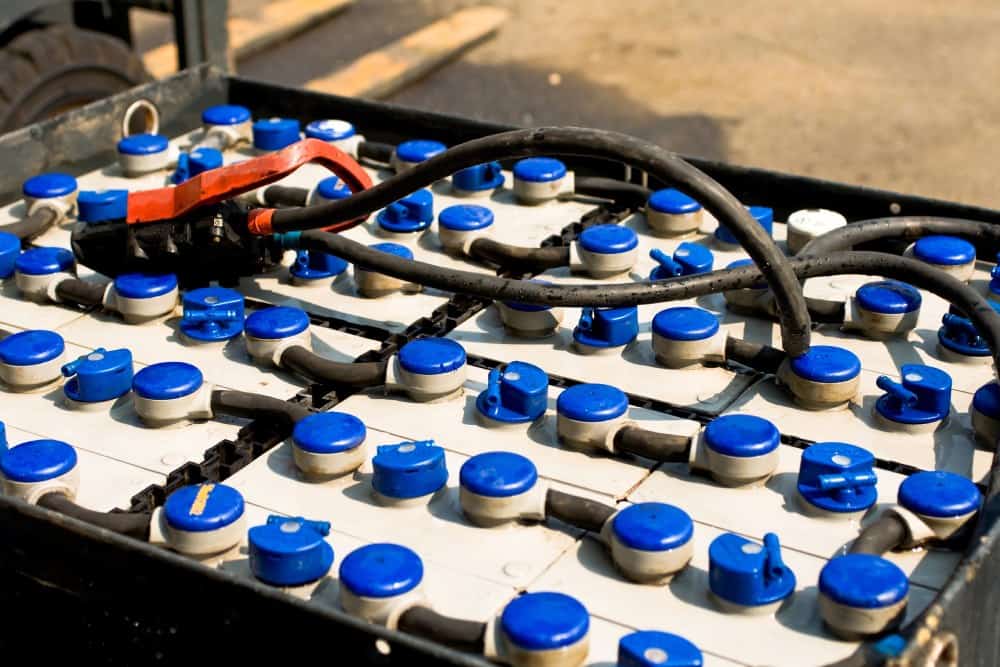
Blue Giant forklift batteries are typically industrial lead-acid traction batteries built to match specific truck compartments. Battery size depends on tray dimensions, cell height, and overall weight, not just voltage. Many Blue Giant walkie units rely on compact 24-volt systems that balance runtime with maneuverability. Larger electric models move into higher voltage ranges to handle heavier loads and longer duty cycles.

Battery identification usually includes both voltage and cell series. Common 85-series cells appear across several Blue Giant models, with variations in length and width to match different truck frames. Selecting the correct size helps maintain proper weight distribution, electrical alignment, and ventilation inside the battery compartment. Incorrect sizing may lead to instability, reduced runtime, or charger incompatibility.

Common Blue Giant Battery Size Options

Several battery configurations appear frequently in Blue Giant lift trucks. Many walkie stackers and pallet jacks operate on 24-volt batteries designed for narrow compartments. These units often feature tray lengths between twenty-five and thirty-one inches, with widths adjusted for specific truck designs.

Some compact equipment uses 12-volt battery arrangements paired to meet system requirements. Heavier electric trucks move into 48-volt systems, which require longer trays and higher overall weight. These higher voltage batteries help manage sustained lifting demands while maintaining consistent power delivery. Battery size selection must always align with the exact truck model and data plate specifications.

For buyers sourcing forklift batteries for Blue Giant lift trucks, confirming tray dimensions, connector type, and charger voltage remains a key step before ordering.

Cost Breakdown For Blue Giant Forklift Batteries

Pricing for Blue Giant forklift batteries varies based on voltage, amp-hour capacity, and construction quality. Most 24-volt systems used in walkie equipment fall within a moderate price range, reflecting their compact size and lower capacity. These batteries typically represent the most economical option for light to medium-duty operations.

Larger 48-volt batteries designed for heavier trucks cost more due to additional cells, increased weight, and higher material requirements. Charger compatibility also influences total investment, especially when upgrading from older equipment.

Extended warranty options, delivery logistics, and installation services may affect final pricing. Many suppliers also factor in core credits when old batteries are returned, which can offset part of the purchase cost. Understanding these variables helps buyers compare quotes accurately rather than focusing only on base price.

Operational Factors That Influence Battery Choice

Battery weight plays a dual role in Blue Giant equipment. In many models, the battery acts as part of the counterbalance system. Selecting a battery outside recommended weight ranges may affect lift stability and steering response.

Charging schedules also shape battery selection. Facilities with limited charging windows may favor batteries with higher amp-hour ratings to extend runtime between charges. Charger matching remains just as important, since mismatched voltage or capacity settings can shorten battery life or disrupt daily workflows.

Get The Right Blue Giant Battery Fit

At Green Power Forklift Batteries, we help fleets select the correct battery size and voltage for Blue Giant equipment without guesswork. We focus on dependable new forklift batteries, strong warranty coverage, clear timelines, and straightforward communication. Our team works across the United States and Canada to simplify ordering and installation. 

If you need accurate sizing or pricing guidance, contact us to keep your fleet operating with confidence.

11 Benefits of Using Green Power Batteries as Your Clark Forklift Batteries

11 Benefits of Using Green Power Batteries as Your Clark Forklift Batteries

Power selection shapes how efficiently electric lift trucks perform across demanding industrial settings. Clark forklift batteries are engineered to handle real workload pressures, including heavy lifting, repeated charging cycles, and variable operating conditions. Selecting the right battery affects uptime, charging flexibility, and long-term cost predictability. 

Operations teams researching Clark forklift batteries often evaluate features that influence daily productivity rather than headline specifications alone. From voltage stability to thermal control, each design element plays a role in maintaining steady performance throughout a shift. 

Businesses sourcing forklift batteries for Clark lift trucks benefit from understanding how these features support operational consistency, reduce interruptions, and align battery investment with actual warehouse demands.

High Energy Density for Consistent Power Delivery

Energy density defines how much usable power a battery stores within a given physical footprint. Clark forklift batteries leverage optimized energy density to deliver reliable output without unnecessary bulk. This design approach allows lift trucks to maintain proper counterbalance while supporting compact battery compartments common in modern warehouse layouts. 

Stable energy storage also supports predictable voltage delivery throughout the discharge cycle, which helps operators maintain smooth acceleration and lift control. When energy density remains consistent, trucks avoid late-shift power dips that slow productivity. 

For fleet managers, this feature simplifies battery selection by aligning physical size, weight, and output with equipment specifications. Energy density directly influences handling precision, runtime reliability, and space efficiency, making it a performance-driven characteristic rather than a purely technical metric.

Extended Cycle Life That Limits Replacement Disruption

Cycle life reflects how well a battery retains usable capacity after repeated charging and discharging. Clark forklift batteries are engineered to handle demanding duty cycles while maintaining consistent output over time. Longer cycle stability allows facilities to plan replacements with fewer unexpected interruptions. 

Predictable capacity retention helps maintain steady runtime across shifts, reducing the need for mid-shift battery changes. In high-traffic warehouses, fewer replacements help keep operations moving without disruption. Cycle life also influences charging infrastructure planning, as batteries with consistent degradation patterns allow more accurate scheduling. 

This characteristic helps control costs by aligning battery investment with real usage rather than early replacement caused by uneven performance.

Integrated Battery Management Systems

Battery management systems regulate internal conditions such as voltage balance, temperature, and charge limits. In Clark forklift batteries, these systems maintain controlled performance during both operation and charging. 

Real-time monitoring detects irregular behavior early, lowering the risk of unexpected shutdowns. Balanced cell regulation promotes uniform discharge, helping preserve internal components and sustain steady output. These systems also promote safer charging practices by limiting overcharge and deep discharge scenarios. 

For facilities that monitor equipment performance, battery management systems deliver valuable operational insight without adding complexity to daily use.

Fast Charging Capability That Preserves Availability

Charging speed has a direct impact on fleet availability. Clark forklift batteries designed for faster charging reduce idle time between shifts or during opportunity charging windows. Shorter charging cycles allow trucks to return to service quickly without compromising power stability. 

This flexibility benefits facilities with fluctuating workloads or limited spare equipment. Controlled charging profiles help safeguard internal battery structure while allowing frequent partial charges. 

Faster charging improves scheduling adaptability and helps maintain consistent throughput across extended operating hours.

Adaptability to Temperature Variations

Warehouse environments often expose batteries to temperature extremes, from refrigerated storage areas to warm production floors. Clark forklift batteries are built to maintain stable output across a wide range of operating conditions. 

Temperature adaptability helps preserve capacity and discharge consistency despite environmental changes. Batteries that tolerate temperature variation reduce seasonal performance shifts that interrupt productivity. 

This capability promotes safe operation by managing thermal stress during extended use. Environmental adaptability also simplifies battery selection for facilities operating across multiple regions or climate-controlled zones.

Industrial-Grade Construction for Daily Demands

Forklift batteries are exposed to vibration, repeated movement, and heavy load cycles. Clark forklift batteries feature durable construction that shields internal components from physical stress. 

Reinforced casings and stable internal layouts help preserve performance integrity during daily operation. Strong construction also enhances safety during handling and installation. 

Over time, structural resilience minimizes downtime caused by physical damage. For high-usage fleets, build quality plays a major role in long-term reliability and consistent operation.

Compatibility Across Clark Lift Truck Models

Battery fit directly affects both safety and performance. Clark forklift batteries are designed to match a wide range of Clark lift truck configurations. Proper compatibility allows correct weight distribution, precise electrical alignment, and effective ventilation. 

Standardized fit minimizes the need for modifications that increase risk. For mixed fleets, compatibility streamlines inventory planning by reducing the number of battery variations required. Accurate fit also preserves predictable handling characteristics intended by equipment design.

Stable Voltage Under Heavy Load Conditions

Heavy lifting places sustained demand on battery output. Clark forklift batteries maintain stable voltage during load-intensive tasks, allowing consistent lift speed and travel response. Voltage stability prevents sluggish performance during peak workload periods. 

It also shields electrical systems from fluctuations that strain motors and controls. Consistent output helps operators maintain productivity while extending component service intervals.

Safety-Oriented Design Elements

Safety-focused design lowers operational risk. Clark forklift batteries incorporate thermal regulation, controlled charging behavior, and protective enclosures. These elements limit overheating and reduce exposure risks during normal operation. 

Built-in safeguards help meet workplace safety standards without adding procedural complexity. Safety-oriented design contributes to predictable behavior during both charging and active use.

Efficient Charger Integration

Battery performance depends on charger compatibility. Clark forklift batteries integrate smoothly with modern charging systems to maintain balanced charge cycles. Proper integration keeps batteries ready for use while protecting internal components. 

Effective charger interaction also helps facilities manage electrical load distribution. This capability simplifies deployment and contributes to long-term performance consistency.

Predictable Output for Fleet Planning

Predictable battery behavior improves operational planning. Clark forklift batteries deliver consistent discharge patterns that help managers schedule shifts, charging, and replacements with confidence. Reliable output reduces uncertainty during extended operations.

Predictability also simplifies standardization across multiple locations. Consistent performance allows battery behavior to align with operational expectations rather than forcing workflow adjustments.

Ready to Upgrade Your Clark Forklift Battery Setup

At Green Power Forklift Batteries, we work directly with operations teams to match Clark lift trucks with new batteries that deliver stable performance and long-term value. Our focus is on clear recommendations, competitive pricing, fast lead times, and responsive customer service across the United States and Canada. All of our new forklift batteries are backed by our industry-leading 7-year warranty, and we emphasize a simple and quick quote/order process.

If guidance or pricing details are needed, you can contact us for direct assistance.