
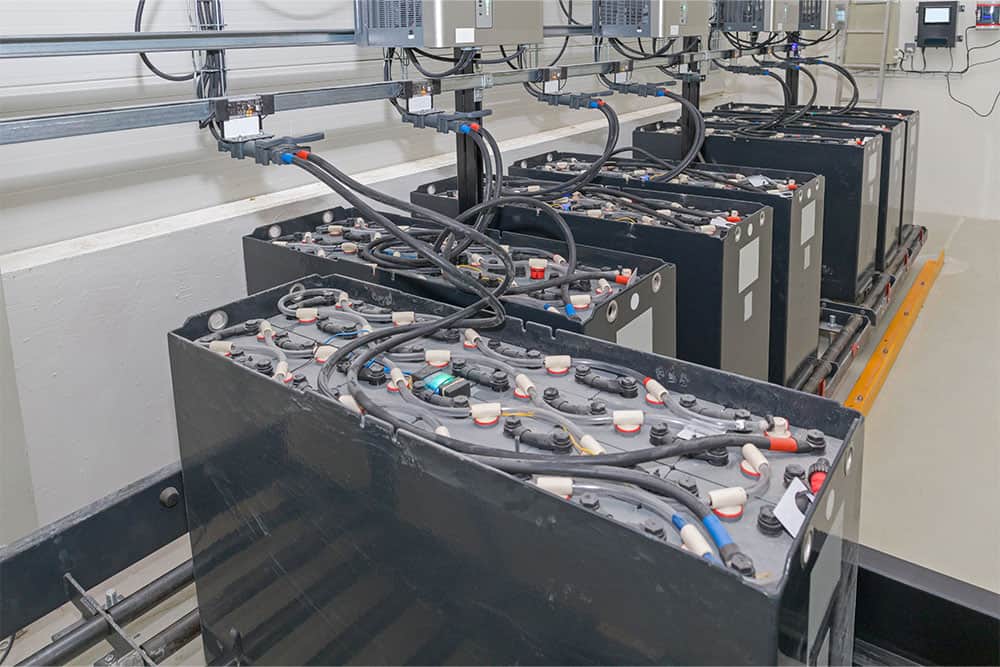
If you find out your forklift battery charger not charging, it can bring operations to a halt, causing delays and increasing costs. The efficiency of a forklift fleet depends on a reliable charging system that guarantees your batteries are always ready for use. Knowing why chargers fail and knowing how to address these issues can prevent downtime and maintain productivity.
This article explains the common causes behind a non-charging forklift battery charger, provides troubleshooting tips, and discusses how to determine whether it is time to replace your battery or charger.
Why A Forklift Battery Charger Not Charging
A forklift battery charger is a key part of your fleet’s power system, but it can stop functioning for various reasons. Here are the most frequent causes:
Faulty Connections
Corroded, loose, or damaged connectors can prevent the charger from delivering power to the battery. Terminals exposed to moisture or grime may also corrode over time. This interrupts the connection.
Voltage Incompatibility
Batteries come in different voltage configurations, such as 24V, 36V, 48V, and 80V. Using a charger that does not match your battery’s voltage will result in poor or failed charging.
Battery Degradation
Forklift batteries wear down over time, losing their ability to hold a charge. If a charger appears to be working, but the battery fails to retain power, the issue may lie with the battery itself.
Internal Charger Malfunctions
A charger comprises components like fuses, diodes, and circuitry. When these parts fail, the charger may stop working entirely. It may need to be replaced if no lights, sounds, or heat emanates from the charger during operation.
Troubleshooting a Forklift Battery Charger Not Charging
Inspect the Charger Indicators
Modern chargers have diagnostic displays or indicator lights. These features can signal an error or malfunction, helping you identify the issue. Review the charger’s manual for guidance on interpreting these indicators.
Verify the Power Source
Make sure the charger is plugged into a functional outlet. Sometimes, a tripped circuit breaker or power outage is the root of the problem. Test the outlet with another device to confirm it is supplying power.
Examine the Connectors
Check the cables and terminals for wear, corrosion, or misalignment. Clean corroded terminals with a terminal cleaner or baking soda solution. Make sure the connectors are securely attached to the battery and charger.
Test the Battery
If the charger seems operational, but the battery is not charging, the issue could stem from the battery. Measure the battery’s voltage with a multimeter. If it is significantly lower than the rated voltage, the battery may require replacement.
Reset the Charger
Some chargers feature a reset button or procedure. Unplug the charger, wait a few minutes, and then reconnect it. This process can resolve minor software or hardware glitches.
Deciding Between Replacing the Charger or Battery
If troubleshooting does not resolve the issue, consider replacing the faulty component. Deciding whether to replace the charger or the battery depends on several factors:
- Battery Condition: Batteries nearing the end of their lifespan may no longer hold a charge effectively. Green Power Forklift Batteries offers new forklift batteries with an industry-leading 7-year warranty, guaranteeing long-term reliability.
- Charger Age and Efficiency: Older chargers may be less efficient or incompatible with modern battery technology. Upgrading to a new charger can enhance charging performance and extend battery life.
- Budget Constraints: Refurbished forklift batteries can be a cost-effective alternative to purchasing a brand-new battery. They bring reliable power while saving on costs.
Preventing Future Charging Issues
Routine maintenance of chargers and batteries can reduce the risk of downtime and extend the lifespan of your equipment. Follow these best practices:
- Match Chargers and Batteries: Use chargers specifically designed for your forklift battery’s voltage and type. Label charging stations and equipment to avoid mismatches.
- Regular Inspections: Check connectors, terminals, and cables for signs of wear, corrosion, or damage. Promptly address these issues to prevent larger problems.
- Monitor Battery Health: Lead-acid batteries require regular maintenance, including water level checks and cleaning. Keep water levels consistent, and use only distilled water to prevent mineral buildup.
Reliable Solutions for Forklift Batteries
When your forklift battery charger is not charging, the impact on operations can be significant. By addressing the issue promptly and choosing the right replacement components, you can minimize downtime and maintain efficiency.
Green Power Forklift Batteries provides high-quality power solutions to support your fleet. Our new forklift batteries have a 7-year warranty and make sure of reliable performance. We also offer refurbished forklift batteries for a budget-friendly alternative and expert guidance to help you choose the best option.
