
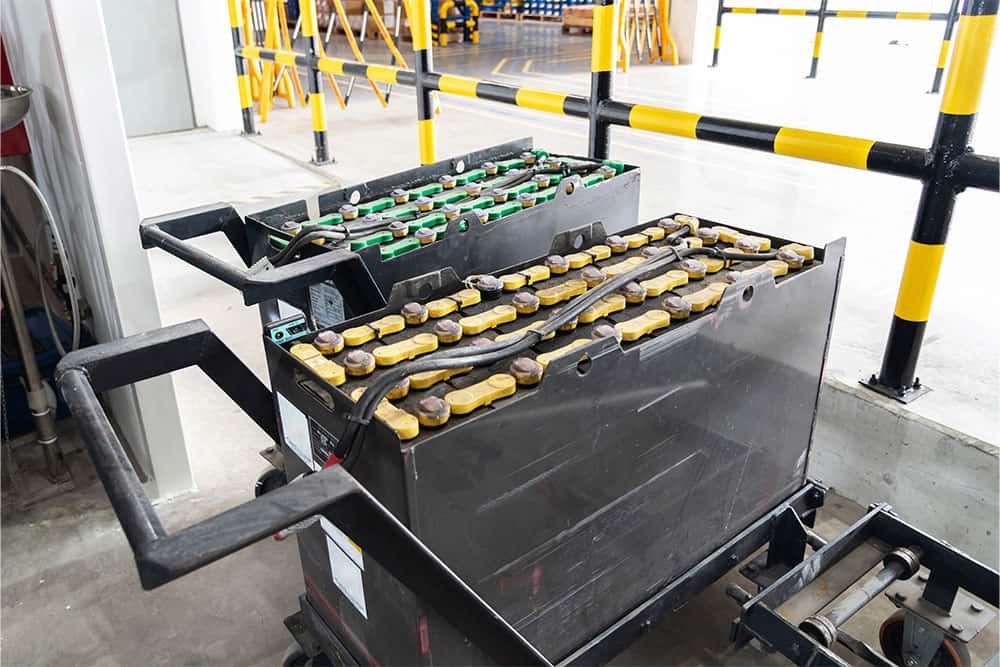
A forklift battery is more than just a source of power; it is a carefully designed system with multiple interconnected components. Each part plays a specific role in featuring optimal performance. Understanding these forklift battery parts is necessary for effective maintenance, sourcing replacements, and extending battery life.
If you are managing a fleet of forklifts or looking into new or refurbished forklift batteries, this guide will give you a clear view of how these key components work together.
Forklift Battery Connector
The battery connector is the key link between the battery and the forklift or charger. It makes sure the smooth transfer of power. There are two primary types of connectors: Flat Style and Euro DIN. Flat Style connectors are commonly used in North America, while Euro DIN connectors are prevalent in Europe.
Modern connectors, such as Moulded REMA Connectors (MRC), integrate cables and terminals into a single molded piece, offering durability and ease of installation.
Battery Connector Harness
The connector harness is an assembly that includes the battery connector, the cables, and the connections to the positive and negative terminals. It is designed to guarantee a secure and efficient power transfer.
These components are often molded together for forklifts equipped with modern harness systems, reducing wear and tear while improving safety and reliability. Confirm compatibility with your existing setup to avoid operational disruptions when sourcing replacement parts.
Forklift Battery Cells
Each forklift battery comprises multiple cells, each producing 2 volts. For instance, a 24-volt battery contains 12 cells, while a 48-volt battery has 24. These cells are connected in series using intercell connectors to achieve the desired voltage.
One faulty cell can disrupt the entire system. Thus, it’s mandatory to monitor and replace individual cells as needed. Regular inspection of cells makes sure the forklift battery operates at peak efficiency.
Intercell Connectors and Bolts
Among all forklift battery parts, intercell connectors join individual battery cells. They enable the flow of electricity throughout the system. In the U.S., these connectors are often rigid and welded. They come with durability. In Europe, flexible, bolted connectors are more common, allowing for easier replacements without specialized tools.
Choosing the right type of connector is necessary for maintaining consistent performance and simplifying maintenance tasks.
Battery Tray or Tank
The battery tray or tank houses the cells and provides structural support. Most trays are made of metal coated with acid-resistant paint to prevent corrosion. In the U.S., trays often include drain holes for removing water accumulated during cleaning or maintenance. Meanwhile, European trays usually lack these holes and require suction pumps for liquid removal.
Packing Material
Packing material is placed between the cells and the tray to keep the cells securely in position. It prevents movement during operation. This reduces the risk of damage to cells, connectors, or the tray. Proper packing material enhances the overall durability of the forklift battery, especially during heavy-duty applications or frequent usage.
Battery Electrolyte Monitor
Modern forklift batteries often include an electrolyte monitor, a valuable tool for maintaining water levels within the cells. These monitors range from basic models with a single LED indicator to advanced systems with multiple indicators and alarms. Regularly topping off the battery with distilled water when indicated can prevent dry-out conditions, extending the battery’s life.
Vent Cap or Battery Filling System
Vent caps are important for replenishing water lost during operation and charging. They can be simple caps for individual cells or part of an integrated battery filling system. These systems allow for simultaneous water addition across all cells, saving time and reducing the risk of operator error. Maintaining proper water levels is critical for preventing damage to the internal components.
Battery Insulation
Battery insulation is a protective layer often installed around the cells within the tray. It helps regulate the battery’s temperature during operation and charging, especially in extreme heat or cold environments.
Proper insulation minimizes the risk of overheating, prevents freezing in cold storage facilities, and enhances overall battery efficiency. Making sure that insulation is intact and compatible with your forklift battery type is critical for optimal performance.
Why Understanding These Parts Matters
Recognizing the function of forklift battery parts helps in multiple ways. It enables you to identify issues early, reduces downtime, and makes sure you can source the correct replacement parts. Whether you are using new forklift batteries or refurbished ones, knowing these details can optimize their performance and extend their lifespan.
Green Power Forklift Batteries offers a range of new forklift batteries backed by industry-leading warranties and excellent customer service. We also provide competitively priced refurbished batteries that meet rigorous quality standards.
Contact us today to explore your options!
