
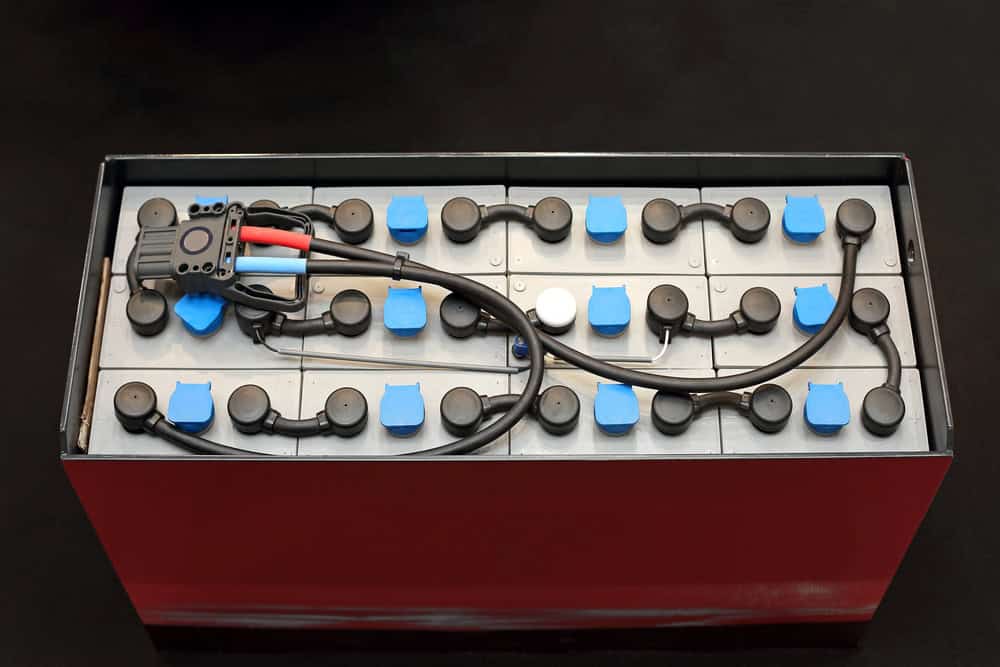
Forklift battery reconditioning is a process that restores used lead-acid batteries to a reliable, measurable standard of performance — extending their service life and reducing the cost of keeping a forklift fleet running. Rather than replacing a battery every time performance declines, businesses can opt for refurbished forklift batteries instead. This guide explains what forklift battery reconditioning actually involves and walks through the full 18-step process used by Green Power Forklift Batteries.
What is Forklift Battery Reconditioning?
Forklift battery reconditioning typically involves a series of steps to clean, repair, and rejuvenate the battery cells. Reconditioning can significantly improve a battery’s capacity and efficiency, making it almost as good as new.
Reconditioning is most commonly performed on lead-acid batteries, which are widely used in forklifts. This process not only saves money but also has environmental benefits, as it reduces the need for new batteries and minimizes waste.
Green Power Forklift Batteries’ 18-Step Reconditioning Process
Phase 1: Initial Inspection
Step 1: Visual Inspection
The process begins with a thorough visual inspection to identify the battery’s most obvious problems. Technicians check for symptoms of acid loss, automatic watering system condition, corrosion, inter-cell (IC) connector problems, signs of past explosions, and physical damage.
Step 2: Wash and Neutralization
The battery is washed with water and acid-neutralizing chemicals. This provides clean and safe working conditions and eliminates any “creep currents” that could interfere with accurate diagnosis.
Step 3: IC Resistance Monitoring
High resistance in a battery causes voltage drops and excessive heat. Technicians locate and correct high-resistance components throughout the battery. Common causes include loose or corroded IC connectors, sulfated connections, bad welds, and damaged cables.
Phase 2: Diagnosis
Step 4: Pre-Diagnosis Cycling
Two high-current short cycles are applied to remove new sulfate crystals, leaving only the larger and more stubborn deposits. This step is especially important for batteries that have been out of service for an extended period.
Step 5: Diagnosis Load Test
Technicians measure the open-circuit voltage (OCV) and specific gravity (SPGR) of all cells when the battery is fully charged, then run a full load test to measure the battery’s amp-hour (Ah) capacity and identify any underperforming cells.
Phase 3: Equalization
Step 6: Slow/Low Constant Charge Equalization
If the load test reveals differences in cell capacity, a low-current equalization charge is applied to align cells.
Step 7: Quick Load Test
A shorter load test is run to evaluate whether the equalization charge was sufficient or if additional intervention is needed.
Step 8: Cell Bridging
If a small number of cells are too strong relative to the rest, those cells are disconnected from the circuit and the remaining battery is charged without them.
Step 9: Single Cell Equalization
If a small number of cells are too weak, those cells are isolated and charged separately in their own circuit to bring them up to an acceptable level.
Step 10: Cell Change (If Necessary)
If the capacity difference between cells remains too large after all equalization steps, a cell replacement is performed. This is the only path forward when equalization alone cannot resolve the imbalance.
Phase 4: Capacity Maximization
Step 11: High-Current Pulse Desulfation
This is the most critical step in the capacity maximization phase. High-current pulses break down even the most stubborn sulfate crystals and return them to their active state as sulfuric acid. The plates are also cleaned of other high-resistance contaminants. This step takes 72 hours.
Step 12: Max Charge
The battery is charged with constant current to its maximum capacity, restoring any lead sulfate particles still drifting in the electrolyte to their active state.
Step 13: Load Test
A load test compares SPGR readings with voltage under load to identify which cells, if any, require an acid adjustment.
Step 14: Acid Adjustment
Sulfuric acid is added to specific cells as needed to even out cell voltages under load.
Step 15: Equalization Charge
An additional equalization charge is applied to balance cell capacities and fully mix any acid that was added into the electrolyte.
Step 16: Final Capacity Load Test
One last load test confirms that the battery has reached an acceptable capacity and that all cells are performing evenly before the battery moves to the finish phase.
Phase 5: Finish
Step 17: Final Charge
The battery is delivered fully charged. A charge immediately before putting the battery into service is still recommended to ensure maximum performance from the first use.
Step 18: Paint and Final Preparation
The battery casing is sanded, and all corrosion is removed. The battery is then painted with anti-corrosive and antioxidant paint. Once the paint dries, stickers are applied, the battery is wrapped in protective plastic film, secured to a pallet, and prepared for shipping.
Benefits of Reconditioned Batteries
Reconditioned batteries offer several advantages:
- Cost Savings:
Reconditioned batteries are more affordable than new ones, providing a cost-effective solution for businesses. - Environmental Impact:
By extending the life of existing batteries, reconditioning reduces waste and the demand for new battery production, which is resource-intensive. - Performance and Reliability:
Properly reconditioned batteries can deliver performance close to new, ensuring that forklifts operate efficiently without the high cost of replacement batteries.
Green Power Forklift Batteries’ Approach
Green Power Forklift Batteries supplies reconditioned forklift batteries that have been processed through the full 18-step reconditioning process described above. Every battery is guaranteed to retain a minimum of 85% of its original rated capacity and comes with a standard 1-year warranty. Green Power does not offer reconditioning as a service — the reconditioned batteries available for sale are fully processed, tested, and ready to deploy.
Whether you require new forklift batteries or refurbished batteries, we have the right products to keep your forklifts running smoothly. Contact us today to explore our selection of new and refurbished forklift batteries.
