
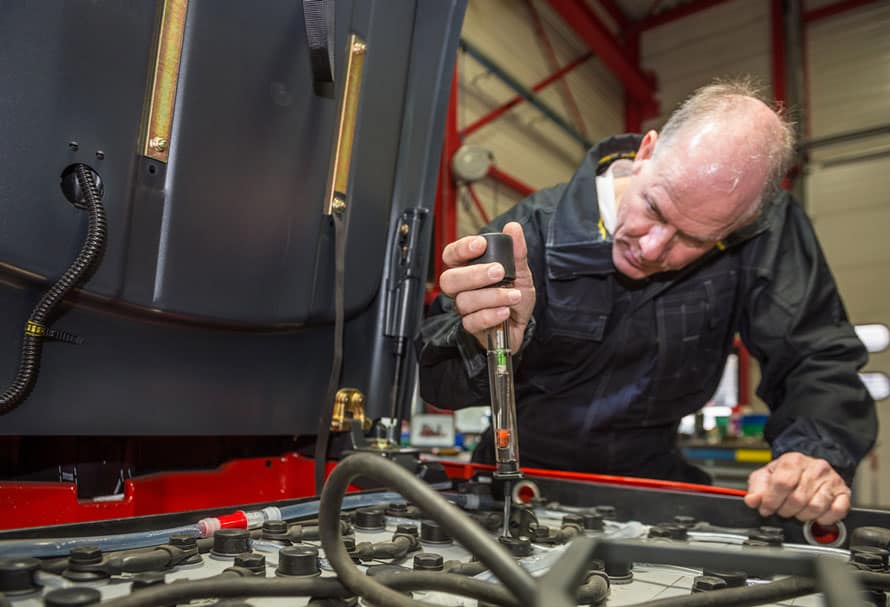
Proper forklift battery maintenance is necessary to help guarantee the life and top performance of your equipment. Proper care and attention can extend the lifespan of new forklift batteries and prevent potential disruptions in your operations. This guide provides a close look into the best practices for maintaining forklift batteries and highlights typical pitfalls to steer clear of.
Forklift Battery Maintenance Requires Knowledge of the Basics
Before you even think about forklift battery maintenance, it’s important to know how these batteries work. Most forklifts use lead-acid batteries, which consist of lead plates and sulfuric acid. These batteries produce electricity through a chemical reaction between the lead plates and acid. Proper maintenance of these components provides efficient energy production and battery longevity.
Regular Inspection and Cleaning
One of the biggest parts of forklift battery maintenance is that of regular inspection. Routine checks help identify signs of wear or damage early on. Start by examining the battery terminals for corrosion. Corrosion appears as a white, powdery substance and can hamper the battery’s performance. Cleaning terminals with a mixture of baking soda and water can help prevent corrosion buildup.
Check the battery case for any cracks or leaks. These could lead to acid spillage and damage to the forklift. Tackling these issues promptly will prevent worse problems and help guarantee the safe operation of the forklift.
Proper Charging Practices
Charging practices play a major role in forklift battery maintenance. Always follow the manufacturer’s recommendations for charging times and procedures. Overcharging or undercharging can lessen battery efficiency and lifespan. Charge the battery when it reaches around 20-30% of its capacity to avoid deep discharges (which can shorten battery life).
During the charging process, make certain the battery is in a well-ventilated area to prevent the buildup of potentially explosive gases. Avoid charging the battery while it’s still hot from recent use. This can lead to overheating and potential damage.
“Watering” and Electrolyte Levels
Maintaining proper electrolyte levels is another hot topic when it comes to forklift battery maintenance. Lead-acid batteries require periodic watering to keep the electrolyte at the correct level. Low electrolyte levels can expose the battery plates to air, resulting in sulfation and reduced performance.
Use distilled water for topping off the electrolyte (because tap water can introduce impurities that may harm the battery). Always add water after charging, because the electrolyte expands during charging. Check the water levels regularly and make sure they remain above the plates but below the battery’s vent wells.
Temperature Management
Temperature control is important for optimal forklift battery maintenance. Extreme temperatures, both hot and cold, can affect battery performance and lifespan. In hot environments, excessive heat can cause the battery to overheat and reduce its effectiveness. However, cold temperatures can slow down the chemical reactions within the battery, affecting its efficiency.
To manage temperature, store the battery in a climate-controlled environment whenever possible. Provide proper ventilation in the charging area to get rid of any heat generated during the charging process. If your operations are conducted in changing temperatures, you might want to use a battery with a built-in thermal management system to maintain optimal performance.
Avoiding Typical Mistakes
Common mistakes can negatively influence the effectiveness of forklift battery maintenance. One frequent error is neglecting the battery’s maintenance schedule. Skipping inspections or ignoring early warning signs can lead to bigger issues down the line. Sticking to a regular maintenance schedule is highly recommended for preventing such problems.
Another mistake to avoid is using incorrect charging equipment or procedures. Always use chargers that are compatible with your forklift battery’s specifications. Using improper chargers can cause damage and reduce battery life.
Also, avoid using the battery until it is completely discharged. Deep discharges can result in a condition known as sulfation. This reduces efficiency when lead sulfate crystals form on the battery plates.
Maintaining a partial charge and recharging the battery when it reaches 20-30% capacity helps prevent this issue.
Replacing and Upgrading Batteries
At times, even with the best care, batteries will eventually need to be replaced. Knowing when to replace them with new forklift batteries is an important part of forklift battery maintenance. Signs that it may be time for a replacement include decreased battery life, reduced performance, or frequent charging issues.
Upgrading to new batteries provides a number of pluses – think improved energy efficiency and longer operational life. When shopping for new batteries, think about things like battery capacity, compatibility with your forklift, and the specific requirements of your operational environment. When in doubt, speak to a professional to make sure you choose the right battery for your needs.
Safe Handling and Disposal
Proper handling and disposal of forklift batteries are also stressed when discussing forklift battery maintenance. Forklift batteries contain hazardous materials that require careful handling to avoid accidents or environmental damage. Always wear protective gear when handling batteries and make sure that any spills are cleaned up immediately.
For disposal, follow local regulations and guidelines for battery disposal. Many cities have specific facilities for recycling lead-acid batteries. This can help prevent environmental contamination. Avoid disposing of batteries in regular trash, because this can lead to harmful chemical leaks.
Why Battery Maintenance Matters in Cost Efficiency
Besides providing for smooth operations, forklift battery maintenance plays a big part in cost efficiency. Proper maintenance extends the life of your batteries, yes. But it also helps lower overall operational costs. By keeping batteries in the best possible condition, you reduce the need for frequent replacements and avoid potential downtime (which can be costly).
A well-maintained battery operates more efficiently. This means fewer energy costs over time. Regularly checking and maintaining the battery’s electrolyte levels, cleaning terminals, and following correct charging procedures all contribute to better battery performance.
Overall, proactive maintenance helps prevent breakdowns. Dealing with small issues before they turn into major problems can save on repair costs. It also means that your forklifts are always ready for use, preventing delays in your operations that could affect productivity and revenue.
Investing in a solid forklift battery maintenance program is a good financial decision. It boosts overall operational efficiency. It is a proactive approach that pays off by reducing long-term costs and improving the reliability of your equipment.
Maintaining Efficiency and Safety
Remember that forklift battery maintenance is of the utmost importance for the longevity and efficiency of your equipment. By regularly inspecting and cleaning batteries, sticking to proper charging practices, maintaining electrolyte levels, and managing temperature, you can extend the lifespan of your forklift batteries and prevent operational disruptions.
Green Power Forklift Batteries: Leading the Charge in Sustainable Solutions
At Green Power Forklift Batteries, we specialize in forklift battery maintenance by providing environmentally friendly and economically viable solutions. Our focus is on delivering top-quality power solutions with our own brand of new forklift batteries, renowned for their competitive pricing, complete warranties, and exceptional customer service. Our new batteries are designed to provide reliable performance and long-term value, backed by a strong 7-year warranty.
For reliable, cost-effective, and eco-friendly battery solutions, contact us at 619-613-0036 or use our online form to reach out today.
