
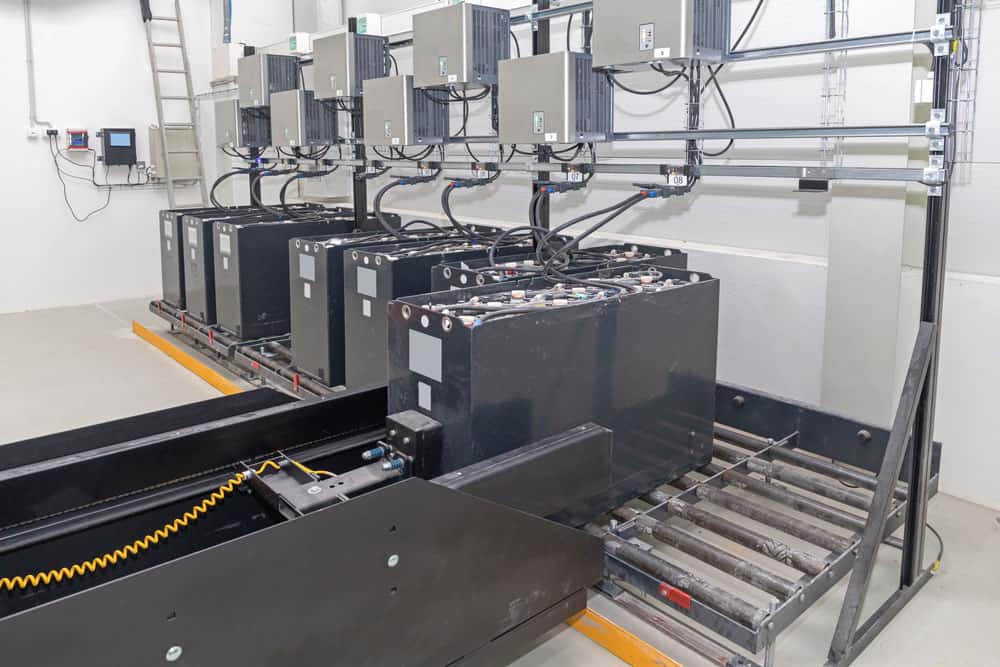
Understanding forklift battery prices is important for anyone running a warehouse or business that relies on forklifts. The price of a forklift battery is not just a single upfront cost but involves several factors that contribute to the overall expense.
In this article, we will explore the different types of forklift batteries, their costs, and the hidden factors that can affect the total price. We aim to provide a clear picture of what to expect when budgeting for forklift batteries.
Types Of Forklift Batteries
Forklift batteries come in two main types: lead-acid and lithium-ion. Each type has its advantages and disadvantages, which also affect their prices.
Lead-acid batteries have been in use for over a century. They are the traditional choice for many industries due to their reliability and affordability. These batteries are known for providing large amounts of power and being able to handle heavy-duty tasks. However, they require regular maintenance, including checking fluid levels and cleaning. The initial cost of a lead-acid battery is lower than lithium-ion, but the maintenance and shorter lifespan can add to the overall cost.
Lithium-ion batteries are a more modern option which was introduced in the 1990s. They are lighter, more efficient, and have a longer lifespan compared to lead-acid batteries. Lithium-ion batteries require less maintenance, which can save time and labor costs. However, their higher initial price can be a significant investment. Despite the higher upfront cost, many businesses find that the benefits of lithium-ion batteries outweigh the initial expense over time.
Average Prices Of Forklift Batteries
When looking at the average prices of forklift batteries, it’s important to consider both the upfront cost and the long-term expenses. For lead-acid batteries, the price typically ranges from $5,000 to $12,000. This price depends on the size and capacity of the battery.
On the other hand, lithium-ion batteries usually cost between $17,000 and $20,000. Although these batteries cost nearly twice as much as lead-acid batteries, their longer lifespan and lower maintenance costs can make them a more economical choice in the long run.
Factors Affecting Forklift Battery Prices
Several factors can influence the price of a forklift battery beyond the type of battery. One key factor is the operating time of your forklifts. If your warehouse operates multiple shifts, you might need more batteries to guarantee that fully charged batteries are always available. This increases the initial cost and the space needed for charging stations.
Charging time is another important factor. Lead-acid batteries take about 8 hours to charge, which can be inconvenient for operations that require continuous use of forklifts. In contrast, lithium-ion batteries charge much faster, often within 1 to 2 hours. This quick charging can reduce downtime and increase productivity for a more cost-effective option in the long run.
The lifespan of the battery also plays a significant role in the overall cost. Lead-acid batteries generally last for 500 to 1,000 charging cycles, whereas lithium-ion batteries can last up to 3,000 cycles. This means that while you might pay more upfront for a lithium-ion battery, you will likely not need to replace it as soon as a lead-acid battery. This can lead to better potential savings over time.
Maintenance costs are another consideration. Lead-acid batteries require regular maintenance, such as watering and cleaning, which can add to the overall expense. On the other hand, lithium-ion batteries are virtually maintenance-free. This aspect can reduce labor costs and minimize downtime for maintenance.
Operating Efficiency And Costs
The efficiency of the battery can also affect its cost. Lead-acid batteries tend to be less efficient than lithium-ion batteries. They have a lower discharge capacity and can lose charge more quickly. This can result in more frequent charging and higher electricity costs.
Lithium-ion batteries are more efficient, with a higher discharge capacity and a slower rate of charge loss. This can result in lower electricity costs and less frequent charging for a more economical choice in the long run.
Environmental Impact
The environmental impact of the battery is another factor to consider. Lead-acid batteries contain toxic materials that can be harmful to the environment if not disposed of properly. They also require more energy to manufacture and maintain.
Lithium-ion batteries, while not completely free of environmental concerns, are generally considered to be more environmentally friendly. They have a longer lifespan, which means fewer batteries need to be produced and disposed of. Also, they require less energy to maintain.
Choosing The Right Battery For Your Needs
Choosing the right forklift battery for your needs involves considering all of these factors. While the upfront cost is an important consideration, it is also important to look at the long-term costs and benefits. If you have a busy warehouse that operates multiple shifts, a lithium-ion battery might be the better choice, despite its higher initial cost. The lower maintenance costs, longer lifespan, and higher efficiency can result in significant savings over time.
If your budget is more limited, or if you do not require continuous use of your forklifts, a lead-acid battery might be a more economical choice. While they do require more maintenance and have a shorter lifespan, their lower upfront cost can make them a more viable option for some businesses.
Working With A Reliable Supplier
When purchasing forklift batteries, working with a reliable supplier is vital. A reputable supplier can help you choose the right battery for your needs and provide valuable advice on maintenance and care.
For example, Green Power Forklift Batteries offers a range of high-quality forklift batteries and can help you find the best option for your specific requirements. A reliable supplier can also provide support and service after the purchase to make sure that your batteries continue to perform optimally.
Cost-Saving Tips
To save costs on forklift batteries, consider implementing a few strategies. One approach is to invest in a battery management system that monitors the health and performance of your batteries. This can help you identify issues early and take corrective action. This proactive approach helps extend the lifespan of your batteries and reduces the need for replacements. Regular maintenance and proper charging practices can also help extend the life of your batteries and improve their efficiency.
Another cost-saving tip is to consider reconditioned or refurbished batteries. These batteries have been restored to good working condition and can provide a cost-effective alternative to new batteries. While they may not have the same lifespan as new batteries, they can be a good option for businesses on a tight budget.
Evaluating Battery Safety
Safety is an important aspect to consider when choosing a forklift battery. Lead-acid batteries can pose safety risks due to the acid and the need for regular maintenance. This can include adding water to the battery, which can expose workers to harmful substances. Proper training for employees handling these batteries is essential to mitigate risks. Lithium-ion batteries, while generally safer, also require proper handling to prevent overheating and fires.
Implementing strict safety protocols and providing necessary personal protective equipment (PPE) can help maintain a safe work environment. Understanding the safety requirements and protocols for each battery type is essential for maintaining a safe work environment and avoiding accidents.
Impact Of Battery Performance On Productivity
Battery performance directly affects the productivity of your warehouse operations. A forklift battery that charges quickly and lasts longer between charges can reduce downtime and keep your operations running smoothly. Compared to lead-acid batteries, lithium-ion batteries typically offer better performance, with faster charging times and longer run times.
Additionally, these batteries maintain consistent power levels throughout their discharge cycle, preventing performance drops that can hinder operations. Assessing the performance metrics of each battery type will help you choose one that maximizes productivity and minimizes disruptions in your workflow. This includes assessing factors including charge time, run time, and power consistency.
Considering Warranty And Support
When purchasing a forklift battery, the warranty and support provided by the manufacturer or supplier can greatly affect your overall costs and satisfaction. A thorough warranty can safeguard you against defects and early failures, offering peace of mind and reducing unexpected expenses. Seek warranties that cover a substantial period and include provisions for replacement or repair.
Reliable customer support is essential for quickly addressing any issues that may arise, and minimizing downtime and operational disruptions. Partnering with a supplier like Green Power Forklift Batteries which is renowned for our reliable warranty and support services can boost your confidence in your purchase and ensure long-term satisfaction.
Making Informed Forklift Battery Choices
Understanding the forklift battery price and the factors that influence it is essential for making an informed decision. Whether you select a lead-acid or lithium-ion battery, it is important to consider not just the upfront cost, but also the long-term expenses and benefits.
By selecting the right battery for your needs and working with a reliable supplier like Green Power Forklift Batteries, you can ensure that your forklifts operate efficiently and cost-effectively. Investing in the right battery can result in significant savings and improved productivity for your business.
If you have any inquiries about our forklift batteries, feel free to contact us today.
