
Quick Summary
Forklift battery selection affects productivity, charging practices, maintenance requirements, and long-term operating costs. Lithium-ion and lead-acid batteries each offer distinct advantages depending on workload demands and facility operations. Understanding the differences between these technologies can help businesses choose a battery solution that aligns with fleet requirements and operational objectives.
Choosing between lithium ion forklift battery vs lead acid solutions can have a significant impact on fleet efficiency, maintenance schedules, and overall operating expenses. Battery technology influences how forklifts are charged, how long they remain productive during shifts, and the amount of attention required to keep equipment operating reliably.
Both battery types have strengths that make them suitable for different environments and workloads, which is why understanding their differences is important before making a purchasing decision. Factors such as runtime expectations, charging habits, facility operations, and budget considerations all play a role in determining the most practical option.
Understanding the Basics of Each Battery Type
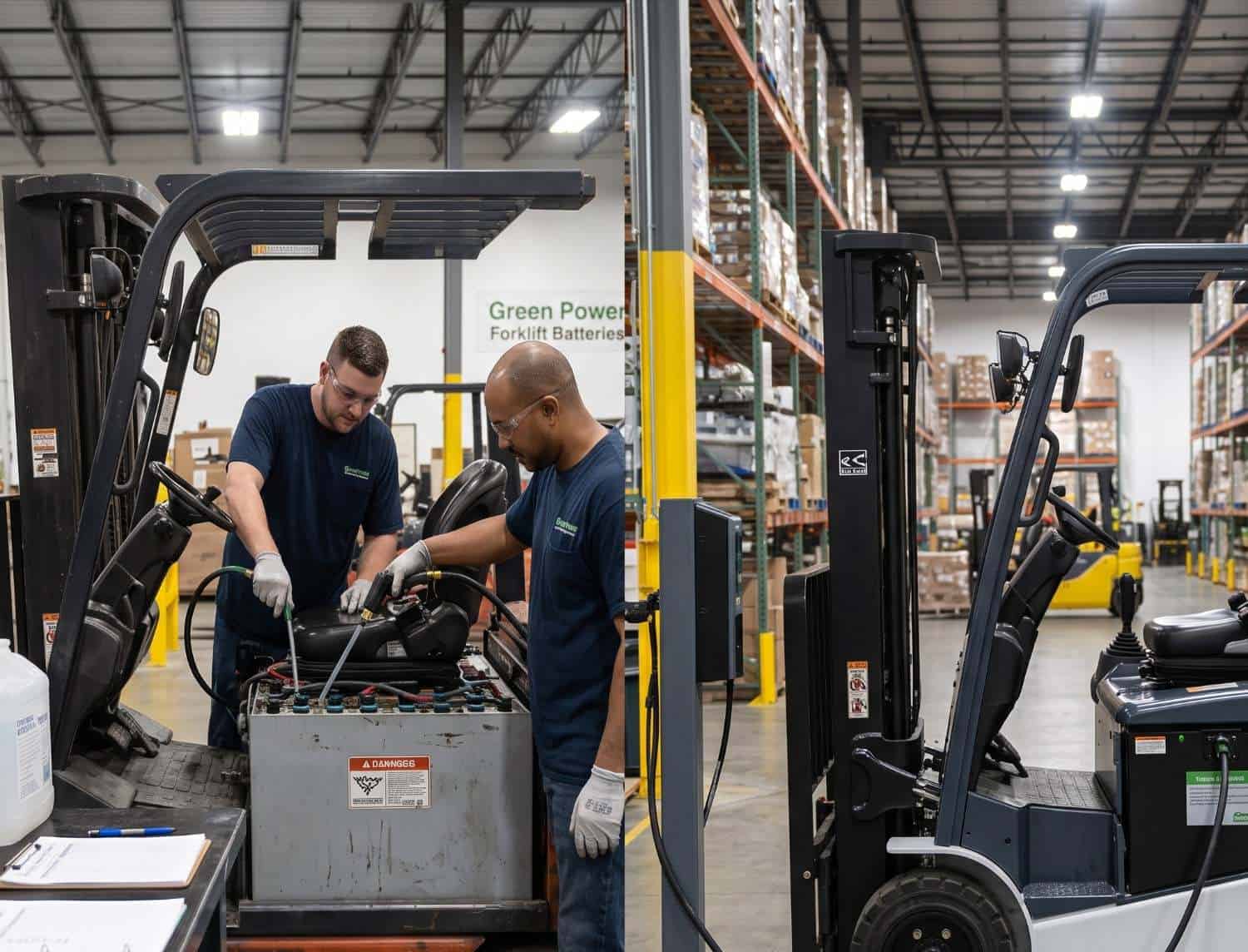
Lead-acid batteries have powered electric forklifts for decades and remain a widely used option across many industries due to their proven performance and lower upfront cost. These batteries rely on electrolyte-filled cells that require routine maintenance and periodic watering to maintain proper operation throughout their service life.
Lithium-ion batteries use advanced battery technology that operates without the watering and maintenance requirements associated with traditional lead-acid systems. Their design allows for more flexible charging practices, making them an attractive option for facilities seeking a different approach to fleet power management.
Comparing Charging and Runtime Performance
Charging practices can significantly influence forklift productivity, particularly in operations where equipment is used across multiple shifts each day. The amount of time forklifts spend charging directly affects equipment availability and the ability to maintain efficient workflows throughout busy periods.
Lithium-ion batteries typically recharge faster and can accept opportunity charging during breaks or downtime, while lead-acid batteries generally follow a more structured charging schedule. Operations with demanding usage patterns may find these charging differences important when evaluating long-term fleet requirements.
Maintenance Requirements and Daily Operations
Battery maintenance represents an ongoing responsibility for many forklift operators, making service requirements an important factor during the selection process. Regular maintenance tasks can influence labor allocation, operational planning, and the amount of time equipment remains available for productive work.
Lead-acid batteries require periodic watering, cleaning, and inspection to maintain performance, while lithium-ion batteries operate with fewer routine maintenance demands. Facilities seeking a simplified maintenance process may view this distinction as a meaningful advantage when comparing battery technologies.
Evaluating Long-Term Cost Considerations
Purchase price is only one part of the overall battery investment, as operating expenses and maintenance requirements contribute to total ownership costs over time. Evaluating the complete financial picture helps businesses make more informed decisions based on long-term operational needs.
Lead-acid batteries generally feature a lower initial investment, making them appealing for organizations with budget-focused purchasing strategies. Lithium-ion batteries typically involve higher upfront costs but may offset some expenses through reduced maintenance requirements and operational efficiencies during their lifespan.
Matching the Right Battery to Your Fleet
Every forklift fleet operates under unique conditions that influence battery performance and value, making it important to evaluate daily usage patterns before selecting a battery type. Factors such as shift schedules, charging opportunities, facility layout, and equipment utilization all affect which solution may be the better fit.
Our battery lineup includes both traditional and advanced battery options designed to meet a wide range of operational requirements. Whether a fleet prioritizes affordability, maintenance simplicity, runtime flexibility, or long-term value, selecting the right battery begins with understanding how equipment is used each day.
Making a More Informed Battery Decision
Battery technology continues to evolve as businesses seek ways to improve productivity while managing operational expenses and equipment performance. Understanding the advantages and limitations of each battery type creates a stronger foundation for making decisions that align with current and future fleet needs.
Our new forklift batteries, reconditioned batteries, and lithium-Ion batteries for forklifts give businesses flexibility when evaluating replacement options for their equipment. Access to multiple battery categories allows operations to choose a solution that reflects workload demands, budget objectives, and long-term fleet planning strategies.
Find the Battery Solution that Fits Your Operation
Battery selection should align with operational goals, equipment demands, and long-term budget considerations. Green Power Forklift Batteries offers quality battery options, responsive customer service, and a straightforward purchasing experience to help businesses identify the right solution for their fleets. Contact us today to discuss your forklift battery needs.
FAQs
Battery lifespan depends on usage, maintenance practices, charging habits, and operating conditions rather than battery type alone.
Lithium-ion batteries require significantly less routine maintenance because they do not need regular watering or electrolyte checks.
Lead-acid batteries remain popular because of lower upfront costs and a long history of reliable forklift performance.
