
Quick Summary
A well-designed forklift charging station contributes to safer operations, smoother workflows, and better battery management. Charging area placement, ventilation, traffic flow, equipment accessibility, and future expansion plans all influence overall efficiency. Understanding the key elements of charging station design can help facilities reduce operational interruptions and create a more productive working environment.
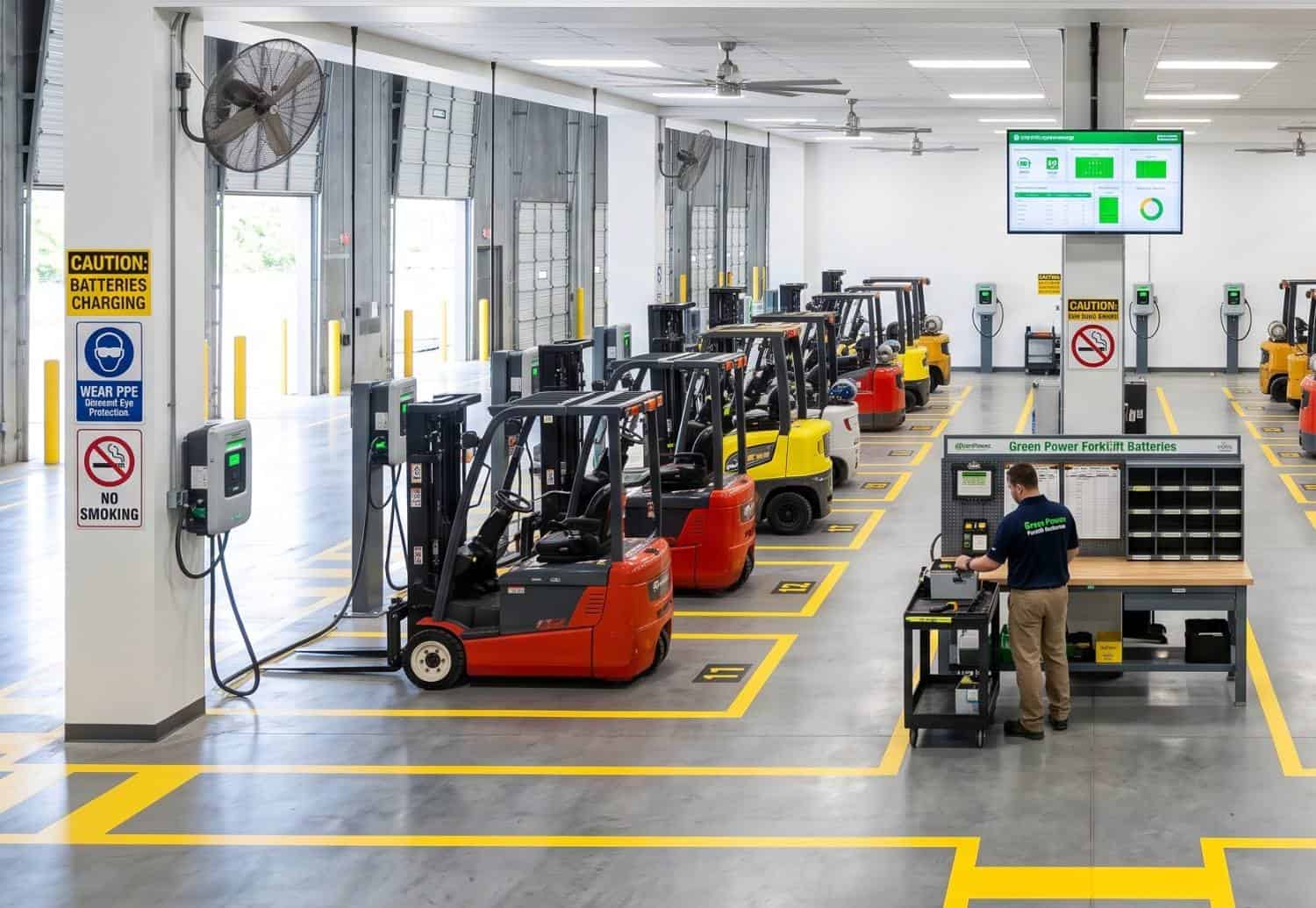
Creating an effective forklift charging station layout involves more than simply assigning a space for battery charging, as the design of the area can influence safety, workflow efficiency, battery performance, and the movement of personnel and equipment throughout a facility. A thoughtful layout helps reduce unnecessary travel distances while making charging procedures easier to manage.
Warehouse operations, manufacturing facilities, and distribution centers all have unique requirements that influence charging station design, making it important to evaluate both current and future operational needs. Proper planning can help facilities create an organized charging environment that contributes to reliable forklift performance and long-term battery management success.
Start With Operational Workflow
Charging stations function as part of a larger operational system, which means their location should complement daily workflows rather than create obstacles that slow productivity. Placing charging equipment too far from active work zones can increase travel time and reduce the amount of time forklifts remain available for productive tasks.
Facilities should evaluate traffic patterns, equipment movement, and shift schedules when selecting a charging station location so that charging activities integrate naturally into existing operations. Positioning charging areas near key operating zones can help reduce congestion while improving overall workflow efficiency throughout the facility.
Allocate Sufficient Space for Equipment Access
Battery charging areas require enough space to allow forklifts to enter, park, charge, and exit safely without interfering with surrounding operations. Restricted spaces can create bottlenecks that increase the likelihood of accidental contact with equipment, infrastructure, or other vehicles operating nearby.
Adequate spacing also allows maintenance personnel to inspect batteries, access chargers, and perform routine service activities without unnecessary difficulty. A charging station that accommodates both equipment movement and maintenance tasks creates a more organized environment that contributes to smoother daily operations.
Prioritize Safety Throughout the Design
Safety should remain a primary consideration when designing any forklift battery charging area because charging activities involve electrical equipment, battery systems, and regular vehicle movement. A well-planned layout helps reduce hazards while creating a more controlled environment for employees working near charging stations.
Clear walkways, designated charging zones, visible signage, and well-defined traffic paths can help separate pedestrians from moving equipment while reducing confusion within the charging area. Establishing these safety measures as part of the initial design process can contribute to more consistent operational practices.
Consider Ventilation Requirements
Battery charging generates heat and, in some cases, gases that should be managed through appropriate ventilation strategies. Facilities that overlook airflow considerations may encounter conditions that affect employee comfort and the overall functionality of the charging area.
Ventilation planning should account for the number of batteries being charged, facility design characteristics, and environmental conditions within the building. Creating adequate airflow helps maintain a more suitable charging environment while contributing to effective battery management practices.
Plan for Charger Placement and Accessibility
Charger placement can significantly influence the usability of a charging station because poorly positioned equipment may create unnecessary obstacles or increase the complexity of charging procedures. Strategic placement helps operators connect equipment efficiently while maintaining orderly traffic patterns.
Forklift battery chargers are available in both new and reconditioned options, making charger selection an important component of a complete battery management strategy. Matching charger placement with operational needs allows facilities to create a charging station that balances accessibility with efficient use of available space.
Design for Future Growth
Facility requirements rarely remain static, particularly in industries experiencing growth, seasonal demand fluctuations, or operational changes. Charging stations that only address current needs may require significant modifications if forklift fleets expand in the future.
Planning for additional charging positions, charger capacity, and equipment access during the design stage can help facilities adapt more easily to changing requirements. This forward-looking approach helps avoid costly redesigns while creating flexibility for future operational developments.
Create an Organized Battery Management System
Charging station efficiency depends not only on physical layout but also on the processes used to manage batteries throughout their service life. Organized battery management practices help reduce confusion and contribute to more consistent equipment performance across the fleet.
Labeling systems, maintenance schedules, inspection procedures, and charging protocols can all help facilities maintain better control over battery operations. Integrating these processes into the charging station environment creates a more structured approach to battery management and equipment reliability.
Support Maintenance and Inspection Activities
Routine maintenance plays an important role in battery performance, making it beneficial to incorporate inspection and service considerations into charging station design. Areas that allow easy access to batteries and chargers can simplify maintenance activities while helping personnel identify potential issues earlier.
Our new forklift batteries and reconditioned battery options are designed to deliver dependable performance, but regular inspections remain an important part of maximizing battery value. Creating space for maintenance activities within the charging station helps facilities maintain a proactive approach to battery care.
Reduce Congestion During Peak Operating Periods
Facilities operating multiple forklifts across different shifts may experience increased activity around charging stations during certain periods of the day. Congestion can slow operations and create inefficiencies if charging areas are not designed to accommodate peak demand.
Evaluating charging schedules and fleet utilization patterns can help determine the number of charging positions needed to maintain efficient operations. A layout that accounts for high-traffic periods helps reduce delays while improving the overall flow of equipment through the charging area.
Align Charging Infrastructure With Battery Strategy
Battery technology influences charging requirements, making it important to align charging infrastructure with the battery solutions used throughout the fleet. Lead-acid batteries, reconditioned batteries, and lithium-ion batteries may each involve different operational considerations that affect charging station design.
Our broad range of battery solutions allows facilities to select equipment that matches operational requirements while maintaining flexibility as needs evolve. Coordinating battery selection with charging infrastructure planning creates a more effective foundation for long-term fleet management.
Build a Charging Area that Works as Hard as Your Fleet
An efficient charging station contributes to better battery management, safer operations, and improved productivity throughout the facility. At Green Power Forklift Batteries, we help businesses find battery and charger solutions that align with operational goals while simplifying the purchasing process. Contact us today to discuss battery, charger, and charging station requirements for your fleet.
FAQs
A well-planned layout improves safety, reduces congestion, and helps maintain efficient equipment movement throughout the facility.
Space requirements depend on fleet size, charger quantity, battery handling procedures, and overall facility design.
Yes, ventilation helps manage heat and maintain suitable conditions during battery charging activities.
Planning for expansion can simplify future upgrades and help facilities adapt to changing operational requirements.
Opportunity charging allows batteries to receive short charging sessions during breaks, which can reduce the number of spare batteries required and simplify a forklift charging station layout. This approach works best when batteries and chargers are compatible with frequent charging cycles.
Regular maintenance helps batteries charge correctly, reach full capacity, and operate safely throughout their lifespan. Neglected batteries may require longer charging times, create workflow disruptions, and reduce the overall efficiency of the charging station.
