
Quick Summary
New lead-acid batteries deliver strong long-term warranty coverage and consistent performance, while reconditioned batteries reduce the upfront investment. Lithium-ion systems can be a practical choice for high-utilization fleets that need quick charging, opportunity charging, and lower routine maintenance demands. The best option depends on shift duration, charging availability, budget, voltage, amp-hour capacity, battery dimensions, weight, and connector specifications. Green Power Forklift Batteries helps fleet managers evaluate these factors before selecting a battery solution.
Choosing between a reconditioned vs. new forklift battery and a lithium-ion system involves more than comparing which option is newer.
Each battery type is designed for different operating needs. A single-shift warehouse may focus on purchase cost, while a multi-shift distribution center may prioritize charging speed, maintenance requirements, and equipment uptime.
Green Power Forklift Batteries works with electric forklift fleets using 24V, 36V, 48V, and 80V configurations. The team reviews the forklift data plate, daily workload, available charging periods, and budget before recommending a battery type. This process helps buyers avoid investing in features they do not need or choosing a battery that cannot meet their operational demands.
Reconditioned vs. New Forklift Battery Options at a Glance
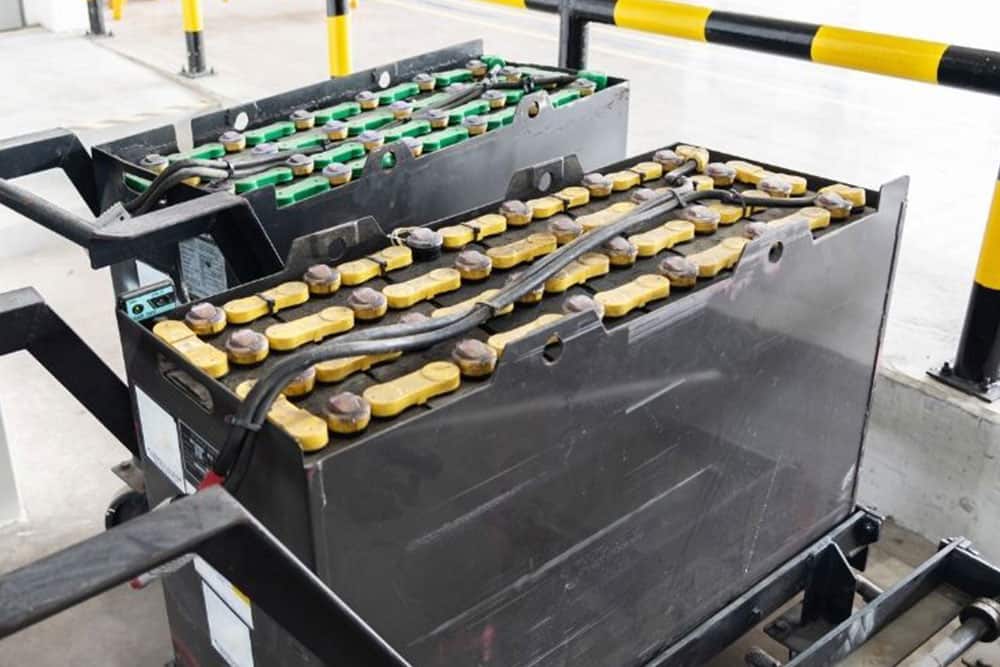
Most new and reconditioned industrial forklift batteries use flooded lead-acid technology. The primary differences involve component condition, warranty coverage, and purchase price. Lithium-ion batteries use a different chemistry and charging method, meaning they should be evaluated as a complete power solution instead of a direct replacement for every lead-acid application.
- New lead-acid batteries: Best suited for buyers looking for maximum warranty coverage, new components, consistent performance, and a long-term ownership plan.
- Reconditioned lead-acid batteries: A good choice for fleets that need reliable capacity at a lower initial cost, especially for moderate-use equipment or forklifts with a shorter expected service period.
- Lithium-ion batteries: Designed for specific high-use operations that benefit from fast charging, opportunity charging, consistent power output, and reduced watering and equalization requirements.
When New Forklift Batteries Make the Most Sense
Our own brand of new forklift batteries is the primary recommendation for businesses that want the strongest combination of price, lead time, customer service, and warranty protection. Most Green Power new batteries carry an industry-leading seven-year warranty, which gives fleet managers a clear long-term value benchmark.
A new battery is often the right choice for newer forklifts, heavily used equipment, or trucks expected to remain active for many years. Fresh cells and components deliver reliable capacity from the beginning. New units also simplify budget planning because fleets can work with a longer warranty period instead of accepting shorter coverage to reduce the initial purchase cost.
The main consideration is the higher purchase price compared with a reconditioned battery. Availability may also vary depending on the forklift model, battery dimensions, capacity requirements, and current inventory.
Green Power reviews these details during the quote process so buyers can compare pricing and delivery expectations before placing an order.
When Reconditioned Forklift Batteries Deliver Better Value
Our refurbished forklift batteries complete a structured 18-stage process and must meet a minimum of 85% of rated capacity before approval. These batteries include a standard one-year warranty. They can significantly lower upfront expenses while still delivering measured performance for suitable applications.
A reconditioned battery can be a strong option for backup forklifts, equipment used for limited hours, seasonal operations, or trucks that may be replaced within a few years. It can also help expanding businesses increase battery availability without spending the full amount required for multiple new batteries.
Understanding the difference between a reconditioned vs. new forklift battery helps fleet managers choose based on actual operating needs instead of focusing only on purchase price. A reconditioned unit may deliver excellent value when the workload, usage frequency, and expected equipment lifespan match the battery’s capabilities.
When Lithium-Ion Forklift Batteries Fit the Workload
Our lithium-ion forklift batteries are designed for operations that can use their charging and maintenance advantages.
Lithium-ion systems can accept shorter charging periods during scheduled breaks, maintain steadier power throughout the discharge cycle, and eliminate the regular watering tasks required by flooded lead-acid batteries.
These advantages can matter in multi-shift facilities where removing batteries for long charging and cooling periods is difficult. Lithium-ion may also reduce the need for battery changing equipment and dedicated storage space. The higher purchase price, charger requirements, battery management system, and equipment compatibility must all be included in the comparison.
Compare Cost, Warranty, Charging, and Maintenance
Upfront Price and Budget
Reconditioned batteries generally have the lowest initial purchase cost. New lead-acid batteries require a larger investment but typically include longer warranty coverage across Green Power models. Lithium-ion systems usually require the highest upfront budget, although their operating benefits may balance some of the additional cost in high-demand environments.
Warranty and Risk Tolerance
Review the current battery warranty and return policy before comparing quotes. Warranty length is not the same as guaranteed battery life, but it shows how risk is allocated between the buyer and seller. New Green Power batteries lead this category, while reconditioned units trade shorter coverage for a lower purchase price.
Charging Equipment and Facility Layout
Battery chemistry must match the charging system. Our forklift battery chargers include options for different voltages, capacities, input power, and charging strategies. A charger that is undersized, mismatched, or configured for the wrong chemistry can reduce productivity and damage the battery.
Routine Battery Care
Flooded lead-acid batteries need scheduled watering, cleaning, terminal inspection, and appropriate equalization. Lithium-ion systems remove several of those tasks but still require correct charging, clean connections, and attention to the battery management system. Maintenance savings should be calculated against the actual labor practices at the facility.
Match the Battery Specifications to the Electric Forklift
Battery type is only one part of the decision. Voltage must match the forklift electrical system exactly. Amp-hour capacity should fit the shift length and duty cycle. Tray dimensions, minimum battery weight, cable length, connector type, and charger compatibility must also be verified before shipment.
Choose the Battery Around the Shift Pattern
For a light single-shift operation, a reconditioned battery may deliver the needed runtime at the lowest capital cost. A new battery becomes more attractive when the forklift is central to daily output, the equipment will stay in service for years, or the fleet values long warranty coverage.
For two- or three-shift operations, compare battery changing, cooling periods, spare battery inventory, and charger availability. Lithium-ion can be valuable when opportunity charging aligns with scheduled breaks. Conventional lead-acid can still work well when the facility has enough batteries, charging stations, and time for proper charging and cooling.
Request a Forklift Battery Quote From Green Power
Green Power Forklift Batteries makes the quote and ordering process straightforward. Share the forklift manufacturer and model, required voltage, amp-hour rating, tray dimensions, connector details, shipping location, and daily workload. We will help compare new, reconditioned, and lithium-ion choices based on the equipment and budget.
FAQs
Is a reconditioned forklift battery as good as a new battery?
A reconditioned battery can be a strong value, but it is not identical to a new unit. Green Power reconditioned batteries must reach at least 85% of rated capacity and carry a standard one-year warranty. New batteries start with fresh components and most include a seven-year warranty.
Which forklift battery type is best for a multi-shift fleet?
The answer depends on charging windows and facility design. Lithium-ion can suit opportunity charging and high utilization. Lead-acid can also serve multiple shifts when the operation has enough batteries, chargers, changing equipment, and cooling time.
Can a lithium-ion battery replace any lead-acid forklift battery?
No. Voltage, dimensions, weight, connector, charger, communication requirements, and forklift compatibility must be checked. A lithium-ion conversion should be treated as a system decision rather than an automatic drop-in replacement.
What information is needed for an accurate forklift battery quote?
The most useful details are the forklift make and model, voltage, amp-hour capacity, battery compartment dimensions, minimum weight, connector type, charger information, shipping location, and expected hours of operation per shift.
