
Voltage loss rarely appears without warning. Operators often notice subtle changes long before a truck stops mid-shift. Understanding how to tell if a forklift battery is bad helps decision-makers avoid unexpected downtime, safety concerns, and rushed replacements. Battery performance reflects daily use, charging habits, and operating conditions, not just age.
Recognizing early warning signs allows warehouse teams to act with confidence, plan replacements responsibly, and protect equipment investment. These indicators also help determine when transitioning to dependable options such as new forklift batteries becomes a practical step rather than a reactive one.
Changes in Charging Behavior Signal Trouble
Charging patterns offer one of the earliest insights into battery condition. A battery that takes longer than normal to reach a full charge often struggles internally. Slower charge completion suggests reduced efficiency inside the cells, which limits how much energy the battery can accept and store. In some operations, this decline leads teams to evaluate alternative technologies, including lithium-Ion batteries for forklifts, which follow a different charging profile.
In other cases, chargers appear to finish normally, yet the battery delivers shorter run time afterward. That mismatch points to declining capacity rather than charger issues. When charging behavior changes without adjustments to workload or environment, the battery itself deserves attention.
Shortened Run Time Affects Daily Operations
Reduced run time stands out quickly in active facilities. Forklifts that once completed full shifts without interruption may need charging earlier or require opportunity charging more often. That shift disrupts workflow and increases strain on chargers and operators.
Fast power drain often pairs with inconsistent lifting strength or slower travel speeds. These symptoms reflect limited energy delivery rather than mechanical faults. As capacity drops, voltage stability weakens, which impacts truck performance under load.
Heat and Odor Indicate Internal Stress
Excessive heat during or after operation signals internal resistance. Batteries should warm slightly during use, yet noticeable heat buildup suggests energy loss rather than efficient output. Heat accelerates internal wear and increases safety risk inside battery rooms.
A sulfur or rotten egg odor during charging also points to internal imbalance. This smell often accompanies overheating or electrolyte stress. Facilities should treat these signs seriously, as they indicate declining battery health and potential safety exposure.
Visual Clues Reveal Declining Condition
Physical inspection remains an important habit. Corrosion around terminals, acid residue on battery tops, or visible leaks signal internal or containment issues. These conditions interfere with electrical flow and raise safety concerns for operators and maintenance staff.
Cracks, bulging cases, or damaged connectors reflect structural stress that compromises reliability. Visible damage rarely improves with continued use. Ignoring these clues often leads to sudden failure during operation rather than controlled replacement planning.
Voltage Testing Highlights Performance Gaps
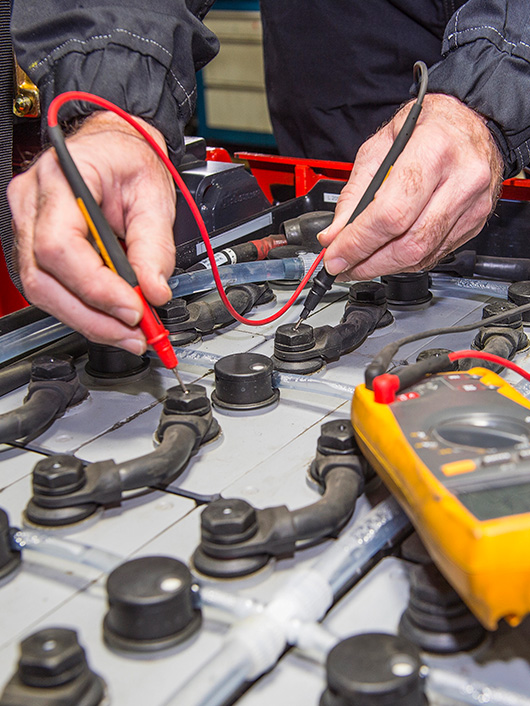
Voltage readings offer objective insight when performance symptoms appear. A fully charged battery should reflect stable voltage between 2.1 and 2.2 volts per cell. Lower-than-expected readings after charging point to capacity loss or internal cell imbalance.
Testing confirms what operators experience daily. When voltage remains low despite proper charging, replacement becomes the responsible path rather than continued operation with reduced output.
Battery Age Versus Battery Condition
Battery age alone does not define performance. Usage patterns, charging discipline, and environmental exposure influence long-term reliability. Some batteries decline faster under heavy cycling, while others maintain stable output for extended periods.
Operational signs matter more than calendar age. Facilities that monitor performance indicators gain clearer insight into replacement timing. This approach reduces guesswork and aligns investment with actual operating needs rather than assumptions.
Replacement Decisions Reduce Risk
When performance issues stack up, replacement planning protects productivity. Continuing to rely on weakened batteries increases downtime, safety exposure, and operational stress. Transitioning to dependable new forklift batteries supports stable output, predictable charging behavior, and long-term planning backed by strong warranty coverage.
Some operations also evaluate sealed alternatives. Lithium-Ion batteries for forklifts eliminate watering requirements and reduce daily battery room demands, offering a different maintenance profile for specific use cases.
Operational Awareness Protects Equipment Investment
Understanding how forklift batteries respond under real conditions empowers better decisions. Operators notice changes first, while managers connect those observations to replacement planning. Addressing performance decline early supports safer work environments and steadier productivity.
Battery health reflects the balance between use, care, and application fit. Recognizing warning signs keeps operations proactive rather than reactive.
How We Help at Green Power Forklift Batteries
Battery issues rarely appear overnight. Recognizing performance changes early allows teams to plan replacements carefully and maintain reliable forklift operation without disruption.
At Green Power Forklift Batteries, we help operations identify the right time to replace underperforming batteries with dependable solutions. We focus on quality replacement options, strong customer support, and simple quoting.
Our new batteries carry a seven-year warranty on most models, backed by responsive service and nationwide reach, so teams can move forward with confidence and clarity.
