
Quick Summary
A forklift battery can lose charge quickly due to incomplete charging, an incompatible charger, low electrolyte levels, excessive heat, corroded connections, weak cells, or a battery that is too small for the application or nearing the end of its service life. Review charging records, cell voltage, battery temperature, water levels, cable condition, and actual shift requirements before deciding on replacement. Green Power Forklift Batteries helps buyers compare new and reconditioned replacement options when testing shows that the existing battery can no longer handle the required workload.
When a forklift battery drains quickly, short runtime can interrupt picking, loading, and production while increasing battery changes and operator downtime. Determine whether the problem comes from charging, battery condition, or a mismatch with the application.
Green Power Forklift Batteries supplies electric forklift batteries for 24V, 36V, 48V, and 80V systems. Record the voltage, amp-hour rating, charger information, shift length, and symptoms before deciding on replacement. These details help separate operating issues from permanent capacity loss.
The Forklift Battery Is Not Reaching a Full Charge
A partially charged battery will lose power early. Interrupted cycles, an early timer cutoff, or brief charging sessions can leave a flooded lead-acid battery below capacity. Review charger records instead of assuming a green indicator proves a complete cycle.
The charger must match the battery voltage and amp-hour range. Green Power offers forklift battery chargers for lead-acid and lithium-ion applications. A mismatched or malfunctioning charger can undercharge the battery, overcharge it, or create heat that accelerates performance loss.
The Battery Is Being Discharged Too Deeply
Frequently operating a lead-acid battery below approximately 80% depth of discharge can reduce usable runtime over time.
A forklift that now handles longer shifts, heavier loads, or greater travel distances may require more energy than the original battery selection was designed to handle. Monitor operating hours and record the battery state of charge at the end of each shift to identify changing power demands.
The solution may involve adjusting the charging schedule, selecting a higher-capacity battery that fits the compartment, or adding another battery for multi-shift operations. Voltage, dimensions, weight, connector type, and amp-hour capacity must all match the electric forklift specifications.
Electrolyte Levels Are Too Low or Watering Is Incorrect
Flooded lead-acid batteries need enough electrolyte to cover the plates. Low water exposes active material, while overfilling before charging can force electrolyte out. Check levels after charging and cooling, then add approved water to the specified level.
A consistent inspection schedule is part of sound forklift battery maintenance. Record water additions because a sudden increase in water consumption can point to overcharging, excess heat, or a cell problem.
Dirty, Loose, or Corroded Connections Are Creating Resistance
Corrosion, damaged cables, loose terminals, and worn connectors create resistance, heat, and voltage drop. After trained personnel disconnect the battery, inspect connectors, cables, terminals, and the battery top for residue, damage, or heating.
Our informational guide to forklift battery repair explains common battery faults and diagnostic considerations. Green Power does not offer repair or reconditioning services for customer-owned batteries; we sell finished replacement products.
One or More Cells Are Weak or Out of Balance
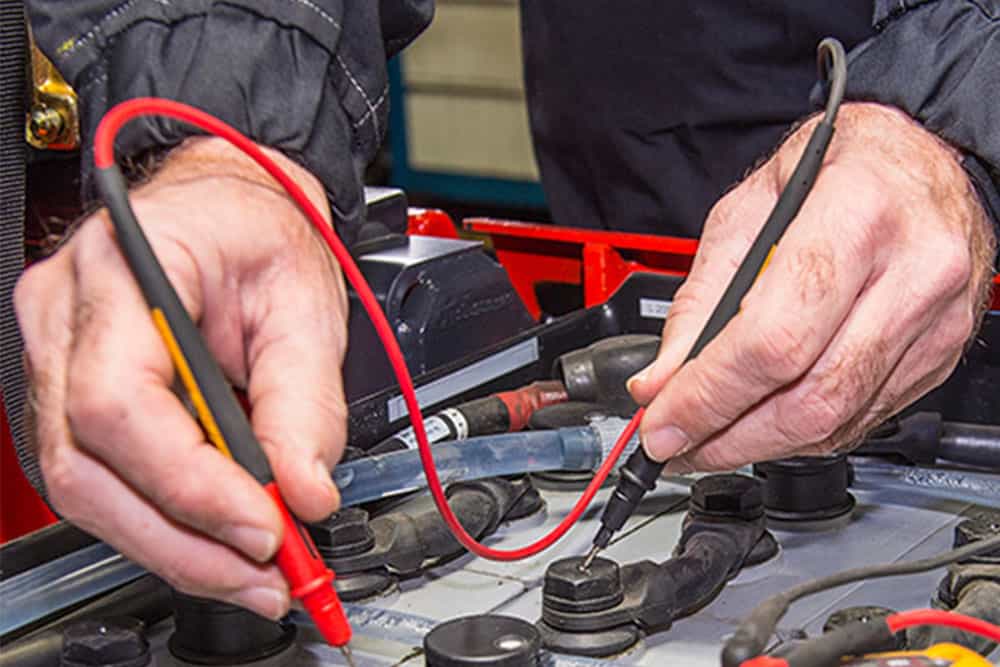
A battery may display an acceptable overall voltage while still losing power quickly during operation if one or more cells are weak. A fully charged lead-acid battery should typically show a stable reading of around 2.1 to 2.2 volts per cell. A noticeably lower cell reading, sudden voltage drop, or repeated imbalance may indicate the need for professional evaluation.
Voltage readings alone do not show the complete battery condition. Specific gravity, temperature, charging patterns, and a controlled capacity test provide a clearer assessment. A battery that cannot maintain the required output should be removed from service and replaced.
Heat Is Reducing Battery Efficiency
High ambient temperatures, poor charging-area ventilation, overcharging, and immediate charging after heavy use can raise battery temperature. Heat speeds chemical activity and can accelerate water loss and internal deterioration. Allow the battery to cool, verify ventilation, and confirm that the charger profile matches the battery.
If the case is unusually hot, swollen, leaking, or producing a strong sulfur odor, stop charging or operating the battery. Isolate the area according to facility safety procedures and have trained personnel assess the condition.
The Battery Is Undersized or Has Lost Too Much Capacity
A battery may simply be too small for the workload or may have lost capacity through age and use. Compare measured capacity with the original amp-hour rating and the actual energy required per shift. Repeatedly swapping or charging a weak battery during one shift usually signals that replacement planning should begin.
Our refurbished forklift batteries offer a lower-cost replacement option and must retain at least 85% of rated capacity before sale. For high-use equipment and longer ownership plans, our new batteries are often the stronger long-term choice because most include an industry-leading seven-year warranty.
How to Diagnose a Forklift Battery That Drains Quickly
- Confirm the battery and charger voltage, amp-hour range, connector, and charge profile.
- Review charge duration, interruptions, end-of-shift state of charge, and operating hours.
- Check electrolyte levels, cell voltage, temperature, cables, terminals, and visible damage.
- Arrange a controlled capacity test when the battery passes visual checks but runtime remains short.
Do not replace a battery based on one short shift. Charger problems, workload changes, or missed watering can create similar symptoms. Consistent records make diagnosis faster.
Choose the Right Replacement Forklift Battery
Green Power makes the quote process simple. Share the electric forklift manufacturer and model, existing battery specifications, compartment dimensions, connector information, charger details, and expected hours per shift.
We can compare current inventory with new forklift batteries and reconditioned options based on price, warranty, lead time, and workload.
FAQs
Why does my forklift battery show full but die quickly?
A surface charge can make voltage look normal even when usable capacity is low. A weak cell, incomplete charge, high resistance, or permanent capacity loss may cause rapid voltage drop under load.
What voltage should each fully charged lead-acid cell show?
A fully charged lead-acid cell should show a stable voltage of approximately 2.1 to 2.2 volts. Cell-to-cell consistency and performance under load are also important.
Does Green Power repair forklift batteries that drain quickly?
No. Green Power does not offer repair or reconditioning services for customer-owned batteries. We sell new, reconditioned, and lithium-ion replacement batteries and help buyers match the product to the electric forklift and workload.
