
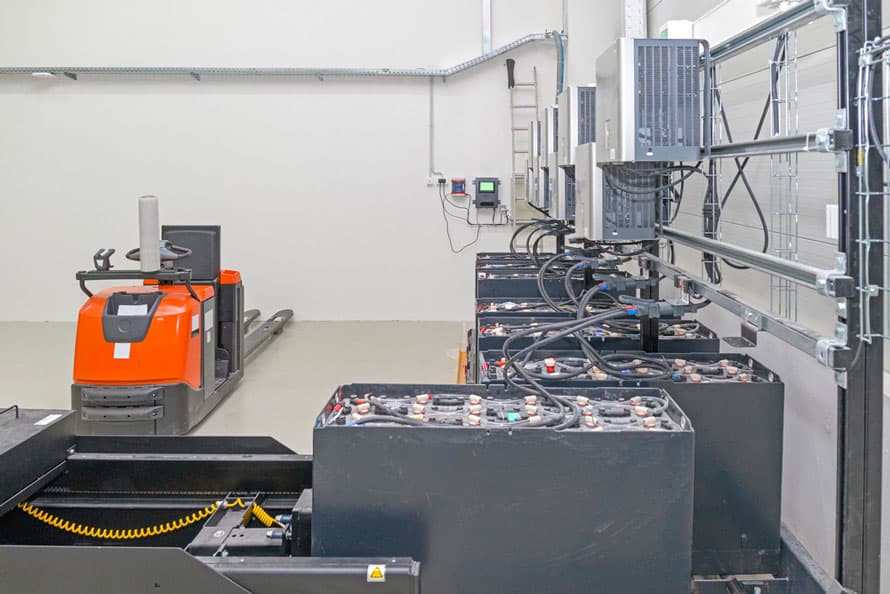
When it comes to maintaining the efficiency and longevity of your forklift fleet, picking out the right forklift battery charger is of the utmost importance. However, what might seem like a small decision can greatly affect the performance of your forklifts, the lifespan of their batteries, and your operational productivity.
Investing in a high-quality forklift battery charger is, of course, about powering up your equipment. But it is also about making sure that your fleet runs smoothly. You’ll be reducing downtime and avoiding the costly repercussions of poorly maintained batteries.
Forklift Battery Charger Compatibility with Forklift Batteries
One of the first things you need to think about when choosing a forklift battery charger is compatibility with your existing forklift batteries. Not all forklift battery chargers are created equal. Different chargers are designed to meet the specific requirements of certain types of batteries.
Whether your forklifts are equipped with lead-acid, lithium-ion, or nickel-cadmium batteries, having a charger that goes along with your battery type is imperative. For example, a charger designed for lead-acid batteries might not provide the best possible performance – or could even damage – a lithium-ion battery.
Compatibility guarantees that the charging process is efficient, safe, and extends the life of your batteries. It helps prevent the need for new forklift batteries sooner than necessary.
Charging Speed and Efficiency
The speed at which a forklift battery charger can replenish a battery’s charge is another big aspect to think about. In a busy warehouse or industrial environment, downtime can lead to productivity losses. So, it’s important to give some thought to the charging speed of your chosen charger.
Fast charging is very useful in operations where forklifts are in constant use. It allows for shorter breaks between shifts and more time spent on the floor. But it’s important to balance speed with the potential impact on battery life.
Rapid charging can sometimes cause excessive heat buildup. It can lead to reduced battery lifespan. Picking a charger that balances speed with efficiency is the secret to maintaining the health of your new forklift batteries over time.
Energy Efficiency and Cost Implications
Energy efficiency also matters when selecting a forklift battery charger. Chargers that consume less energy contribute to lower operational costs and are in keeping with environmental sustainability goals. The long-term savings associated with energy-efficient forklift battery chargers can be impressive, especially in operations where a number of forklifts are in use around the clock.
Also, energy-efficient chargers are frequently equipped with advanced technologies that make the most of the charging process. They help reduce waste and guarantee that batteries are charged to their top level without overcharging.
Safety Features You May Want
Safety should always be a priority when working with industrial equipment, and forklift battery chargers are no exception. Choosing a charger with advanced safety features can protect both your equipment and your personnel from accidents and damage.
Important safety features to look for include automatic shut-off mechanisms that prevent overcharging, temperature controls that reduce the risk of overheating, and built-in diagnostics that alert you to potential issues before they become serious problems. Some chargers also come with features that protect against power surges, so your new forklift batteries are not exposed to fluctuations that could affect their integrity.
Ease of Use and Maintenance
The ease of use and maintenance of a forklift battery charger is another important topic. Chargers that are easy to understand and operate can reduce the likelihood of user error and see to it that your batteries are charged correctly every time. Features like digital displays, clear indicators, and user-friendly interfaces make it easier for operators to monitor the charging process and identify any issues quickly.
Taking the maintenance requirements of the charger into consideration is highly recommended. Chargers that require minimal maintenance reduce downtime and lower the overall cost of ownership. Choosing a charger that is easy to clean, with accessible parts for inspection and replacement, will help make certain it remains in the best possible working condition for years to come.
Determine the Total Cost of Ownership
While the initial purchase price of a forklift battery charger is important, look beyond this and consider the total cost of ownership. It includes not just the cost of the charger itself, but as well as the operational costs associated with energy consumption, maintenance, and potential repairs. A cheaper charger might seem like a good deal at first glance. But if it is less energy-efficient or requires frequent maintenance, it could end up costing more in the long run.
On the other hand, investing in a higher-quality charger with advanced elements, better energy efficiency, and strong safety mechanisms can lead to distinct savings over time. It’s also worth thinking about the impact of the charger on the lifespan of your batteries. A charger that optimizes battery life will reduce the need for new forklift batteries, lowering your operational costs.
Impact on Battery Lifespan
The relationship between your forklift battery charger and the lifespan of your batteries cannot be stressed enough. A good charger will not only charge your batteries but also assist with their longevity.
Chargers that are designed to prevent overcharging and manage heat buildup can help extend the life of your batteries, reducing the frequency with which you need to purchase new forklift batteries. Also, some chargers have features that allow for equalization charging (which helps to balance the cells within a battery), extending its life even further. By
Environmental Considerations
The environmental impact of your forklift battery charger is something that matters more and more in this day and age. Chargers that are energy-efficient reduce your operation’s carbon footprint and contribute to sustainability goals.
What’s more, some chargers are made with elements that minimize energy waste, like automatic shut-off once the battery is fully charged. A charger that supports your company’s environmental initiatives can also boost your brand’s reputation. It demonstrates a commitment to sustainability in your operations.
Making the Best Choice for Long-Term Success
Selecting the right forklift battery charger involves careful consideration of many things – from compatibility with your forklift batteries to the energy efficiency, safety features, and total cost of ownership.
By taking the time to weigh all of these carefully, you can make the best decision. One that will improve the performance and longevity of your forklifts and also support your operational efficiency and sustainability goals.
The purchase of a high-quality charger is an investment in the long-term success of your business, seeing to it that your forklifts remain reliable and that your batteries last as long as possible.
Green Power Forklift Batteries: Sustainable Solutions for Your Fleet
At Green Power Forklift Batteries, we provide an environmentally friendly and cost-effective alternative to traditional power solutions by offering reconditioned lead-acid forklift batteries (and new, as well). With over 12 years of expertise and a unique 18-stage renovation process, we restore lost capacity and extend the lifespan of industrial batteries, allowing them to perform at their best for up to twice their normal lifespan.
Our approach not only reduces equipment maintenance costs but also supports your commitment to sustainability. If you’re looking for reliable power with excellent customer service and competitive pricing, we have you covered.
Call us at 619-613-0036 or use our online form to reach out today.
