
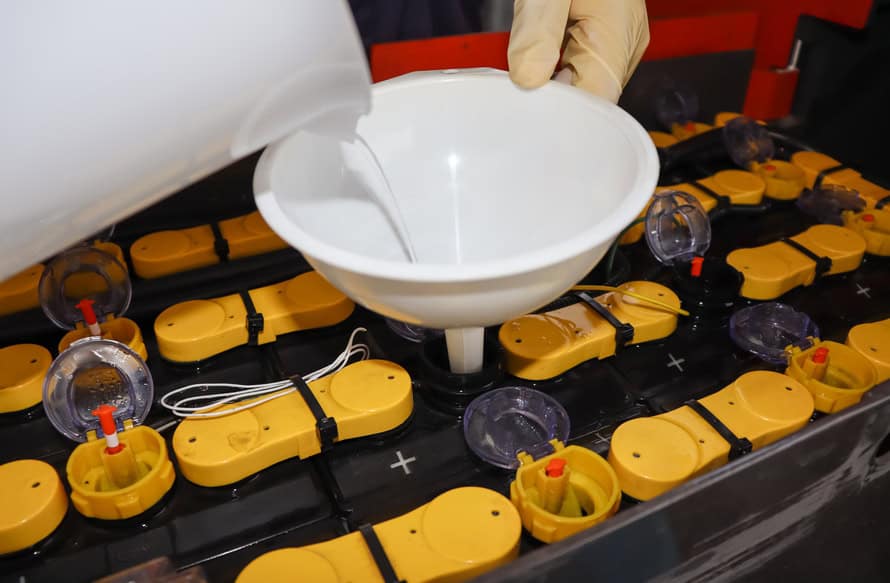
Proper forklift battery watering is a vital part of forklift battery maintenance, making sure that your equipment runs smoothly and efficiently. Keeping the electrolyte levels balanced is key to prolonging the battery’s lifespan and maintaining performance. Therefore, this guide offers key tips and a recommended watering schedule to help you get the most out of your forklift batteries.
When to Water Forklift Batteries
Timing is everything when it comes to forklift battery watering. You should always water the batteries after they have been fully charged and are still warm. This guarantees that the water doesn’t expand and overflow during charging, which can lead to hazardous conditions like boil-overs.
A general rule of thumb is to water your forklift battery every 5 to 10 charging cycles. For operations using forklifts daily, it typically means watering about once a week. However, older batteries may require more frequent watering as they tend to lose water faster than newer ones.
Always avoid watering the batteries before or during charging, as it could cause the electrolyte to overflow. Regular watering helps maintain optimal electrolyte levels, which are key for the electrochemical reactions that power the battery.
How to Properly Water a Forklift Battery
The quality of the water used is just as important as the timing. Always use distilled or deionized water with a pH level between 5 and 7. Using tap water can introduce minerals and contaminants that may damage the battery over time.
When watering the cells, make sure that the electrolyte level is 1 to 2 inches below the top of the cell. This level allows the battery to operate efficiently without risking overflows during charging. Overfilling the battery can lead to acid spills, which are not only dangerous but can also reduce the battery’s performance.
Watering Tips for Long-Term Battery Health
Watering your forklift battery regularly is one of the key steps in forklift battery maintenance. In addition to this, a few extra tips can help extend the battery’s life and improve performance:
- Inspect Electrolyte Levels Regularly: Use a float indicator or visually inspect the cells to guarantee electrolyte levels remain consistent.
- Clean the Battery Monthly: Use a battery cleaner to remove any debris or acid residue from the battery’s surface. It prevents corrosion, which can damage both the battery and your equipment.
- Monitor for Corrosion: If you notice corrosion or a rotten egg smell, this could indicate a more serious issue. Discontinue use and consult a professional for further inspection.
- Charge Fully Before Use: Confirm that batteries are fully charged before use to avoid wasting cycles, which can shorten the battery’s lifespan.
- Avoid Opportunity Charging: While tempting, opportunity charging (brief charges between uses) can reduce the overall lifespan of the battery. Only charge when necessary, and aim for full cycles.
Recommended Watering Schedule
Developing a regular watering schedule is essential for maintaining battery health. A consistent schedule helps prevent performance drops and prolongs the battery’s effective lifespan. For most operations, watering the forklift battery once every 5 to 10 charges is sufficient. For daily use, this translates to about once a week. Additionally, equalizing the battery once a week—usually during the weekend—can help balance the cells and improve overall performance.
Green Power Forklift Batteries delivers top products and expert advice to help you maintain your forklift batteries. Whether you need new forklift batteries, cost-effective refurbished forklift batteries, or accessories like chargers, we’ve got you covered. Our dedication to customer service and quality makes sure you get the most out of your equipment.
