How Much Sulfuric Acid Is In A Forklift Battery?

The sulfuric acid within a forklift battery plays a pivotal role in its overall function and performance. Knowing how much sulfuric acid in a forklift battery can help operators understand more about maintenance, safety, and even efficiency.

Forklift batteries, particularly lead-acid types, depend on sulfuric acid to facilitate the chemical reactions necessary for power generation. Whether you’re using new forklift batteries or refurbished forklift batteries, understanding this essential component makes sure you get the most out of your equipment.

The Role of Sulfuric Acid in Forklift Batteries

Sulfuric acid in a forklift battery serves as the electrolyte, enabling the electrochemical process that generates electricity. The lead plates inside the battery interact with the sulfuric acid, producing a chemical reaction that generates electrons. This reaction powers the forklift, making sulfuric acid a key element for performance.

The acid solution, usually consisting of about 37% sulfuric acid and the remaining portion being water, changes as the battery charges and discharges. During charging, the concentration of sulfuric acid increases, while it decreases during discharge. Therefore, the proper handling and care of the solution are necessary for forklift battery maintenance.

Concentration and Amount of Sulfuric Acid

The sulfuric acid concentration in a forklift battery is typically between 30% and 50%, with 37% being the most common. The remaining percentage is water. The amount of sulfuric acid varies depending on the size of the battery and its total weight.

For example, if a standard forklift battery weighs around 2,400 pounds, it could contain approximately 432 pounds of sulfuric acid. This calculation assumes that sulfuric acid makes up about 18% of the battery’s total weight. However, the amount of sulfuric acid can fluctuate depending on the battery’s state of charge, as the concentration of the acid increases when the battery is fully charged.

Importance of Sulfuric Acid Concentration for Battery Health

Maintaining the correct sulfuric acid concentration is key to guaranteeing your forklift battery performs optimally. A diluted or imbalanced acid solution can reduce the effectiveness of the chemical reactions, leading to poor battery performance and shorter life spans. Over time, a low concentration of sulfuric acid can result in slow charging, decreased capacity, and increased risk of failure.

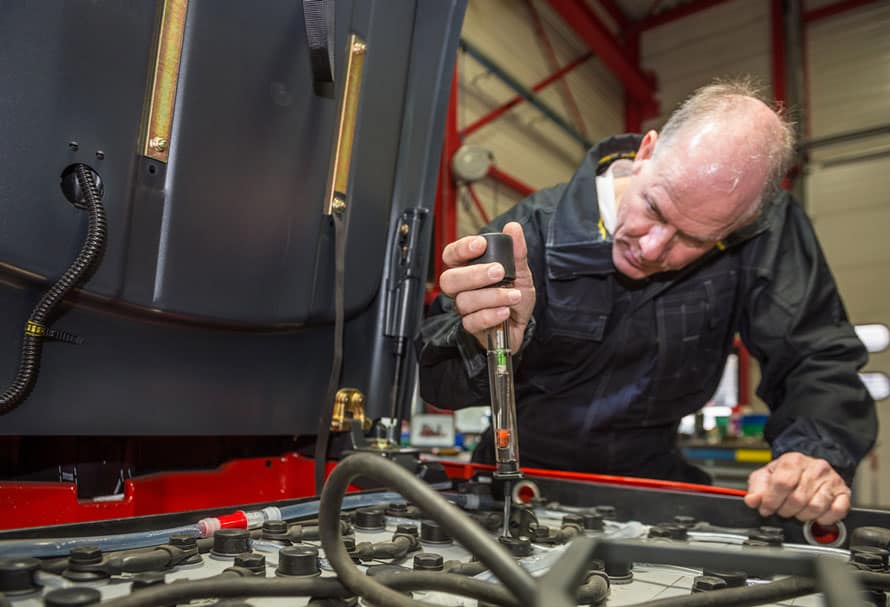
This is where regular forklift battery maintenance becomes critical. For lead-acid batteries, guaranteeing proper water levels in the electrolyte is crucial. As the battery charges and discharges, water is lost through evaporation, which can increase the sulfuric acid concentration too much, leading to possible damage.

Safety Considerations for Handling Sulfuric Acid in Forklift Batteries

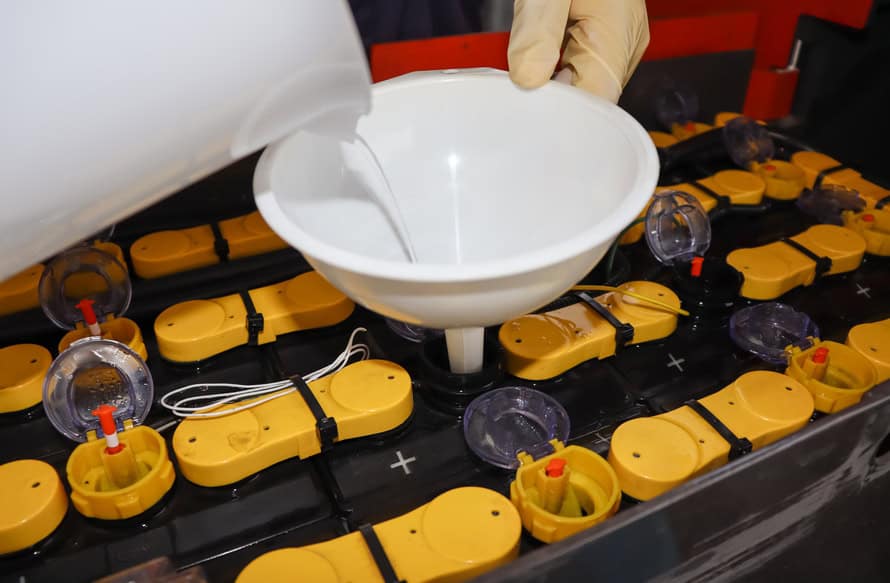
Sulfuric acid is highly corrosive, and mishandling can pose serious safety risks. Battery maintenance, including refilling water or testing electrolyte levels, must be done with caution. Always wear protective gear, such as gloves and goggles, to avoid skin burns and eye injuries.

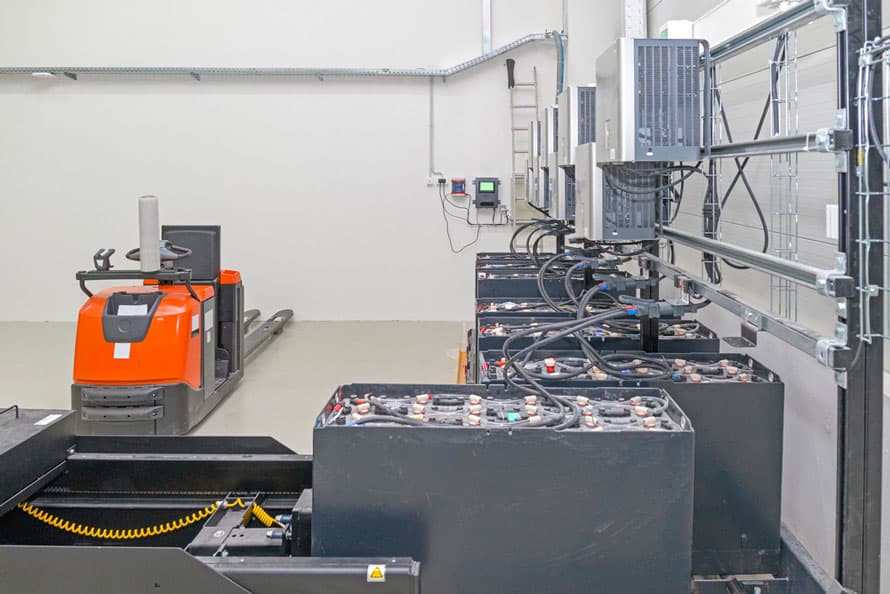
Additionally, forklift batteries should be kept in well-ventilated areas when charging. As the sulfuric acid reacts with the battery plates during charging, it can release hydrogen gas, which is highly flammable. Proper ventilation reduces the risk of gas buildup and brings a safer environment for charging stations.

When considering new forklift batteries or refurbished forklift batteries, understanding the proper maintenance practices for sulfuric acid solutions is necessary for both performance and safety. Skipping routine care could lead to battery failure or, in the worst cases, hazardous chemical spills.

Comparing New and Refurbished Forklift Batteries

When shopping for forklift batteries, understanding sulfuric acid’s role helps you make informed choices between new and refurbished batteries. New forklift batteries typically come with warranties, superior technology, and an extended lifespan due to their optimized acid levels and pristine components. They are often designed to function at peak capacity without frequent maintenance concerns.

Refurbished forklift batteries, on the other hand, may still be a cost-effective solution for companies prioritizing price. These batteries undergo thorough reconditioning, which often includes replenishing or adjusting the sulfuric acid to restore optimal performance. However, refurbished batteries may require more frequent maintenance compared to new ones, especially when it comes to monitoring the sulfuric acid concentration.

Maximizing Battery Life Through Proper Maintenance

Regardless of whether you choose a new or refurbished battery, regular care and maintenance are key to maximizing its lifespan. Keeping sulfuric acid levels balanced makes sure that the battery continues to perform efficiently. Checking electrolyte levels, adding distilled water as needed, and keeping the battery clean from corrosion are essential practices for prolonging its life.

A well-maintained forklift battery can save your business significant costs in the long run by avoiding frequent replacements and downtime. Regularly scheduled battery maintenance makes sure that sulfuric acid remains at the right concentration, which in turn helps avoid performance issues. Green Power Forklift Batteries brings a range of new forklift batteries and refurbished forklift batteries, each tailored to meet your operational needs. Our team is ready to help you find the best solution for your forklifts, offering exceptional customer service and a 7-year warranty on most new batteries.
Forklift Battery Watering: Essential Tips And Schedule

Proper forklift battery watering is a vital part of forklift battery maintenance, making sure that your equipment runs smoothly and efficiently. Keeping the electrolyte levels balanced is key to prolonging the battery’s lifespan and maintaining performance. Therefore, this guide offers key tips and a recommended watering schedule to help you get the most out of your forklift batteries.

When to Water Forklift Batteries

Timing is everything when it comes to forklift battery watering. You should always water the batteries after they have been fully charged and are still warm. This guarantees that the water doesn’t expand and overflow during charging, which can lead to hazardous conditions like boil-overs.

A general rule of thumb is to water your forklift battery every 5 to 10 charging cycles. For operations using forklifts daily, it typically means watering about once a week. However, older batteries may require more frequent watering as they tend to lose water faster than newer ones.

Always avoid watering the batteries before or during charging, as it could cause the electrolyte to overflow. Regular watering helps maintain optimal electrolyte levels, which are key for the electrochemical reactions that power the battery.

How to Properly Water a Forklift Battery

The quality of the water used is just as important as the timing. Always use distilled or deionized water with a pH level between 5 and 7. Using tap water can introduce minerals and contaminants that may damage the battery over time.

When watering the cells, make sure that the electrolyte level is 1 to 2 inches below the top of the cell. This level allows the battery to operate efficiently without risking overflows during charging. Overfilling the battery can lead to acid spills, which are not only dangerous but can also reduce the battery’s performance.

Watering Tips for Long-Term Battery Health

Watering your forklift battery regularly is one of the key steps in forklift battery maintenance. In addition to this, a few extra tips can help extend the battery’s life and improve performance:

  • Inspect Electrolyte Levels Regularly: Use a float indicator or visually inspect the cells to guarantee electrolyte levels remain consistent.
  • Clean the Battery Monthly: Use a battery cleaner to remove any debris or acid residue from the battery’s surface. It prevents corrosion, which can damage both the battery and your equipment.
  • Monitor for Corrosion: If you notice corrosion or a rotten egg smell, this could indicate a more serious issue. Discontinue use and consult a professional for further inspection.
  • Charge Fully Before Use: Confirm that batteries are fully charged before use to avoid wasting cycles, which can shorten the battery’s lifespan.
  • Avoid Opportunity Charging: While tempting, opportunity charging (brief charges between uses) can reduce the overall lifespan of the battery. Only charge when necessary, and aim for full cycles.

Recommended Watering Schedule

Developing a regular watering schedule is essential for maintaining battery health. A consistent schedule helps prevent performance drops and prolongs the battery’s effective lifespan. For most operations, watering the forklift battery once every 5 to 10 charges is sufficient. For daily use, this translates to about once a week. Additionally, equalizing the battery once a week—usually during the weekend—can help balance the cells and improve overall performance.

Green Power Forklift Batteries delivers top products and expert advice to help you maintain your forklift batteries. Whether you need new forklift batteries, cost-effective refurbished forklift batteries, or accessories like chargers, we’ve got you covered. Our dedication to customer service and quality makes sure you get the most out of your equipment.

Choosing The Right Toyota Forklift Battery: A Guide

Selecting the appropriate Toyota forklift battery can significantly impact the performance and safety of your forklift. A battery that aligns with your forklift’s specifications and operational demands guarantees smooth operations and extends the equipment’s lifespan. This guide will explore the key factors to consider when choosing a Toyota forklift battery, helping you make an informed decision for your business.

Understanding Forklift Specifications

Voltage Requirements

Your Toyota forklift will either require a 24V,36V,48V or 80V battery. Making sure you use the correct voltage is crucial, as an incompatible voltage can cause damage to your forklift’s electrical systems and reduce efficiency. Double-check the voltage needed for your model to avoid potential operational issues.

Battery Compartment Size

Every forklift has a designated space for the battery, and not all batteries are one-size-fits-all. It’s important to measure the width, depth, and height of the battery compartment to guarantee a proper fit. An ill-fitting battery could affect the balance and stability of your forklift during use, potentially leading to unsafe conditions.

Battery Types: Lead-Acid vs. Lithium-Ion

Lead-Acid Batteries

These are the traditional power sources for many forklifts and are known for their durability and lower upfront cost. However, they require regular maintenance, such as watering and equalizing, to maintain performance.

Lead-acid batteries typically last for about 1,000 to 1,500 cycles, making them a reliable option for companies with moderate usage demands. If cost-efficiency is a priority, lead-acid may be the way to go, particularly if you’re considering refurbished forklift batteries.

Lithium-Ion Batteries

As a more modern alternative, lithium-ion batteries are increasingly popular due to their longer lifespan and reduced maintenance needs. These batteries can last between 2,000 and 3,000 cycles and bring faster charging times.

With no need for watering and minimal upkeep, they are an excellent choice for high-demand operations requiring quick turnarounds. Though they come with a higher initial cost, their longer life and efficiency can offer better long-term value, particularly if your operation runs multiple shifts.

Capacity and Weight Considerations

  • Ampere-Hour (Ah) Rating

The Ah rating indicates the battery’s capacity to deliver power over time. A higher Ah rating brings longer run times and more power, making it ideal for high-intensity applications. It’s always a good idea to check the Ah rating of your current battery and match it with your new purchase to maintain consistent performance.

  • Weight Considerations

Forklifts rely on their batteries for both power and counterbalance. This means the battery must meet the weight requirements specified by the manufacturer. A battery that is too light may throw off the balance of the forklift, leading to safety risks, while a heavier battery could strain the machinery.

Charging System Compatibility

One often overlooked aspect of battery selection is the compatibility between the battery and your existing charging system. Not all chargers can accommodate every battery type or voltage. If you’re transitioning from lead-acid to lithium-ion, you may need to upgrade your charger to make sure it works efficiently with your new battery.

Maintenance and Operational Efficiency

When selecting a Toyota forklift battery, consider the amount of maintenance required. Lead-acid batteries need routine watering and charging, while lithium-ion batteries are maintenance-free. If minimizing labor costs and maximizing operational efficiency are priorities, lithium-ion batteries offer a clear advantage.

Brand Quality and Warranty

The quality of the brand you choose is equally important. Toyota forklifts perform best with batteries from trusted manufacturers known for durability and performance. Opt for a battery that comes with a warranty, which can protect your investment and give you peace of mind.

At Green Power Forklift Batteries, our brand of new forklift batteries comes with a 7-year warranty, reflecting our confidence in their reliability and long-term performance. A robust warranty means that you can operate with minimal disruptions and keep maintenance costs down.

Operational Environment

The environment in which your forklift operates plays a significant role in battery selection. If your forklifts are used in cold storage facilities or outdoor environments, it’s essential to choose a battery that can perform in extreme temperatures.

Some batteries are designed with insulation or heating elements to help them function optimally in colder climates. Having the right battery for your specific work environment helps maintain productivity and safety.

Green Power Forklift Batteries prides itself on presenting the best solutions for your forklift battery needs. Whether you’re looking for new forklift batteries with extended warranties or cost-effective refurbished options, we’re here to help. Our customer service team is ready to guide you through the process, helping you find the perfect battery to keep your operations running smoothly.

7 Essential Parts Of A Forklift Battery Watering System

Maintaining a lead-acid forklift battery requires careful attention to water levels, making a forklift battery watering system an indispensable tool. These systems streamline the process of filling battery cells, preventing overflows and maintaining consistent electrolyte levels. Whether you’re working with new forklift batteries or refurbished forklift batteries, knowing the key forklift battery watering system parts helps maintain the health and longevity of your equipment.

Reliable Water Source

A dependable water source is the backbone of any forklift battery watering system. The quality of water used is crucial to prevent damage to the battery cells. Distilled or deionized water is typically recommended because it is free from minerals and impurities that can accumulate in the battery and reduce its efficiency over time.

Depending on your facility, the water source can come from a variety of setups, including a hose connected to a tap or a dedicated water tank. The use of clean water prevents sediment buildup, which can impact battery performance and longevity.

Filling Mechanism Options

The filling mechanism is one of the most important forklift battery watering system parts. It determines how the water gets into the battery cells. There are three common types of filling mechanisms:

  • Manual Filling Gun: This handheld device allows operators to fill each cell individually, guaranteeing precise control over water levels. While effective, this method requires more time and labor.
  • Electric Single Point Watering (SPW) System: A more efficient solution, SPW systems connect all the battery cells through a network of hoses to a single filling point. It allows for the simultaneous filling of all cells, reducing the time and effort required for maintenance.
  • Gravity Feed Single Point Watering (SPW) System: With this system, a large tank is elevated above the batteries, letting water flow into the cells via gravity. Though practical, this system may lack the precision of more modern approaches like the electric SPW systems.

Automatic Shutoff Valve

A critical safety feature of modern forklift battery watering systems is the automatic shutoff valve. This component prevents overfilling by cutting off the water supply once the correct level is reached in each cell. Overfilling can cause acid spills, which not only waste resources but can also create a safety hazard.

By incorporating automatic shutoff valves, businesses can streamline their forklift battery maintenance processes and bring consistent watering without the need for constant monitoring.

Water Level Indicators

Keeping track of electrolyte levels is essential for maintaining battery health. Many forklift battery watering systems are equipped with water level indicators, such as float sensors or visual markers, that allow operators to quickly check the water status of each cell. These indicators bring a simple and efficient way to know when it’s time to top off the water, preventing both underfilling and overfilling.

In refurbished forklift batteries, water levels may fluctuate more frequently, making these indicators especially useful for guaranteeing optimal performance.

Essential Safety Equipment

Forklift battery maintenance often involves handling potentially hazardous materials, including sulfuric acid. Proper safety equipment is essential to protect operators during the watering process. This includes:

  • Gloves: To protect hands from acid exposure.
  • Goggles: To shield eyes from accidental splashes.
  • Aprons: To give additional protection for clothing and skin.

Maintenance Schedule for Optimal Performance

Having a well-established maintenance schedule is critical to keeping forklift batteries in peak condition. A regular routine helps prevent dry cells, where the lead plates inside the battery become exposed to air, leading to oxidation and reduced battery capacity.

Generally, batteries should be checked and watered after every five to ten charging cycles, depending on usage. For high-demand environments where forklifts are used daily, a weekly check is recommended. By staying on top of this schedule, operators can extend the lifespan of both new and refurbished forklift batteries.

Proper Training and Procedures

Even the best forklift battery watering system is only as effective as the people using it. Making sure that staff members are properly trained on how to use the system is key to preventing costly mistakes. Training should cover:

  • When to water: Always after charging, as water levels fluctuate during the charging cycle.
  • How to check water levels: Using visual indicators or float sensors.
  • Emergency procedures: In case of spills, overflows, or acid exposure.

By following established procedures, businesses can maximize the efficiency of their forklift battery maintenance and minimize the risks associated with improper handling.

At Green Power Forklift Batteries, we offer a range of solutions to keep your operations running smoothly. With industry-leading warranties, competitive prices, and exceptional customer service, we are committed to delivering the best forklift battery products for your needs. Reach out today to learn more about how we can help you maintain your forklift fleet with reliable battery solutions.

Things To Consider When Choosing A Forklift Battery Charger

Things To Consider When Choosing A Forklift Battery Charger

When it comes to maintaining the efficiency and longevity of your forklift fleet, picking out the right forklift battery charger is of the utmost importance. However, what might seem like a small decision can greatly affect the performance of your forklifts, the lifespan of their batteries, and your operational productivity.

Investing in a high-quality forklift battery charger is, of course, about powering up your equipment. But it is also about making sure that your fleet runs smoothly. You’ll be reducing downtime and avoiding the costly repercussions of poorly maintained batteries.

Forklift Battery Charger Compatibility with Forklift Batteries

One of the first things you need to think about when choosing a forklift battery charger is compatibility with your existing forklift batteries. Not all forklift battery chargers are created equal. Different chargers are designed to meet the specific requirements of certain types of batteries.

Whether your forklifts are equipped with lead-acid, lithium-ion, or nickel-cadmium batteries, having a charger that goes along with your battery type is imperative. For example, a charger designed for lead-acid batteries might not provide the best possible performance – or could even damage – a lithium-ion battery.

Compatibility guarantees that the charging process is efficient, safe, and extends the life of your batteries. It helps prevent the need for new forklift batteries sooner than necessary.

Charging Speed and Efficiency

The speed at which a forklift battery charger can replenish a battery’s charge is another big aspect to think about. In a busy warehouse or industrial environment, downtime can lead to productivity losses. So, it’s important to give some thought to the charging speed of your chosen charger.

Fast charging is very useful in operations where forklifts are in constant use. It allows for shorter breaks between shifts and more time spent on the floor. But it’s important to balance speed with the potential impact on battery life.

Rapid charging can sometimes cause excessive heat buildup. It can lead to reduced battery lifespan. Picking a charger that balances speed with efficiency is the secret to maintaining the health of your new forklift batteries over time.

Energy Efficiency and Cost Implications

Energy efficiency also matters when selecting a forklift battery charger. Chargers that consume less energy contribute to lower operational costs and are in keeping with environmental sustainability goals. The long-term savings associated with energy-efficient forklift battery chargers can be impressive, especially in operations where a number of forklifts are in use around the clock.

Also, energy-efficient chargers are frequently equipped with advanced technologies that make the most of the charging process. They help reduce waste and guarantee that batteries are charged to their top level without overcharging.

Safety Features You May Want

Safety should always be a priority when working with industrial equipment, and forklift battery chargers are no exception. Choosing a charger with advanced safety features can protect both your equipment and your personnel from accidents and damage.

Important safety features to look for include automatic shut-off mechanisms that prevent overcharging, temperature controls that reduce the risk of overheating, and built-in diagnostics that alert you to potential issues before they become serious problems. Some chargers also come with features that protect against power surges, so your new forklift batteries are not exposed to fluctuations that could affect their integrity.

Ease of Use and Maintenance

The ease of use and maintenance of a forklift battery charger is another important topic. Chargers that are easy to understand and operate can reduce the likelihood of user error and see to it that your batteries are charged correctly every time. Features like digital displays, clear indicators, and user-friendly interfaces make it easier for operators to monitor the charging process and identify any issues quickly.

Taking the maintenance requirements of the charger into consideration is highly recommended. Chargers that require minimal maintenance reduce downtime and lower the overall cost of ownership. Choosing a charger that is easy to clean, with accessible parts for inspection and replacement, will help make certain it remains in the best possible working condition for years to come.

Determine the Total Cost of Ownership

While the initial purchase price of a forklift battery charger is important, look beyond this and consider the total cost of ownership. It includes not just the cost of the charger itself, but as well as the operational costs associated with energy consumption, maintenance, and potential repairs. A cheaper charger might seem like a good deal at first glance. But if it is less energy-efficient or requires frequent maintenance, it could end up costing more in the long run.

On the other hand, investing in a higher-quality charger with advanced elements, better energy efficiency, and strong safety mechanisms can lead to distinct savings over time. It’s also worth thinking about the impact of the charger on the lifespan of your batteries. A charger that optimizes battery life will reduce the need for new forklift batteries, lowering your operational costs.

Impact on Battery Lifespan

The relationship between your forklift battery charger and the lifespan of your batteries cannot be stressed enough. A good charger will not only charge your batteries but also assist with their longevity.

Chargers that are designed to prevent overcharging and manage heat buildup can help extend the life of your batteries, reducing the frequency with which you need to purchase new forklift batteries. Also, some chargers have features that allow for equalization charging (which helps to balance the cells within a battery), extending its life even further. By

Environmental Considerations

The environmental impact of your forklift battery charger is something that matters more and more in this day and age. Chargers that are energy-efficient reduce your operation’s carbon footprint and contribute to sustainability goals.

What’s more, some chargers are made with elements that minimize energy waste, like automatic shut-off once the battery is fully charged. A charger that supports your company’s environmental initiatives can also boost your brand’s reputation. It demonstrates a commitment to sustainability in your operations.

Making the Best Choice for Long-Term Success

Selecting the right forklift battery charger involves careful consideration of many things – from compatibility with your forklift batteries to the energy efficiency, safety features, and total cost of ownership.

By taking the time to weigh all of these carefully, you can make the best decision. One that will improve the performance and longevity of your forklifts and also support your operational efficiency and sustainability goals.

The purchase of a high-quality charger is an investment in the long-term success of your business, seeing to it that your forklifts remain reliable and that your batteries last as long as possible.

Green Power Forklift Batteries: Sustainable Solutions for Your Fleet

At Green Power Forklift Batteries, we provide an environmentally friendly and cost-effective alternative to traditional power solutions by offering reconditioned lead-acid forklift batteries (and new, as well). With over 12 years of expertise and a unique 18-stage renovation process, we restore lost capacity and extend the lifespan of industrial batteries, allowing them to perform at their best for up to twice their normal lifespan. 

Our approach not only reduces equipment maintenance costs but also supports your commitment to sustainability. If you’re looking for reliable power with excellent customer service and competitive pricing, we have you covered.

Call us at 619-613-0036 or use our online form to reach out today.

The Dos And Don’ts When Charging A Forklift Battery

The Dos And Don'ts When Charging A Forklift Battery

Charging a forklift battery is a routine yet important job that directly affects the efficiency and longevity of the equipment. The forklift battery charging process requires careful attention to detail and sticking to best practices for both safety and optimal battery performance. This guide will walk you through the best practices to follow and pitfalls you should avoid when charging new forklift batteries or maintaining existing ones.

The Basics of Forklift Battery Charging and Chargers

First, having full knowledge of the different types of forklift battery chargers available is advisable. Forklift battery chargers come in different forms, including conventional chargers, opportunity chargers, and fast chargers.

Conventional chargers are the most common and are usually used for a full charge over eight hours. Opportunity chargers provide partial charges during breaks. Fast chargers can recharge batteries in a fraction of the time.

Going with the right charger for your battery is critical, because using an inappropriate charger can lead to overheating, undercharging, or overcharging. All of these can reduce the lifespan of your new forklift batteries.

Proper Timing for Forklift Battery Charging

One of the most key aspects of forklift battery charging is knowing when to charge the battery. Charging at the wrong time can lead to premature wear and tear. A forklift battery should be charged when it reaches about 20% of its capacity.

Charging too early, like when the battery is still 70-80% full, can result in an incomplete charge cycle. Waiting until the battery is almost fully drained can cause deep discharge damage. Both situations can shorten the battery’s overall lifespan and decrease its efficiency.

Besides, frequent charging, known as “opportunity charging,” should be done with caution. Although this practice is common in high-demand environments where forklifts are in constant use, it can lead to overheating if not done properly. Always make sure the battery has sufficient cooling time between charges to prevent thermal damage.

The Importance of Regular Maintenance

Maintaining a forklift battery goes hand in hand with proper charging practices. Regular maintenance – including cleaning, water topping, and terminal inspection – will help the battery remain in good condition.

Dirt and corrosion on battery terminals can cause poor connections. This can lead to inefficient charging. Therefore, it’s highly recommended to clean the terminals regularly to maintain a good connection between the battery and the charger.

Water topping is another big part of battery maintenance. The electrolyte levels in a forklift battery should be checked regularly and topped up with distilled water when necessary.

Low electrolyte levels can lead to the exposure of battery plates. This can cause irreversible damage and reduce the battery’s lifespan. However, it’s needed to top the water only after charging, because the electrolytes expand during the charging process. Topping up before charging can cause overflow.

Avoiding Overcharging and Undercharging

Overcharging and undercharging are common problems in forklift battery charging. Either can cause damage to the battery. Overcharging happens when the battery is left connected to the charger for too long, leading to excessive heat buildup and electrolyte loss.

This not only shortens the battery’s lifespan but also increases the risk of battery failure. Modern forklift battery chargers frequently come with automatic shutoff features. These prevent overcharging by stopping the charge once the battery reaches full capacity.

It is still necessary to monitor the charging process and avoid leaving the battery unattended for extended periods. Undercharging, on the other hand, is when the battery is not charged to its full capacity. This can happen if the charging process is interrupted or if the battery is not left on the charger for the required amount of time.

Undercharging leads to sulfation (where sulfur crystals form on the battery plates), reducing the battery’s ability to hold a charge. Over time, this can cause the battery to become weak and eventually fail. To avoid undercharging, always make sure the battery completes its full charge cycle. Also, refrain from using the forklift during the charging process.

Safety Precautions During Forklift Battery Charging

Safety is of the utmost importance during forklift battery charging. Why? The process involves handling heavy equipment and hazardous materials. Before beginning the charging process, be sure to wear the right personal protective equipment (PPE), including gloves, goggles, and an apron, to protect against potential acid spills and electrical hazards.

The charging area should be well-ventilated to prevent the buildup of hydrogen gas, which is produced during the charging process. Hydrogen gas is highly flammable, and a spark or open flame can lead to an explosion. So, smoking and the use of open flames should be strictly prohibited in the charging area.

Also, the charger should be turned off before connecting or disconnecting the battery to avoid electrical sparks. You should use the correct lifting equipment when handling heavy new forklift batteries. Improper lifting can lead to injuries and damage to the battery. Always make sure the lifting equipment is in good condition and that the battery is securely fastened before lifting.

Why Temperature Plays a Part in Forklift Battery Charging

Temperature plays a major role in the forklift battery charging process. Batteries should be charged in an environment with a stable temperature (ideally between 50°F and 80°F). Extreme temperatures, whether hot or cold, can affect the charging process and the battery’s overall performance.

Charging a battery in a hot environment can lead to overheating. Charging in a cold environment can slow down the chemical reactions within the battery, resulting in incomplete charging. In some cases, batteries may need temperature compensation. This is where the charger adjusts the charging voltage based on the ambient temperature. This helps make certain that the battery receives the correct amount of charge without overheating or undercharging.

When to Buy New Forklift Batteries

No matter how well you maintain your forklift battery, it will eventually reach the end of its useful life. Knowing when to replace your battery is crucial to avoid unexpected downtime and maintain productivity.

Signs that it may be time to consider new forklift batteries include a distinct decrease in run time, the battery not holding a charge, or visible damage like cracks or leaks. If you notice any of these signs, it’s imperative to work with a professional to assess the condition of your battery. In some cases, it may be possible to recondition the battery.

But many times, replacement is the best option. An investment in new forklift batteries will help guarantee that your equipment operates efficiently and reduces the risk of costly breakdowns.

Extending the Lifespan of Your Forklift Battery

To boost the lifespan of your forklift battery, one of the key elements to think about is the depth of discharge (DoD) during each use. Frequently discharging a battery to very low levels before recharging can cause wear on the battery cells. This can lead to a shorter overall lifespan.

Rather, try to maintain a consistent charging routine where the battery is recharged at around 20-30% capacity. This will help your battery operate efficiently and lessen the strain on the cells, allowing the battery to last longer. Avoid excessive heat exposure. While temperature management during forklift battery charging is critical, it’s also important to keep an eye on the battery’s temperature during regular operation.

Excessive heat can speed up the chemical reactions within the battery. This leads to premature aging and a reduction in capacity. To prevent this, make sure the forklift is operated in a well-ventilated area and avoid overworking the equipment (because it can generate additional heat).

One more thing: Rotating your battery fleet can help extend the life of each unit. If you have multiple forklifts in operation, rotating batteries allow each one to rest and cool down between uses. This helps prevent the overuse of any single battery.

Green Power Forklift Batteries: Sustainable Solutions for Efficient Charging

Green Power Forklift Batteries offers a sustainable and cost-effective approach to forklift battery charging by providing high-quality batteries that are designed to maximize performance and reduce overall operational costs. 

For environmentally friendly, economically sound power solutions, contact Green Power Forklift Batteries today. Call us at 619-613-0036 or use our online form to reach out today.

Forklift Battery Maintenance: What To Do And What To Avoid

Forklift Battery Maintenance: What To Do And What To Avoid

Proper forklift battery maintenance is necessary to help guarantee the life and top performance of your equipment. Proper care and attention can extend the lifespan of new forklift batteries and prevent potential disruptions in your operations. This guide provides a close look into the best practices for maintaining forklift batteries and highlights typical pitfalls to steer clear of.

Forklift Battery Maintenance Requires Knowledge of the Basics

Before you even think about forklift battery maintenance, it’s important to know how these batteries work. Most forklifts use lead-acid batteries, which consist of lead plates and sulfuric acid. These batteries produce electricity through a chemical reaction between the lead plates and acid. Proper maintenance of these components provides efficient energy production and battery longevity.

Regular Inspection and Cleaning

One of the biggest parts of forklift battery maintenance is that of regular inspection. Routine checks help identify signs of wear or damage early on. Start by examining the battery terminals for corrosion. Corrosion appears as a white, powdery substance and can hamper the battery’s performance. Cleaning terminals with a mixture of baking soda and water can help prevent corrosion buildup.

Check the battery case for any cracks or leaks. These could lead to acid spillage and damage to the forklift. Tackling these issues promptly will prevent worse problems and help guarantee the safe operation of the forklift.

Proper Charging Practices

Charging practices play a major role in forklift battery maintenance. Always follow the manufacturer’s recommendations for charging times and procedures. Overcharging or undercharging can lessen battery efficiency and lifespan. Charge the battery when it reaches around 20-30% of its capacity to avoid deep discharges (which can shorten battery life).

During the charging process, make certain the battery is in a well-ventilated area to prevent the buildup of potentially explosive gases. Avoid charging the battery while it’s still hot from recent use. This can lead to overheating and potential damage.

“Watering” and Electrolyte Levels

Maintaining proper electrolyte levels is another hot topic when it comes to forklift battery maintenance. Lead-acid batteries require periodic watering to keep the electrolyte at the correct level. Low electrolyte levels can expose the battery plates to air, resulting in sulfation and reduced performance.

Use distilled water for topping off the electrolyte (because tap water can introduce impurities that may harm the battery). Always add water after charging, because the electrolyte expands during charging. Check the water levels regularly and make sure they remain above the plates but below the battery’s vent wells.

Temperature Management

Temperature control is important for optimal forklift battery maintenance. Extreme temperatures, both hot and cold, can affect battery performance and lifespan. In hot environments, excessive heat can cause the battery to overheat and reduce its effectiveness. However, cold temperatures can slow down the chemical reactions within the battery, affecting its efficiency.

To manage temperature, store the battery in a climate-controlled environment whenever possible. Provide proper ventilation in the charging area to get rid of any heat generated during the charging process. If your operations are conducted in changing temperatures, you might want to use a battery with a built-in thermal management system to maintain optimal performance.

Avoiding Typical Mistakes

Common mistakes can negatively influence the effectiveness of forklift battery maintenance. One frequent error is neglecting the battery’s maintenance schedule. Skipping inspections or ignoring early warning signs can lead to bigger issues down the line. Sticking to a regular maintenance schedule is highly recommended for preventing such problems.

Another mistake to avoid is using incorrect charging equipment or procedures. Always use chargers that are compatible with your forklift battery’s specifications. Using improper chargers can cause damage and reduce battery life.

Also, avoid using the battery until it is completely discharged. Deep discharges can result in a condition known as sulfation. This reduces efficiency when lead sulfate crystals form on the battery plates.

Maintaining a partial charge and recharging the battery when it reaches 20-30% capacity helps prevent this issue.

Replacing and Upgrading Batteries

At times, even with the best care, batteries will eventually need to be replaced. Knowing when to replace them with new forklift batteries is an important part of forklift battery maintenance. Signs that it may be time for a replacement include decreased battery life, reduced performance, or frequent charging issues.

Upgrading to new batteries provides a number of pluses – think improved energy efficiency and longer operational life. When shopping for new batteries, think about things like battery capacity, compatibility with your forklift, and the specific requirements of your operational environment. When in doubt, speak to a professional to make sure you choose the right battery for your needs.

Safe Handling and Disposal

Proper handling and disposal of forklift batteries are also stressed when discussing forklift battery maintenance. Forklift batteries contain hazardous materials that require careful handling to avoid accidents or environmental damage. Always wear protective gear when handling batteries and make sure that any spills are cleaned up immediately.

For disposal, follow local regulations and guidelines for battery disposal. Many cities have specific facilities for recycling lead-acid batteries. This can help prevent environmental contamination. Avoid disposing of batteries in regular trash, because this can lead to harmful chemical leaks.

Why Battery Maintenance Matters in Cost Efficiency

Besides providing for smooth operations, forklift battery maintenance plays a big part in cost efficiency. Proper maintenance extends the life of your batteries, yes. But it also helps lower overall operational costs. By keeping batteries in the best possible condition, you reduce the need for frequent replacements and avoid potential downtime (which can be costly).

A well-maintained battery operates more efficiently. This means fewer energy costs over time. Regularly checking and maintaining the battery’s electrolyte levels, cleaning terminals, and following correct charging procedures all contribute to better battery performance.

Overall, proactive maintenance helps prevent breakdowns. Dealing with small issues before they turn into major problems can save on repair costs. It also means that your forklifts are always ready for use, preventing delays in your operations that could affect productivity and revenue.

Investing in a solid forklift battery maintenance program is a good financial decision. It boosts overall operational efficiency. It is a proactive approach that pays off by reducing long-term costs and improving the reliability of your equipment.

Maintaining Efficiency and Safety

Remember that forklift battery maintenance is of the utmost importance for the longevity and efficiency of your equipment. By regularly inspecting and cleaning batteries, sticking to proper charging practices, maintaining electrolyte levels, and managing temperature, you can extend the lifespan of your forklift batteries and prevent operational disruptions.

Green Power Forklift Batteries: Leading the Charge in Sustainable Solutions

At Green Power Forklift Batteries, we specialize in forklift battery maintenance by providing environmentally friendly and economically viable solutions. Our focus is on delivering top-quality power solutions with our own brand of new forklift batteries, renowned for their competitive pricing, complete warranties, and exceptional customer service. Our new batteries are designed to provide reliable performance and long-term value, backed by a strong 7-year warranty.

For reliable, cost-effective, and eco-friendly battery solutions, contact us at 619-613-0036 or use our online form to reach out today.

Choosing The Right Electric Forklift Battery Charger

Choosing The Right Electric Forklift Battery Charger

When trying to choose a battery charger for electric forklifts, there is much to think about. The decision is not just about picking the right charger but also about making sure the forklift battery chargers you use are compatible with your battery’s specifications and operational needs. Knowing as much as you can ahead of time can end up making a big difference in the efficiency and longevity of your forklift operations.

Battery Charger for Electric Forklifts: What to Take into Consideration

The choice of a specific battery charger for electric forklifts depends on the type of battery you are using. Each battery type has its own requirements and characteristics. These will influence your decision. Here, we’ll explore the most important things to think about and how different types of batteries and chargers compare to each other.

Battery Type Compatibility

One of the first and foremost considerations when selecting a charger is securing compatibility with the specific battery type you are using. Chargers are engineered to work with particular battery chemistries and specifications. Using an incompatible charger can not only harm your battery but also impact its performance and longevity.

For instance, if you are using new forklift batteries from Green Power Forklift Batteries, it’s crucial to verify that the charger matches the battery’s voltage, amperage, and chemistry requirements.

Each type of battery has unique characteristics and charging needs, so using a charger designed for a different type can lead to inefficiencies, potential damage, or even safety hazards. Ensuring that your charger is compatible with your battery type will help maintain optimal performance and extend the life of both your charger and battery.

Price and Value

Price is an important factor when choosing a battery charger for electric forklifts, but it should not be the only consideration. While opting for the least expensive option might be tempting, it is essential to weigh cost against quality and durability. A lower-priced charger might lack the advanced features, reliability, or longevity offered by higher-priced models.

Investing in a quality charger can lead to better performance, fewer breakdowns, and ultimately, greater value over time. Consider factors such as build quality, safety features, and energy efficiency when evaluating the price. Sometimes, paying a bit more upfront can result in long-term savings and a more reliable charging solution, making it a worthwhile investment.

Warranty and Reliability

A robust warranty is a key indicator of the reliability and quality of a battery charger. It serves as a safeguard for your investment and reflects the manufacturer’s confidence in their product. Green Power Forklift Batteries, for example, is known for offering exceptional warranties on its new forklift batteries and chargers.

We provide a 7-year warranty on most of their new batteries, underscoring their commitment to quality and customer satisfaction. A strong warranty can give peace of mind and assurance that you are investing in a durable and trustworthy product.

Lead Time and Availability

Understanding lead time is crucial when purchasing a battery charger. Lead time refers to the duration required to process and deliver the charger after placing an order. This factor is particularly important if you need to replace a faulty charger quickly or require additional units to maintain operational efficiency.

A shorter lead time can minimize downtime and ensure that you have the necessary equipment available when needed. Checking the lead time before making a purchase can help you plan accordingly and avoid potential disruptions to your operations.

Customer Service and Support

Customer service is an often-overlooked but critical aspect of purchasing a battery charger for electric forklifts. Reliable customer support can significantly impact your experience, especially if you encounter issues with the charger or battery. Good customer service can bring timely assistance, troubleshooting, and resolution of any problems that arise.

Ensuring that the manufacturer or supplier offers strong customer support can make a substantial difference in addressing any concerns or challenges you might face, ultimately contributing to a smoother and more satisfactory ownership experience.

Green Power Forklift Batteries: Your Trusted Source for Reliable Power Solutions

At Green Power Forklift Batteries, we specialize in providing high-quality new forklift batteries designed to deliver exceptional performance and value. Our extensive experience in the industry and our commitment to excellence is clear.

With our origins in Sweden and facilities in California, Texas, Michigan and Illinois we bring a blend of international expertise and local support to every customer.

For more information or to discuss your needs, call us at 619-613-0036 or use our online form to reach out today.

What Are The Prices For Reconditioned Forklift Batteries?

What Are The Prices For Reconditioned Forklift Batteries?

In the realm of warehousing and material handling, managing operational costs effectively without sacrificing equipment quality is a perennial challenge. One significant way businesses can achieve this delicate balance is by opting for a reconditioned forklift battery. At Green Power Forklift Batteries, we provide high-quality reconditioned batteries that ensure reliable performance at a fraction of the cost of new units, supporting both budget-friendly operations and environmental sustainability.

The Appeal of Reconditioned Forklift Batteries

Refurbished forklift batteries are previously used batteries that have undergone a rigorous refurbishment process to restore and enhance their capacity and efficiency. This process typically involves disassembling the batteries, cleaning all components, replacing damaged or worn parts, ensuring proper electrolyte levels, and recharging to full capacity.

The result is a battery that functions like a new forklift battery, offering a cost-effective solution that extends the operational lifecycle of forklifts without the high expense of purchasing brand-new batteries.

Factors Influencing the Price of Reconditioned Batteries

Type and Capacity

The type of battery (e.g., lead-acid, lithium-ion, nickel-metal hydride) and its capacity significantly dictate the price. Higher capacity batteries, which provide longer operational periods between charges, typically command higher prices due to their increased utility and the greater amount of work involved in their refurbishment.

Age and Condition Prior to Refurbishment

The age of the battery and its condition prior to refurbishment also play critical roles in determining the cost. Older batteries or those that have been heavily used may require more extensive refurbishment, which can increase the final price.

Extent of Refurbishment

The depth and scope of the refurbishment process affect pricing. Comprehensive refurbishments that include complete cell replacements, significant upgrades to hardware, and advanced diagnostics will naturally cost more than basic refurbishments that might only involve simple parts replacement and recharging.

Average Cost of Reconditioned Forklift Batteries

Pricing for reconditioned forklift batteries can indeed vary widely, but by understanding the general cost brackets, businesses can better budget for their forklift fleet maintenance. These price guidelines depend on the battery type and capacity, with each range tailored to different operational needs.

  • Small Capacity Batteries (24V, 500-750 AH): These are typically priced between $1,500 and $2,500. Batteries in this range are ideal for light to medium-duty operations where the forklifts are used intermittently throughout the workday rather than continuously. This makes them an economical option for smaller warehouses or light industrial applications where extensive use is not required.
  • Medium Capacity Batteries (36V, 750-1000 AH): Prices for these batteries can range from $2,800 to $4,500. They are designed for more demanding applications, suitable for operations that require prolonged use but not at maximum capacity all the time. These batteries strike a balance between performance and cost, providing a robust power source for many standard warehouse operations without the investment required for the highest capacity units.
  • Large Capacity Batteries (48V, 1000+ AH): These are necessary for heavy-duty industrial use and are priced from $4,500 to $7,300 and above, depending on specific capacity and refurbishment level. They are essential for operations that involve constant forklift use throughout the day, such as in large distribution centers or manufacturing facilities where downtime can lead to significant disruptions in the supply chain.

The prices outlined above reflect the batteries’ restored state after undergoing a comprehensive reconditioning process. This process not only extends the battery’s operational life but also enhances its efficiency, ensuring that these units provide a reliable power source for forklifts, like new batteries.

Selecting the Right Reconditioned Forklift Battery

Understand Your Operational Needs

Evaluate the specific needs of your operation, considering factors like the type of forklifts in use, their operational intensity, and typical usage patterns. This assessment helps in selecting a battery with the right type and capacity to meet daily demands without overextending or underutilizing the battery’s potential.

Check Supplier Reputation and Warranty Offers

It is crucial to purchase reconditioned batteries from reputable suppliers who offer warranties and transparent refurbishment histories. Reliable suppliers will provide documentation detailing the refurbishment process and offer support for any issues that arise post-purchase.

Consider Total Cost of Ownership

When evaluating the cost of a reconditioned battery, consider not only the purchase price but also long-term expenses such as maintenance, potential downtime, and the likelihood of earlier replacement compared to new batteries. Opting for a slightly more expensive, thoroughly refurbished battery can often lead to better financial savings over the battery’s life.

Reconditioned forklift batteries are an excellent choice for businesses looking to optimize their operational budgets without compromising performance. With careful selection and maintenance, these batteries can offer comparable functionality to new units at a reduced cost, supporting sustainable business practices.

Green Power Forklift Batteries is committed to providing our clients with dependable, cost-effective battery solutions that meet their operational needs while also advancing their environmental and financial goals.

Used Forklift Batteries: A Cost-Effective Solution For Warehouses?

Used Forklift Batteries: A Cost-Effective Solution For Warehouses?

In the competitive landscape of material handling, every cost-saving measure counts, particularly when it comes to the equipment that powers daily operations. Used forklift batteries offer a compelling value proposition for warehouses looking to maximize efficiency while managing expenses. By considering these batteries, companies can benefit from significant cost reductions without compromising on quality and performance.

The Economic Advantage of Used Forklift Batteries

In today’s economic environment, where every dollar saved can be reinvested into growth or innovation, choosing forklift batteries can be a strategic decision. These batteries typically cost up to 50% less than their new counterparts, making them an attractive option for businesses looking to stretch their operational budgets further.

Cost Savings

The immediate benefit of opting for used batteries is the substantial cost savings. For many businesses, especially small to medium-sized enterprises, these savings can make a significant difference. The lower investment cost allows businesses to allocate funds to other critical areas such as workforce training, facility upgrades, or even the purchase of additional equipment.

Longevity and Durability

Concerns about the longevity and performance of used batteries are common, but with proper refurbishment processes, these batteries can perform as reliably as new ones. At Green Power Forklift Batteries, our refurbished forklift batteries undergo a rigorous rejuvenation process.

Each cell is carefully tested, cleaned, and balanced to ensure optimal performance and extended life. This meticulous process not only ensures reliability but also enhances the battery’s durability, making it nearly indistinguishable from new batteries in terms of operational efficacy.

Environmental Impact and Sustainability

Choosing used forklift batteries aligns with environmentally responsible business practices. By reconditioning and reusing batteries, companies contribute to reducing electronic waste and the demand for new raw materials. This practice not only supports environmental sustainability but also positions a business as a green leader in its industry.

Reducing Waste

The process of refurbishing batteries extends their lifecycle, which in turn helps in minimizing the environmental footprint. Fewer batteries are discarded, and the need for new ones is reduced, which significantly cuts down on the waste produced and the resources expended in battery production.

Supporting Circular Economy

Using used and refurbished forklift batteries promotes a circular economy where resources are utilized for as long as possible. The approach not only conserves natural resources but also reduces environmental pollutants, contributing to a healthier planet.

Operational Efficiency and Reliability

The skepticism surrounding the performance of used forklift batteries often centers on their reliability and efficiency. However, with advancements in battery technology and comprehensive refurbishing processes, used batteries can support warehouse operations without frequent downtimes.

Consistent Performance

Well-maintained used batteries can offer consistent power and performance, which is crucial for maintaining operational efficiency in a warehouse setting. The key is to source these batteries from reputable suppliers who guarantee their condition and performance.

Availability and Flexibility

Another advantage of opting for used batteries is their availability. Unlike new batteries, which may have longer lead times due to manufacturing and shipping, used batteries can often be acquired more quickly. This availability provides businesses with the flexibility to scale operations or replace failing batteries without significant delays.

Integrating Used Forklift Batteries into Modern Warehouses

Assessing Compatibility and Capacity

Before integrating used forklift batteries, it is crucial to evaluate whether these batteries are compatible with the existing fleet of forklifts. This involves checking the voltage, amperage, and physical size to ensure that the batteries will not only fit but will also deliver the required power without straining the forklifts’ motors and electronics.

Warehouse managers should conduct a detailed audit of their equipment to match the battery specifications with their forklifts’ requirements. This step is vital to avoid potential mismatches that could lead to underperformance or damage. Additionally, assessing the capacity needed based on the typical workload and operational hours will guide the purchase decision, ensuring that the used batteries can handle the demand.

Implementing a Gradual Transition Strategy

When introducing used forklift batteries into an operation, a gradual transition strategy can be beneficial. This approach allows for the monitoring of the batteries’ performance and impacts on operational workflows before fully committing to a complete replacement.

Starting with a small number of forklifts or selecting a specific area of the warehouse for the initial rollout can provide valuable insights into the practical advantages and any adjustments needed without risking widespread disruption.

Training and Employee Engagement

A critical aspect of integrating used batteries is training staff on proper handling and maintenance practices. Unlike new batteries, used batteries might have specific care requirements to maximize their lifespan and efficiency. Providing comprehensive training sessions that cover charging protocols, cleaning procedures, and safety measures is essential.

Engaging employees in the transition process not only prepares them to work with the new equipment but also helps in identifying any potential issues early on, fostering a culture of teamwork and continuous improvement.

Setting Up Proper Charging Stations

For optimal performance of used forklift batteries, especially lithium-ion batteries for forklifts, setting up appropriate charging stations is crucial. These stations should be equipped with advanced charging systems that can prevent overcharging and manage the charging cycle efficiently to extend the battery’s life.

Additionally, considering the placement of charging stations to minimize downtime is important. Strategically located charging points can significantly enhance operational efficiency by reducing the time forklifts are out of service for charging.

Monitoring and Maintenance

Implementing a robust system for monitoring the performance of used forklift batteries is another step toward seamless integration. Using technology to track battery health, usage patterns, and efficiency can provide actionable insights that help in preventive maintenance. Regular checks and balances ensure that any signs of degradation are addressed promptly, thereby preventing unexpected failures and costly downtime.

Monitoring also helps in understanding the lifecycle of the battery and planning for replacements in advance. This proactive approach not only keeps the warehouse operations smooth but also contributes to better budgeting and financial planning.

Evaluating Environmental Impact

For businesses committed to sustainability, evaluating the environmental impact of adopting used forklift batteries is beneficial. By choosing refurbished forklift batteries, warehouses can significantly reduce their carbon footprint, support recycling efforts, and promote a greener supply chain. Communicating these efforts to stakeholders and customers can also enhance the company’s green credentials and market image.

The Strategic Value of Used Forklift Batteries

Embracing these forklift batteries is more than a cost-saving initiative; it is a strategic move that can enhance operational efficiency, support environmental goals, and foster a culture of sustainability within the organization. With careful planning, the right support systems, and a commitment to continuous improvement, warehouses can transform their operations and set a benchmark in the industry for responsible and efficient practices.

Green Power Forklift Batteries is dedicated to providing solutions that not only meet the immediate needs of our customers but also support their long-term business objectives. By choosing to integrate these forklift batteries, warehouses are not just making a financial decision; they are making a strategic investment in their future.